Posted in parents and technology

Facebook on My Mind — Should I or Shouldn’t I ?

If like me, you occasionally mull over your Facebook participation, you may be carrying on that internal conversation every time you hear about the company’s mishandling of data. It’s not that I don’t like Facebook — I enjoy it immensely, especially connecting with so many friends — but I am distressed, over and over, by Facebook’s data problems, and its cavalier attitude towards user privacy.

Now two articles provide information about the problems and how users are responding.

CNET’s short article, Facebook Lost 15 million US Users in the Past Two Years, describes an Edison Research report that contains statistics on Facebook users. For instance, 15 million people in the United States quit using their accounts in 2017 and the article explains all sorts of statistics, including the fact that use among people 55 and older is still increasing. There are many more interesting stats in this brief piece. Continue reading “Facebook on My Mind — Should I or Shouldn’t I ?”
Posted in 21st Century life, brain, cell phones, changing digital habits, digital devices, digital habits, Facebook, moderation

A Bit Less Facebook, a Bit More Writing & Piano Practice — I Feel More Relaxed

It’s been nearly four weeks since I wrote Digital Device Time Off, a post that described how one individual readjusted his extreme mobile phone habits, aiming to become less addicted to using his phone to fill every moment of the day.

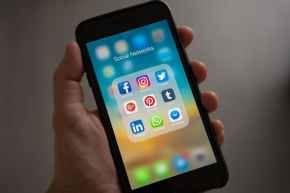
apple applications apps cell phone
Photo by Tracy Le Blanc on Pexels.com

After writing the post, I decided to keep track of my phone use, and lo and behold, I discovered that I have some of the same tendencies. So, I made a resolution to cut back a bit.

I decided to start with Facebook. I found that I opened Facebook many times each day, mostly because I received a notification or discovered something interesting to share with friends. But I also decided to start with Facebook because the company’s myriad privacy and data collecting problems sometimes make me want to completely wean myself off.             Continue reading “A Bit Less Facebook, a Bit More Writing & Piano Practice — I Feel More Relaxed”

Posted in parents and technology

Facebook Fundraisers & My Credit Card

Create a fundraiserI like how individuals can set up small Facebook fundraisers for various charities as a way to celebrate birthdays and other important occasions.
Sometimes when I might be purchasing a present, or at least a card, contributing to a good cause makes it so much easier. At other times, a Facebook friend may put up a fundraiser for a cause that is near and dear to my heart. Once in a while deciding what to contribute to can be a challenge. especially when half-a-dozen friends set them up around the same time.               Continue reading “Facebook Fundraisers & My Credit Card”

Posted in 21st Century Learning, digital learning resources, fact-checking, fake news, image evaluation, information credibility, media literacy

MediaWise: A Cool Initiative for Teens

describing-real-newsIf you are searching for an educational media literacy initiative that focuses on the mechanics of fact-checking, take a few minutes to learn about MediaWise, a project of the Poynter Institute.

Eighteen teenagers from around the United States are part of a MediaWise fact-checking network, learning about strategies and techniques that can help them identify misinformation. They participate in training that helps them understand how to determine what’s true and what’s not, and then the teens can set about investigating on their own. Finally, and this is the cool part, after the students decide whether the information is true or false, they create videos that illustrate the process they used to evaluate the information.

I’ve embedded two of the videos below.             Continue reading “MediaWise: A Cool Initiative for Teens”

Posted in anti-vaccine, child health, choosing reliable resources, connected world problems, evaluating web site resources, health information, misinformation, real life learning, social media

Misinformation Does Not Have to Rule

It looks like anti-vax misinformation, promoted over the last several years on social media, is suddenly the focus of the robust challenges that will be needed to help people understand the dangers of going without immunizations.

Screen Shot 2019-03-12 at 4.31.14 PM
Check out the New York Times video below.

The challenges to the scientific information on vaccinations and scientific knowledge offer a real-life learning opportunity, one that parents and educators can use to help young people understand the perils of distorted information, the power of social media to distort facts, and the need for reliable digital sources. The video below, Fool House Rockis a resource to help people learn about some of the reasons why individuals believe vaccination misinformation on social media. Continue reading “Misinformation Does Not Have to Rule”

Posted in advertising, Google Images, searching

Google Images Now Come With Ads!

Google Towel Search
I searched Google Images for towels.

We will now see advertisements on many of our Google Image searches.

In a March 5, 2019 blog post, Google announced a new advertising promotion that will appear in Google Image searches. According to a post, written by Surojit Chatterjee, the company’s data indicate that many people who consult Google Images are actually shopping for products and looking for pictures of items they might purchase. So the company has created “shoppable ads” that will appear at the top of the image page illustrating where items can be purchased.             Continue reading “Google Images Now Come With Ads!”

Posted in 21st Century Learning, American history, citizenship, curated resources, digital citizenship, digital learning, First Amendment, informed citizens, NewseumEd, web resources

All About the First Amendment at NewseumEd

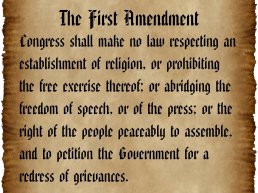
These days I hear many people talking about the First Amendment to the United States Constitution, but as they talk I often wonder how much they really understand about the document? Can they describe the five freedoms and how those freedoms affect people’s lives in the United States? Children and adults probably need to learn lots more.

An excellent NewseumEd activity, designed for students in grades three through eight, introduces the First Amendment using materials, discussion, and scenario examinations that explore how the First Amendment works in real-life situations. Similar resources are available at the website for high school and college learners.

Below are some interesting facts from the activity, although students will discover much more. Continue reading “All About the First Amendment at NewseumEd”