Each year I write a back-to-school post, that challenges parents and educators to think about the ever-changing lives we live as parents and teachers in our increasingly digital world. This year my 2015 post, A Back-to-School Digital Parenting Checklist, received quite a few hits.
If you are an educator or parent searching for just the right comments about digital parenting to use at a school, organization, or parent meeting, take a look at the blog post A Booster Shot on Parents’ Night by Ann Klotz over at the National Association of Independent Schools (NAIS). Klotz, the head of the Laurel School outside of Cleveland, hits the nail on the head, using a healthy child metaphor to describe the important responsibilities — digital and otherwise — for the parents of digital kids. Adults, she points out, must take on these responsibilities no matter how they feel about technology (or even how much more a parent thinks a child knows about technology). Below is one paragraph from Klotz’s post, but I suggest that you read the entire post.
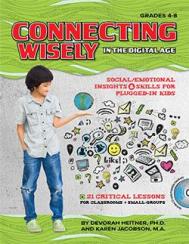
If you teach or think a lot about digital citizenship, take a few minutes to get acquainted with Connecting Wisely in the Digital Age. This new book is simple yet powerful, with content and context for adults who seek to support and mentor 21st Century digital kids. The goal is to help children develop a deeper understanding of the responsibilities that accompany their connected lives.
Click to download a PDF of the Digital Parenting Checklist.
It’s back-to-school 2015, a time to list the many tasks we need to accomplish before the start of the new academic year. We think about school supplies, new clothes and shoes, new lunch boxes, and, of course, new digital devices and computers. We check off our lists as we go, getting our 21st Century children ready to return to school.
Yet back-to-school season is also a useful time for parents to list, consider, and articulate connected-life expectations, old and new, for the coming year. What do you want your children to do or not do? How do you expect them to behave when a friend encourages behavior that is not allowed at home?
C.S. Mott Children’s Hospital National Poll on Children’s Health conducts regular surveys several times each year polling adults in around 2000 randomly selected, nationally representative households, about significant health issues that relate to children. The goal of this survey and others in the C.S. Mott program is to collect information and identify trends that are useful to health providers, community public health organizations, and public policymakers.
Image from CS. Mott Children’s Hospital Survey report site.
This year, 2015, parents rated internet safety as the fourth most important health problem for children, moving from eighth place in 2014. Sexting, which was in 13th place in 2014, was rated as the sixth greatest health concern for children in the 2015 survey.
If you are the parent of a 21st Century digital kid, and you want to try something new in the turbulent, always-changing social media world, you might explore Pinterest — a social media site that helps people accomplish an old activity in a new and better way.
Visit Pinterest!
In the “olden days” people spent time looking through magazines and catalogs, identifying images such as the best-looking clothes, interesting plants, comfortable shoes, or pictures with ideas for an upcoming home construction project. An individual cut out the image and put it into a folder (or a pile). I used to have folders filled with images on all sorts of topics, waiting for me to consult, and I used them from time-to-time. Now Pinterest makes this process digital.
Pinterest, a social media sharing site, allows users to collect and store digitized images from all over the web, along with the image links, and it offers a way organize the pictures into digital folders — Pinterest calls them boards. When a person searches for and finds a useful image, it’s pinned along with its web link into a board’s collection. An individual can also discover, collect, and pin web images from outside of Pinterest. Continue reading “Pinterest: A Digital Passport to the World of Images”→
It’s nearly impossible to compare the parental responsibilities before and after the onset of the digital age.
Parents today encounter one challenge after another, and each family member lives a slightly different connected life. Deciding on devices and time to spend on them is only one parenting issue. Other issues include the monitoring of child’s privacy, the access to so much uncensored information, the ease of making mistakes, and parental worries about what happens with devices when a child visits another household with different connected-world rules. And then there’s the big problem for adults — how they model (or don’t model) appropriate use for younger family members.
Many parents approach digital family life with focus and ongoing attention. That’s why Jane Brody’s two New York Times articles, Screen Addiction Is Taking a Toll and How to Cut a Child’s Screen Time made me a bit nervous, Brody aptly describes screen addiction, a situation that is not uncommon, and she points out that parents, too, need to learn how to disconnect and pay more attention to their children. Brody offers several top-notch resources for parents and quotes Catherine Steiner-Adair, whose excellent book, The Big Disconnect, is an eye-opening presentation about the family and especially real-life parental problems in the connected world. Continue reading “Making Digital Parenting Easier, Not Scarier”→

 Each year I write a back-to-school post, that challenges parents and educators to think about the ever-changing lives we live as parents and teachers in our increasingly digital world. This year my 2015 post, A Back-to-School Digital Parenting Checklist, received quite a few hits.





You must be logged in to post a comment.