Posted in 21st Century life, digital citizenship case study, fake news, hateful comments, media literacy, news literacy, offensive speech, parents and technology, social media

Poor News Literacy Skills Combined With Unproven News Can Hurt Real People

america-1238742_960_720
via Pixabay

For years to come there will be no better case study to illustrate the damage that unsubstantiated news, internet trolls, and social media can create than ‘Pizzagate’. The shameful, made-up information and the events that followed will comprise an authoritative discussion piece for parents, and it should enter every middle and high school media/news literacy curriculum.

In the April 20, 2017 Washington Post, Comet Pizza owner James Alefantis writes about how fake news concerning his restaurant went viral. His article What Happened When ‘PizzaGate’ Came to My Restaurant describes what happened when his business, neighbors, and customers suffered because of harassment, frightening phone calls, menacing comments to workers and their families, intimidation toward nearby businesses, and even death threats. Yet Alefantis also describes how his strong community — neighbors and other businesses — rallied in support.
Continue reading “Poor News Literacy Skills Combined With Unproven News Can Hurt Real People”

Posted in 21st Century Learning, information credibility, media literacy, parents and technology

News Literacy Skill Requires Knowledge About Evaluation and Credibility

Check out the News Literacy Project video below.

I’ve spent some time on this blog discussing the importance of credibility and evaluation — what I call 21st Century vocabulary words. Understanding how to evaluate and judge the credibility of content is digital life survival skill. Thus, when I discover a new resource that supports student learning I am always excited.

The News Literacy Project website features an excellent video with individuals — of all ages — sharing their thoughts about how news literacy skills can help people know what information to trust. It will be a useful tool for teachers who are developing student activities that focus on media credibility and evaluation. It can be well-paired with student activities that feature the online or app exhibits of the Newseum front pages

Watch the video.          Continue reading “News Literacy Skill Requires Knowledge About Evaluation and Credibility”

Posted in 21st Century Learning, 21st Century life, digital health and wellness, digital life, parents and technology

What Do You Know About Artificial Intelligence & How It May Affect Your Life?

https://pixabay.com/en/users/geralt-9301/

Ideas about artificial intelligence (AI) have tended to swirl around without offering me much to think about. I use Siri and Hello Google on my iPhone, I’m aware of the increasingly powerful social media algorithms, and I’ve watched, with some interest, the accomplishments of IBM’s Watson. Yet I haven’t really thought much about it.

The developments and decisions made about AI over the next couple of years may well affect our lives and the lives of our descendants. It’s best to get to know a bit about what is going on, especially when it comes to personal privacy, and also to ensure that our children learn about the positive and negative aspects of artificial intelligence.

Over the past several days I’ve read Maureen Dowd’s long and detailed report in Vanity Fair, Elon Musk’s Future Shock, describing the unbridled, and sometimes turbulent Silicon Valley debate about AI. This is the first detailed AI article that I’ve read, and it offers readers much to think about as Dowd circles, again and again, from Elon Musk to other AI researchers who oppose his views and back Musk again. I’ve realized that artificial intelligence is no longer something we see in science fiction movies. It may well affect our health and digital wellness. Continue reading “What Do You Know About Artificial Intelligence & How It May Affect Your Life?”

Posted in 21st Century life, civility, computer history, digital change, innovation, teaching digital kids, women and computing

Even a Web Founder Worries about Today’s Connected World Climate

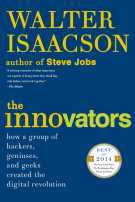
the-innovators-9781476708706_hr-1Can a world wide web creator be a doubter about what he helped to create?

I’ve just finished reading The Innovators by Walter Isaacson, a book that highlights the many people who helped create, step-by-step, the digital world where we now reside.

The book begins way back in the mid-1800s with the ideas of Lady Ada Lovelace, an amateur mathematician (and the daughter of poet Lord Byron). It was Lady Ada, Isaacson writes, who provided the ideas and laid the groundwork for early computer developers to use nearly 100 years later when they created their first computing machines.                              Continue reading “Even a Web Founder Worries about Today’s Connected World Climate”

Posted in 21st Century teaching, civics, connected learning, credibility, free press, media literacy, museums, teaching

The Newseum’s Front Pages — A Rich Media Literacy Resource

FullSizeRender-2
The Front Pages exhibit in front of the Newseum. Can you see the Capitol dome in the distance?

If you are seeking a new and creative medialit resource — for home or school learning — take some time to discover and explore the Today’s Front Pages exhibit on display at the Newseum in Washington, DC. Visitors to the city can set aside a block of time to visit the Newseum itself, but those who don’t have time for a longer visit can still check out the front pages on the sidewalk in front of the Newseum (for free).

Not traveling to the Nation’s Capital? No problem. The Newseum makes it easy to visit Today’s Front Pages online — each day all 800 Front Pages are posted on the website. And there’s even a Today’s Front Pages app.

No matter where you see them, the Front Page exhibits are rich with learning possibilities.

Continue reading “The Newseum’s Front Pages — A Rich Media Literacy Resource”

Posted in 21st Century life, choosing reliable resources, citizenship, civics, democracy and civility, informed citizens, news on social media, social media

Are People Well-Informed if They Only Consume News that Suits Their Point of View?

Lee Hamilton served for 34 years in Congress and was Vice Chairman of the 9-11 Commission.
Lee Hamilton served in Congress for 34 years in and was the Vice Chairman of the 9-11 Commission.

In this age of fake news, one of today’s challenges for educators and parents is guiding young people toward an understanding of what it means to be an informed citizen.

An important responsibility is helping children, pre-adolescents, and teens learn how to identify news sources and writing that come from responsible journalistic sources.

Months before the 2016 election former Indiana Congressman Lee Hamilton penned a thoughtful commentary, Social Media Challenges Democracy, considering what is required of an informed citizen, and predicted — intentionally or otherwise — some of the questions about news consumption that citizens have asked since November 2016. It’s an excellent discussion resource for educators and others who work with youth groups.

Lee Hamilton heads The Center on Representative Government at Indiana University.

In his commentary he asks:           Continue reading “Are People Well-Informed if They Only Consume News that Suits Their Point of View?”

Posted in 21st Century life, 21st Century teaching, choosing reliable resources, credibility, democracy and digital life, digital kids, digital life, evaluating news, fake news, parents and technology, raising digital kids, teaching digital kids

How Are You Helping Kids Learn About MediaLit & Fake News? Progress?

Screen Shot 2017-04-09 at 9.30.15 PM
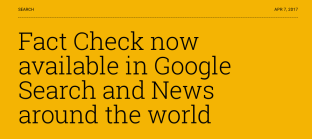
Check out Google’s new fact check feature.

Teachers all over the country are sharing ideas about how to help their students identify news that is made-up, unsubstantiated, or just plain false. Now Google has added a feature that identifies false information that comes up on user searches. An April 7, 2017 article at the Pointer Journalism site describes Google’s new fact check in detail and explains how the company went about developing its new feature. You can also read the CNET article about Google.

I’ve been delighted by the articles, such as Five Ways Teachers Are Fighting Fake News, an NPR education article that describe how three teachers are incorporating media literacy activities into their curriculum.  Plenty of other similar reports have appeared in various media. I hope that, somewhere, there is an organization that is archiving as many teacher ideas as possible.                          Continue reading “How Are You Helping Kids Learn About MediaLit & Fake News? Progress?”