Posted in 21st Century Learning, blogging, generating content, online communication, parents and technology, teaching digital kids

British Girl’s Blog: Why Make Such a Big Deal About It?

Visit the Never Seconds blog.

You might enjoy reading British Girl’s Blog on School Lunch Stirs it Up in the Sunday, June 17, 2012 Washington Post about a nine-year-old girl who is blogging to change the quality of food in her school lunches and to raise money for a local charity, Mary’s Meals, that feeds the hungry. The blog, Never Seconds, has become a sensation…

… because some officials decided to make an impromptu rule — the young blogger cannot take any more pictures of her school lunches.

So let me get this straight. A child or adolescent starts writing about an issue or a topic and doing it well. She offends no one as she points out that change is necessary — in fact, she writes rather respectfully while taking a stand on making the meals better. People are short-sighted enough to try to stop her?

How long will it take adults in today’s world to understand that life, 21 Century skills, and communication have fundamentally changed — people can create good-quality digital content just about anywhere. They can share it and other people can also share. Reminder to Adults: Stopping this type of creating on a mere whim doesn’t work. Continue reading “British Girl’s Blog: Why Make Such a Big Deal About It?”

Posted in cyber-bullying, digital parenting, electronic communication, online safety, parents and technology, social media, social media friends, teens and technology

Good, Bad, Ugly… Internet? – Danah Boyd

Check out Danah Boyd’s short commentary, The Good, the Bad, the Ugly … and the Internet in Boston Magazine. In the June 15, 2012 piece Boyd describes how fears about children’s safety have curtailed their time out in the real, face-to-face world for several generations. Today many parents have transferred their fears into the digital world.

Read some of Boyd’s blog posts here.

Boyd points out that many serious behavioral issues, bullying, for instance, have been and continue to be huge problems. Yet they tend to be more frequent and serious face-to-face than in the digital world (though the digital problems get more media coverage). As one of the most well-regarded observers of teen social networking behavior, Boyd conducts research for Harvard’s Berkman Center and for Microsoft.

Continue reading “Good, Bad, Ugly… Internet? – Danah Boyd”

Posted in 21st Century Learning, blogging, digital learning, digital parenting, parent education, parents and technology

You Can Start a Family Blog – Summer 2012

Visit Start a Family Blog and Get Started!

This summer think about starting a family blog. It’s a terrific communication project as well as a collaborative learning opportunity for everyone — kids, parents, grandparents, cousins, aunts, and uncles.

Last year I taught a short online blogging course to parents at my school. My Start a Family Blog classhosted on a WordPress blog, is still available. The posts will guide interested families through the basics of starting a blog for relatives and friends.

Over at some novel ideas, a blog authored by librarian Stacy Nockowitz would be bloggers will find a comprehensive and rich list of resource links to help get started. She organizes her links into categories:

    • Blogging Basics
    • Blogging Resources
    • Blogs About Blogging
    • Blogging Platforms
    • Images

Also included at the bottom of the resource page is a cool glossary of blogging terms.

Posted in cell phones, digital parenting, electronic communication, gadget ownership, mobile phones, parents and technology, social media friends

Are Teens Moving Away from Facebook?

Take a few minutes to read Some Teens Aren’t Liking Facebook as Much as Older Users, a May 30, 2012 business article in the Los Angeles Times. Facebook’s growth is slowing, and many teens, after absorbing lessons about privacy and the need to share less personal information, now seek to socialize online in smaller community groups with people they know.

Reporters Jessica Guynn and Ryan Faughnder point out that students are also far more eager to use mobile services designed for their smartphones. Interestingly, parents are still avid Facebook users.

Best Quotes from the Article

  • Teens… can also be more selective about what they share and with whom, and feel less social pressure to “friend” everyone in their school or friends or friends.
  • Teens who belong to the first truly mobile generation — their most common form of communication is text messaging — are increasingly gravitating to services made for their smartphones and tablets.
Posted in cell phones, digital parenting, mobile phones, parents and technology

Getting a Cell Phone for a Child in Summer 2012?

Check out Techlicious!

The Techlicious blog features an information-filled post, with resources for parents who want to learn more about features and limits-setting as they go about considering whether to purchase a cell phone for a child. In her May 28, 2012 piece Suzanne Kantra describes some of the newest parental control packages on the market at large mobile phone carriers.

Kantra compares and contrasts various features that  address  a variety of parent concerns including:

      • Keeping track of kids
      • Text messaging limits
      • Entertainment

Below are a few past blog posts from MediaTechParenting on mobile phones and kids.

Posted in 21st Century Learning, digital learning, digital parenting, evaluating web site resources, family conversations, online research, parents and technology, teaching digital kids

Help Students Evaluate Digital Sources-Howard Rheingold Video

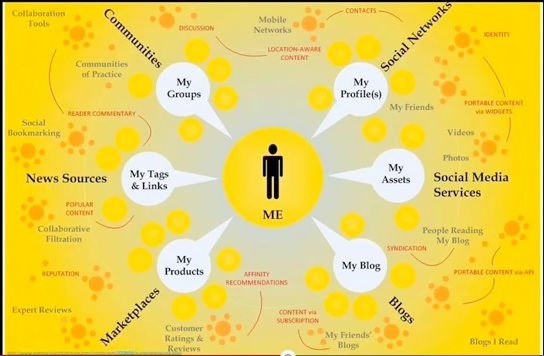
Rheingold’s vision of a person’s personal trust network copied from the video.

Teaching children to evaluate resources and determine credibility is the biggest challenge of our 21st Century world. Until now authoritative textbooks have dominated the world of education, but not anymore.

In the video below, Howard Rheingold, the digital thinker, professor (Stanford and UC Berkeley), and personal learning network advocate, describes how parents and educators should help students develop the ability to ask questions when they discover digital information, thereby evaluating the quality or lack of it. Rheingold calls this “crap detection,” a term originally coined by Ernest Hemmingway.

We need to teach kids, Rheingold points out, “how to search and how to find” and how to be sure that what is found is of good quality. The long-range goal is for each individual to develop what Rheingold calls a “personal trust network.”

Continue reading “Help Students Evaluate Digital Sources-Howard Rheingold Video”

Posted in cell phones, digital devices and gadgets, family conversations, online communication, parents and technology, setting technology limits

Some Time Out From Digital Devices?

In Google’s Eric Schmidt and the Curse of Constant Connection, Washington Post columnist Ruth Marcus reports on the Google executive’s commencement address at Boston University (BU). In her May 22, 2012 column Marcus describe how Schmidt made the case for a bit of balance — urging new graduates (even as they stayed connected during the graduation ceremony) to take an hour or so each day away from the digital devices that keep us so connected.

The full text of Schmidt’s speech is on the BU website, and it’s a good read for digital age parents who are seeking ways to schedule a bit more disconnected time with family and friends.

To learn more about the search for digital device moderation I recommend the book Hamlet’s Blackberry: A Practical Philosophy for Building a Good Life in the Digital Age. Author William Powers explores how people who lead connected lives (he does) need to find the time for reflection and interaction away from screens. And he describes how his family wants about setting some time to be together and disconnected.

Best Quote from Powers’ Book

If we’ve learned anything in the last decade about technology and human interaction, it’s that as screen time rises, direct human-to-human interaction falls off proportionally.