Posted in 21st Century Learning, digital citizenship, digital parenting, online safety, parent child conversations, parents and technology, teaching digital kids

Seeking a Family Digital Use Agreement or Contract?

Check out the GetNetWise family digital use agreements.

Many times each year parents and teachers ask me for examples of agreements and contracts that can help families focus on digital life expectations and limits-setting. Some individuals seek a pre-written document to use with their children, while others hope to design and write a document expressly for their families.

These agreements, contracts, or pledges, cover the gamut of 21st Century digital world behavior, from cell phones, to online access, to texting, web 2.0, social media, cyber-bullying, and digital citizenship.

The conversation and preparation that contribute to developing a family agreement or contract are often more important than the final document. In these family discussions, parents will need to arm themselves with information about digital natives, address values, and encourage common sense. Parents will also need to help their children think about what to do in unexpected situations, and encourage them to speculate on how to cope with friends who encourage them to misbehave. The more personal and relevant the agreement, the better.

Then, too, adults should understand that the preparation and writing process is not a one-way street. A child may make a pointed observation or come up with a thoughtful idea about the digital issues contained in the agreement. Perhaps he or she feels strongly about certain types of access, time limits, or other parental expectation.  Maybe there are compelling reasons to grant access to one site or another, even though the parent has reservations.

Continue reading “Seeking a Family Digital Use Agreement or Contract?”
Posted in digital footprints, digital parenting, Do Not Track Kids Act, online security, online tracking, privacy

Stop Tracking Kids: Protect Their Privacy on the Web

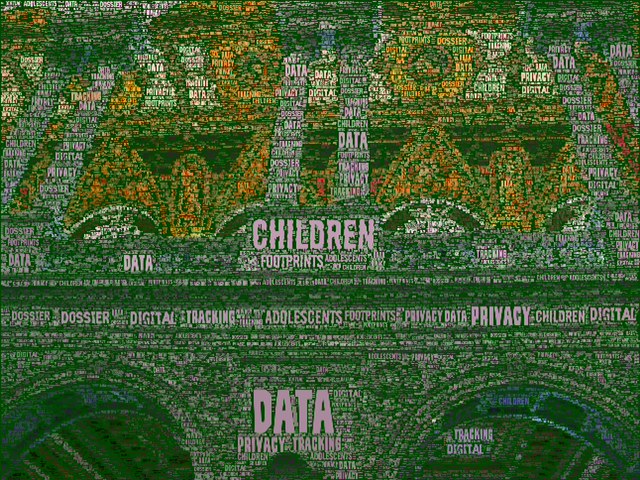
Image made with WordFoto with a picture taken at the Library of Congress.

While people worry a lot about kids and their digital access, the most critical aspect to me — and the most likely to cause an eventual problem for a child — is the degree to which information can be tracked and collected while children work and play in the web.

It doesn’t have to be this way.

For more information, read Tell the FTC to Stand Up for Children’s Privacy at the Campaign for a Commercial-Free Childhood website.

Posted in apps, cell phones, digital devices and gadgets, digital parenting, mobile phones, parents and technology, social media, social networking, tweens and technology

Getting to Know Instagram – Links to Bring Adults Up to Speed

In a matter of weeks last spring quite a few older elementary and middle school children whom I know jumped on the Instagram bandwagon, and they continue to have fun with it. The social networking photography app, now owned by Facebook, lives on their wireless devices, making it easy to use without getting encumbered with computers.

The minimum age for the Instagram app is 13, but that hasn’t stopped the site from attracting many children younger than that. While I tend to be someone who takes age requirements seriously, many parents, after checking out various sites, are more comfortable than I am with letting their children use sites when they are a bit younger than 13 years of age.

The biggest challenge for adults is keeping an eye on the content and quality of the photos that their children are uploading to Instagram. Problems can occur when children err in judgment as they make decisions about what to share (and what not to share).

In any event, all of us — parents, teachers, and any other adults in children’s lives — need to learn more about Instagram. I’ve added the app to my phone and plan to get acquainted with it. The list of articles below offers parents and teachers lots of information  — how Instagram works and how children socialize when they use the social networking app with their friends.         Continue reading “Getting to Know Instagram – Links to Bring Adults Up to Speed”

Posted in 21st Century Learning, cultural changes, digital learning, digital parenting, parent education, parents and technology, teaching digital kids

Beloit College 2016 Mindset List: How Fast Life Changes

The new Beloit College 2016 Mindset List — a great start-of-the-school-year conversation piece for adults — is out.

Watch a video about the list.

At the beginning of each academic year, several faculty members at Beloit compile a list to demonstrate how students in the entering freshman college class experience life, learning, and culture differently from many of the adults they know. Some items are silly, others compare digital kids with their parents’ generation; some I don’t understand; and others I can fit into a bit of context, but they are mostly unfamiliar to me.

The list’s mission is to remind educators and parents that it takes energy and openness to new literacies to understand how dramatically the “growing-up” and learning processes change over time (and many of these have nothing to do with digital life). 

Every fall I look forward to the release of this list, which Beloit releases just before the start of the school year. I’ve included a few of my favorites from this year.          Continue reading “Beloit College 2016 Mindset List: How Fast Life Changes”

Posted in digital parenting, family conversations, media literacy, parents and technology

Another Tragedy for Digital Kids to Absorb — Aurora, Colorado

Watch the video at Common Sense Media.

Yet again we are living through a horrible tragedy, this time in Aurora, Colorado, and this incident is extra frightening because the shooting and killing occurred as people went about normal activities in a movie theater. What’s more a part of kids’ daily lives than movie theaters?

Any connected child or adolescent can learn about this event and others via a digital device or television. In the digital world, the news cycle never stops, and most children do not possess the media literacy skills to evaluate the sources of information. The traditional walls that used to insulate kids from information about violent events just aren’t that thick anymore.

What are digital parents and teachers to do?

If you need support or at least some extra perspective before you initiate a parent-child conversation in your family, check out a video, Explaining the News to Our Kids, over at the Common Sense Media. This short presentation provides thoughtful suggestions that can help adults get started with difficult conversations about the news when scary and discomforting events occur.

Posted in digital parenting, parent child conversations, parents and technology, social media, social networking

Summer, Social Media, and Digital-Age Parenting

Read the research here.

Summer is a good time for parents to learn more about the social media activities of their children, developing additional skill and more understanding about what’s happening in the digital whirl that is a huge part of kids’ social lives.

A 2011 Pew Internet and American Life Project report, Teens, Kindness, and Cruelty on Social Networking Sites, noted that 95% of children ages 12 – 17 are online, many on social networking sites. Since that Pew report was published, media sources report that children several years younger than 12 are also using social media. Read the NPR piece, Social Networks: Thinking of the Children. Children continue to need guidance and limits-setting from their parents.

The goal is not to prevent children from exploring — that’s not realistic. Instead, parents need to gather enough information to be able to keep an eye on activities, facilitate discussions when required, and intervene when it’s necessary to insulate their kids from impulsive digital behavior on computers, smartphones, and tablets.        Continue reading “Summer, Social Media, and Digital-Age Parenting”

Posted in 21st Century Learning, digital citizenship, digital learning, digital literacy, parents and technology, web 2.0

Digital Footprints: Changing What We Teach

Check out Richardson’s Book.

Recently, after reading Will Richardson’s article Footprints in the Digital Age, I began thinking about how much attention we pay to online safety and security without thinking nearly as much about teaching kids how to be literate consumers and competent creators of content. Richardson’s article started me thinking about how I might refine the way I teach digital citizenship to fifth graders.

While safety and security will never be left out of the curriculum, the 2008 Educational Leadership article convinced me to put more effort into helping my students think of digital footprints as only one part of the digital life equation. The other part of this equation involves teaching children to think proactively about the online narratives that they are creating and helping them begin to understand how other people will be searching for each of them — and for appropriate reasons. My students and their parents need to become curators of the digital content in their profiles, just as any highly skilled museum curator creates an exhibition.

A strong digital profile, Richardson writes, “Google’s well.”        Continue reading “Digital Footprints: Changing What We Teach”