Posted in 21st Century life, 21st Century parenting, digital devices, digital kids, digital life, mentoring digital kids, parents and technology

Another Digital Parenting Book That’s Scary – Sigh…

fear riskSo many digital parenting books and articles generate fear and anxiety, and American Girls: Social Media and the Secret Lives of Teenagers is no exception. The big question is whether or not this book, or any of the others, can inspire parents to get serious, learn about the relationships and issues their children encounter with poorly supervised mobile devices, and then figure out how to guide and, yes, supervise their children.

Journalist Nancy Jo Sales offered us a preview of her book in a 2013 Vanity Fair article, Friends Without Benefits, and now that I’ve read both the book and the article, I’d recommend going for the article. The book definitely offers many more interviews with girls, providing an intensive gaze through the prism of 21st Century adolescent digital life.

Continue reading “Another Digital Parenting Book That’s Scary – Sigh…”
Posted in 21st Century life, 21st Century parenting, digital devices, digital life, media diet, parents and technology

Screen Time: Myths & Facts (and More)

Screen Shot 2016-03-03 at 7.44.51 PMCheck out a cool infographic over at Tuned in Parents that addresses many screen time questions. The image was created using information from a broad array of evidence-based research conducted by organizations such as Common Sense Media, The American Academy of Pediatrics, Zero to Three, PBS, and a number of research sources, and the infographic addresses many of the questions that parents continuously mull over.

Screen time is for many of us is a conundrum. Most parents and teachers (and grandparents, too) wonder just how to balance the time children spend with screens. Our goal, after all, is to create digital wellness for our children and ourselves — a sometimes lofty goal.

We have many questions including: Continue reading “Screen Time: Myths & Facts (and More)”

Posted in 21st Century Learning, 21st Century life, evaluating web site resources, information credibility, parents and technology

Building Habits of Evaluation into the Conversation & the Curriculum

Screen Shot 2016-04-01 at 11.28.15 AM
21st Century Vocabulary Words – Evaluation

A few days ago at the public library, I overheard two teachers talking excitedly about a curriculum unit that they were developing. As the discussion progressed, they also began noting their frustration with the cavalier attitudes students demonstrate toward online resources. I was not surprised by the conversation.

Young people who are growing up today seem to navigate effortlessly through digital materials—learning resources, games, publications, websites, and apps—but we adults often forget their limited fluency when it comes to identifying the quality, reliability, and credibility of information. If they are to become good evaluators kids need lots of practice and plenty of time spent observing adult models.

As the educators continued talking, I thought about two 21st Century learning vocabulary words—evaluation and credibility—and mulled over how we get young people, in an age of unlimited content and information, to develop stronger habits of evaluation.
Continue reading “Building Habits of Evaluation into the Conversation & the Curriculum”

Posted in 21st Century Learning, 21st Century parenting, 21st Century teaching, digital wellness, parents and technology

Incorporating 21st Century Vocabulary Words Into the Conversation & the Curriculum

vocabulary 4
Check out all the posts in this series and watch for new ones.

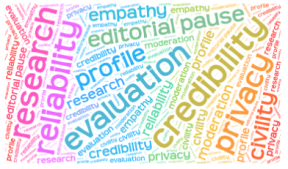
To become successful, intelligent, and mindful 21st Century learners, young people need to understand and apply a small group of vocabulary words that now have expanded digital world meanings.

Parents may want to use and talk about these words in conversation as often as possible. Teachers should consciously incorporate them into the curriculum, because the vocabulary knowledge provides young learners with tools that help them consume information more effectively.

Screen Shot 2016-04-01 at 11.28.15 AM
21 Century Vocabulary Words

As young preadolescents and teens become more comfortable with these words and increasingly able at applying the conceptual meanings they may also gain skill at discerning and then avoiding many of the digital world problems and pitfalls that children encounter.

Continue reading “Incorporating 21st Century Vocabulary Words Into the Conversation & the Curriculum”

Posted in 21st Century Learning, 21st Century parenting, digital change, digital life, digital parenting, education not fear, Facebook, parents and technology, risky behavior, social media, supervising digital kids, values in digital life

On Digital Parenting Fear, Part #2 – We Must Know More About Kids’ Digital Lives

fear-riskIn our connected world unfamiliar activities make adults worry about kids, and violent and exploitative events, some connected to the digital world, make us fear for our children’s safety. This past week two events, a 13-year-old’s ruthless murder that was associated with online app interactions and a Wall Street Journal article, Cyberthieves Have a New Target: Children, made many of us wonder, once again, whether the digital world is degrading the quality of our lives.

Cybertheives PM

For me the week reinforced the importance of parents understanding what their children are up to on digital devices. It’s a serious responsibility, it requires enormous time and energy, and we cannot hire outside experts to do it for us. The work requires every parenting skill that we’ve ever developed and more, and if you are not up to it you need to consult a parent education organization, such as the Parenting Encouragement Program (PEP) in my area, that offers training to parents. Continue reading “On Digital Parenting Fear, Part #2 – We Must Know More About Kids’ Digital Lives”

Posted in 21st Century parenting, connected learning, digital citizenship, digital kids, parents and technology, research on the web, risky behavior, social media friends

On Digital Parenting Fear, Part #1 – What Risks Should We Worry About the Most?

When we teach and interact with digital kids about their hyper-connected lives, I wish we could de-emphasize the fear factor and re-emphasize education and understanding, helping young users become stronger digital world problem-solvers. While monitoring, learning, and guiding, we also need to be sure to help kids, develop the antennae to identify and avoid a range of online problems — not just the big ones.

fear risk
Image made at Festisite.

A day doesn’t go by without hearing an adult comment about children’s digital world risks, and invariably these conversations focus on predators, strangers, pornography, cyber-bullying and even the death of a child. In the area where I live, a grievous and tragic event is unfolding as I edit this post.

My concern as an educator is that my students, without fail, noted how important it was to be aware of the frightening situations. Their deep concern about potentially horrible Internet encounters — events that do not occur nearly as often as the mainstream media imply — obscured for many of them, the importance of many other interactive problems that happen on a daily basis to digital kids — misjudgments, miscommunications, and daily social events gone awry. It’s these problems, often the result of minor online misjudgments or typically adolescent missteps that regularly cause public humiliation and embarrassment, and such events wreak havoc on a child’s and a family’s daily life.       Continue reading “On Digital Parenting Fear, Part #1 – What Risks Should We Worry About the Most?”

Posted in 21st Century Learning, electronics, innovation, maker movement, makerspaces, parents and technology

Electronics Tutorial Helps Parents & Teachers Gain Deeper Understanding

Click on this icon at the top left of the webpage to access the tutorial.
Click on this icon at the top left of Paul Mirel’s webpage to access the tutorial.

As exciting makerspaces spring up all over the place, I wonder how much attention is given to leveling the makerspace playing field in order to ensure that everyone in a 21st Century group, class, or school community has the basic knowledge for exploring and innovating.

Take understanding basic electricity, for instance. At a conference that I attended last year — an amazing event filled with countless maker opportunities —  some people seemed to understood electricity’s basics and lots of others did not. The people without the knowledge, the “have-nots,” frequently appeared to lurk on the periphery of projects.

A friend and former colleague, physics teacher Paul Mirel, recently developed an introductory electronics tutorial for his art students at the Maryland Institute College of Art (MICA) in Baltimore, MD. It’s written in a way that is easy to understand and also easy to follow. He thinks that his students need an elementary understanding of basic electronics if they are to fine tune their maker skills. Check it out!               Continue reading “Electronics Tutorial Helps Parents & Teachers Gain Deeper Understanding”