Posted in 21st Century Learning, commenting, digital world conversations, digital world reading habits, evaluating news, fact-checking, parents and technology

Fact Checking & Commenting Skills Go Hand-in-Hand

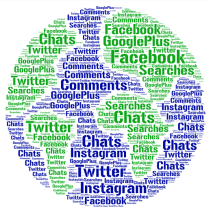
commenting sprialLearning to comment well, avoid chatter, and identify made-up news and comments — before sharing or forwarding them —  is a critical 21st Century literacy skill.

Each week I receive a terrific email on fact checking, sent from the Poynter Institute, an independent group that promotes excellent and innovative journalism in our 21st Century democracy.  Poynter’s weekly email message contains all sorts of interesting tidbits, quotes, and information that can help people learn more about information accuracy.

Several weeks ago the Pointer email contained the following quote that can be used as a teaching tool with students in class or with the family discussions around the dinner table.                        Continue reading “Fact Checking & Commenting Skills Go Hand-in-Hand”
Posted in 21st Century parenting, digital change, digital devices, digital footprints, family life, learning and the brain, parents and technology, personal voice assistants

Should Babies Learn Alexa’s Name Before Mama’s?

Check out a fascinating article, When Your Kid Tries to Say ‘Alexa’ Before Mama, in the November 27, 2017 Washington Post. Tech reporter Hayley Tsukayama describes how a young child responds to the Alexa voice assistant in his house, calling out her name before learning his mom’s. She also writes about the personal voice assistant universe and expert opinions.

51ciPnzyhQL._SX328_BO1,204,203,200_I am not sure what to think and, yes, it is amusing.

Yet I keep wondering whether digital toys and devices, especially those that talk, tend to distract babies and toddlers as they go about learning words and begin to carry on a basic conversation. Babies are hard-wired to learn the language that their parents speak — the words, the pitch, the intonation — and it seems like inserting digital conversations into the equation could slow down the process, or at least not be helpful. Twenty-first Century life is becoming more complex for every age as we sail nonstop into an increasingly digital world.

Continue reading “Should Babies Learn Alexa’s Name Before Mama’s?”

Posted in 21st Century life, 21st Century teaching, American history, and media, digital learning, media literacy, museums, parents and technology

Video Tour of the Newseum’s News History Gallery

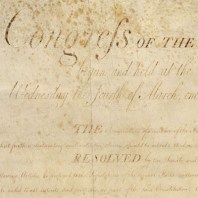
bill-of-rights-cropWatch this inside video tour (below) of the Newseum’s updated News History Gallery. The exhibit features 400-plus historical newspapers, newsbooks, and magazines —  documents that reported some of the greatest and most amazing news stories. You can visit the Newseum’s web site to explore some of the other exhibits without leaving your home or school.

After you watch the video, check out and sign up for NewseumEd, a site that is filled with ideas for teaching First Amendment and media literacy and with resources that can be easily downloaded. These are terrific connected world teaching tools that can be used in 21st Century classrooms.     Continue reading “Video Tour of the Newseum’s News History Gallery”

Posted in cell phones, digital devices and exercise, digital life, mobile phones, modeling for kids, parents and technology

Exercise & Phones — Why Do People Do It?

IMG_8335There are times when cell phones should be put away.  Shouldn’t exercise time be one of those times?

I walk several miles almost every day, sometimes outside and sometimes in, and no matter where I am, I observe lots of people talking on the phone while they move. They may be walking, pushing strollers, on treadmills, or various elliptical trainers or on the street or jogging path — but there they are talking on mobile devices.

The last time I went to the track — my goal that day was to walk three miles —  I observed an individual on the phone while pushing a stroller with a wide-awake baby. For as long as I was watching — and I looped the person and the stroller many times on the track —  there was no interaction with the child. Moreover, her slowness, trudging and talking in the middle of the track lanes —  was an issue with many other exercisers, who needed to give her wide berth every time they approached the stroller.
Continue reading “Exercise & Phones — Why Do People Do It?”

Posted in 21st Century Learning, 21st Century life, 21st Century teaching, children and civility, civility, data collecting, data sharing, democracy and civility, democracy and digital life, fraudulent news, parent child conversations, parents and technology

Two Pithy Quotes on Social Media & Democracy

How can worldwide social media companies ensure that their digital tools are not used to promote chaos?

Social media and the digital tools that we use every day have transported us into a strange new era. As we use these tools to work and play we tacitly allow them to collect incredible amounts of our personal information — content that documents our lives, likes, loves, and dislikes —  and we become sitting ducks for sham news and fraudulent information. Those who possess our information, good guys or bad, can use impersonal algorithms to assess and use our data.  Read my post about using Duck, Duck Go.

Fast Company’ article, Alphabet’s Eric Schmidt On Fake News, Russia, And Information Warfare describes how Google and social media companies were caught off guard by the manipulation of their systems and the prevalence of divisive news. The October 29, 2017, article by Austin Carr contains two interesting comments by titans of digital industry, though neither of them testified at the Capitol Hill hearings.    Continue reading “Two Pithy Quotes on Social Media & Democracy”

Posted in 21st Century life, collaborating with kids, digital change, digital devices, digital parenting strategies, family media plan, parents and technology

Melinda Gates Parents Digital Kids, Too

Parenting digital kids?

kids devices Gates
Image downloaded from Pixabay.

If you sometimes feel lonely and unprepared as you take steps to craft appropriate media guidelines for your family, check out Melinda Gates’ digital parenting essay I Spent My Career in Technology: I Wasn’t Prepared for Its Effect on My Kids, appearing in the August 24, 2017, edition of the Washington Post. Her family experiences some of the same 21st Century challenges.

Despite spending years working at Microsoft, Gates describes her amazement at the pace of change and the ways that digital activities have taken over, in different ways, the lives of her children. She compares and contrasts her older child’s technology experiences with the increased access of her younger daughter. And she thinks about and shares a range of resources to help parents understand more about digital wellness and how to raise children who understand the digital world where they live.

Continue reading “Melinda Gates Parents Digital Kids, Too”

Posted in 21st Century Learning, 21st Century parenting, parents and technology, preschoolers, toddlers, young children

Young Children, YouTube Kids & Learning: Thoughts to Consider

If you have preschoolers in your family, check out The Algorithm That Makes Preschoolers Obsessed With YouTube, appearing in The Atlantic.

YouTube Kids splash screenWritten by Adrienne LaFrance, the eye-opening article describes how the YouTube Kids app works as well as the experiences of 21st Century preschool children who use it. The author also shares thoughts about the app (though not endorsements) from academics including Michael Rich, who directs the Center on Media and Child Health at Harvard Medical School and Sandra Calvert, who heads up the Children’s Digital Media Center at Georgetown University.

It appears that many older toddlers and preschool kids spend a considerable amount of time with YouTube Kids. They love the app, and the article in The Atlantic details many of the reasons why.

Continue reading “Young Children, YouTube Kids & Learning: Thoughts to Consider”