Posted in attributing sources, digital learning, digital parenting, evaluating web site resources, parents and technology

10 Tips to Ensure that You Use Accurate Digital Information

Even in today’s fast-paced virtual world, these tips never seem to age. Help kids learn to make good choices.
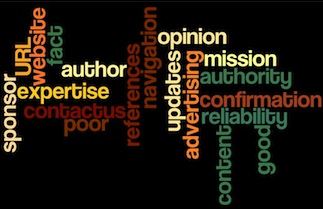
1.  Who made the site? Is it from a university or other institution? Is it for-profit or non-profit. Corporate?  Look for an “about” link that describes the site.

2.  When was the site made and how often is the site updated? Somewhere, usually at top or bottom it should tell. Is this site updated recently?  If not this may be a reason to check out another website on your topic.

3.  Is it possible to contact the webmaster or the sponsor of the site? Is there a “contact us” link somewhere on the page?

4.  How much advertising is on the page, and how aggressive is it? Good sites that use advertising are careful to keep it from being “in your face.”

5.  Does the site state its mission? Why was it set up?

Continue reading “10 Tips to Ensure that You Use Accurate Digital Information”

Posted in American Academy of Pediatrics, digital devices and gadgets, digital parenting, parents and technology, tech free time

iPad Crazed Kids? OK, but Are They Also Learning How to Play With Others?

I’ve just read a November 28, 2011 Bloomberg article, iPad Crazed Toddlers Spur Holiday Sales. OK, the title is a bit overly dramatic, but it’s an interesting read, describing the demand for tablets of all kinds and kids’ motivation to use them.

Seriously, though, the tone of the article makes me worry a bit. As a confirmed techie, gadget lover, educational technology specialist, teacher, and parent, I know that children also need lots of outside play time and plenty of experiences working/playing with others. We don’t know what the jobs will be in 15 years when these kids are looking for employment, but we do know that their superior technology skills will matter little if they don’t have great people skills — understanding how to share, take turns, and work collaboratively.

The article reminds parents about the American Academy of Pediatrics recommendations about no screen time (or very little of it) for children under two years of age. And please — this is a plea from me — avoid, as much as possible, using these digital devices as electronic pacifiers, the term used in the article by Victoria Nash of the Oxford Internet Institute (England).

Continue reading “iPad Crazed Kids? OK, but Are They Also Learning How to Play With Others?”

Posted in cell phones, digital devices and gadgets, digital parenting, iPhones and iPads, parents and technology

Kids’ Cell Phones? Who’s in Charge Here?

Made at Wordle.com.

Read You Make the Call on Kids’ Phones in the Sunday, November 27, 2011 Washington Post. Written by columnist Michelle Singletary and aimed at the parents of digital kids, the article examines the practice of giving children cell phones at younger and younger ages. The author believes that, in reality, cell phones are simply playful gadgets that easily confuse children about the difference between needing things and wanting things.

Most Compelling Thoughts from the Article

Posted in digital parenting, parents and technology, social media, social media friends, social networking

Redefining Public Relations in Our Digital World

Check out this article about social media at Wikipedia.

If you wonder about the still-new world of social media, and are continually amazed when a few comments on a social media site affect prompt change  (whether it’s a political movement, corporate policy, or an unsatisfied customer quieted down) this New York Times article, Redefining Public Relations in the Age of Social Mediaprovides helpful background. The article, by Stuart Elliott, describes the evolutionary and revolutionary changes in the digital public relations world.

A Few Interesting Thoughts from the Article

Posted in 21st century job hunting, digital parenting, parents and technology

Relying on a Resume? Think Bigger!

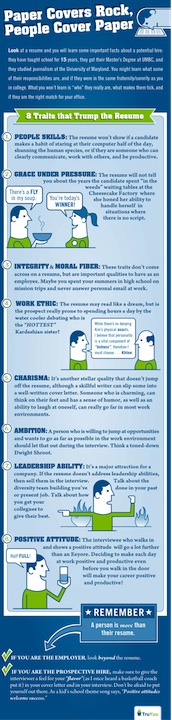
If you are a parent helping an adolescent get started on the first hunt for a job or internship, or if you know someone who is searching for a job right now, Business Insider has just published an unusual infographic to help you understand that a resume may not always be the best — or at least not the only — job seeker’s tool.

This infographic offers an overview of the personal characteristics that employers cannot discover just by reading resumes. Any individual who seeks a position in this day and age needs to think about how to expand a resume and more clearly demonstrate these additional traits to potential employers.  These include:

  • People skills
  • Grace under pressure
  • Integrity
  • Work ethic
  • Charisma
  • Ambition
  • Leadership
  • Positive attitude

Continue reading “Relying on a Resume? Think Bigger!”

Posted in digital parenting, parent education

Texting Dictionaries for Parents of Digital Kids

Do you sometimes wonder about the meaning of all those shortened words and acronyms that arrive in kids’ e-mails and text messages?

Check out the Texting Dictionary of Acronyms, published by C.G. Publishing in 2011. I purchased mine at a gift shop, but it’s available on the web. I’ve fun pulling it out of my purse or book bag when someone mentions one the lesser known shortened words that often arrive in text messages of people under twenty-five years old. And there’s even a family-friendly version.

You can also check out those unfamiliar words at NetLingo and at the Common Sense Media Digital Glossary.

Posted in American Academy of Pediatrics, digital parenting, parents and technology, television

Pediatricians Recommend No Screens for Kids Under Age 2

Yesterday I wrote about a newspaper article that described the updated American Academy of Pediatrics media recommendations for children under two years of age. Here’s the direct link to the updated policy statement, Media Use by Children Younger Than 2 Years from the journal Pediatrics. The entire document is easily accessible and free, about four pages of reading plus footnotes.

A Few Quotes from the Document