
“It’s time to move past fake news,” suggests an August 30, 2019 editorial in the Toronto Star, which explains the need to amend or change the terminology, instead labeling made-up information as disinformation. The article points out that, while there has always been made up or exaggerated information, our contemporary digital world provides easy and efficient ways to spread disinformation.

Best Quote:
Fake news is a misnomer. There is no “news” in it. And the term has become mere shorthand to dismiss anything with which the user of the phrase disagrees.
Quoting scholars including Kathleen Hall Jamieson, at the University of Pennsylvania, and David Runciman at Cambridge University, the Toronto Star editorial writers note that the digital revolution allows people to target various groups with disinformation. Moreover, the digital precision and speed of social media make it easier to challenge the cultural norms of democracy. Sometimes these challenges are designed to make people understand even less about democratic institutions. Continue reading “The Word Fake Really Can’t Describe the Word News”
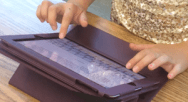
 Various types of digital devices and toys are now a given in the lives of many children — even toddlers and preschoolers. From three and four years of age, many of their play activities include a vast array of toys and books that talk, beep, sing, cue activity, and play music. Even two-year-olds quickly learn how to use digital devices — after all they are generally adept at figuring out cause and effect and how to operate buttons.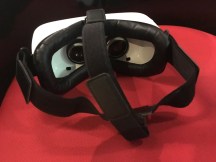
 The Media Literacy community is dedicated and passionate about its work — but not according to danah boyd (yes she spells her name this way).
 Media! Tech! Parenting!
You must be logged in to post a comment.