Posted in 21st Century Learning, 21st Century life, 21st Century parenting, 21st Century teaching, online communication, online security, parents and technology, privacy, public vs private comments, teachers, teaching digital kids

Digital Communication Disrupts the Rules of Civility, Privacy, & Integrity

Click to read the article.
Click to read the Washington Post article.

After spending years teaching digital citizenship and civility in the K-12 world, I’ve now come to the conclusion that we parents and teachers should, in the midst of teaching children, stress that there is never privacy online. Yes, I know that we already teach this — or try to — in most schools and homes, but election 2016, accompanied by the theft and sharing of emails and other connected world materials, is scary. It has proven that everyone can be hurt by what they say online — even when what is said is not intended to generate hurtfulness.

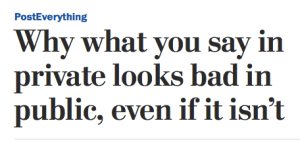
To learn much more about the lack of privacy in private communication read Deborah Tannen’s October 28, 2016 Washington Post column, Why What You Say In Private Looks Bad in Public, Even if It Isn’t. Tannen is a professor at Georgetown University and the author of the bestseller, You Just Don’t Understand.

Our confidential comments may differ from what we say in public. When our candid thoughts become widely available — yes, through hacking, but with kids, it’s through intentional sharing, gossip, or the unintentional mistakes that kids make — words can often be interpreted negatively. Moreover, at least for the time being, we live in a world where stealing a public figure’s private communications and making them public appears to be OK.

Good Quotes from Deborah Tannen’s Article  (Read the entire article for much more)           Continue reading “Digital Communication Disrupts the Rules of Civility, Privacy, & Integrity”

Posted in 21st Century life, 21st Century parenting, data collecting, digital footprints, digital life, kids and privacy, online data collecting, parents and technology, privacy

How Photos & Data Collecting Take Away Our Privacy

Screen Shot 2016-05-22 at 6.54.28 PM
A bank of computers in a data center. Via Pixabay.

Finding good resources to help young people learn and understand more about data and photo collecting is key to building strong citizens in our 21st Century digital world. We adults can also learn a lot in the process.

Interestingly, no matter how we set privacy settings (stipulating who can see our images), the sites where we post and share continually accumulate information about us  — much, but not all, gleaned from the photos themselves.  Yes, it’s about digital footprints, but it’s much bigger than that.

One article we should read is Why Photos Are The Next Big Battleground in the Fight for Privacy, over at The Next Web news site. The report is chock full of interesting information about big data and how it zeros in on our photos. It also includes sobering statistics about the number of pictures that people share in sites like Facebook, Instagram, and Google. It’s good information to share with the digital kids in your family or school. Continue reading “How Photos & Data Collecting Take Away Our Privacy”

Posted in 21st Century Learning, 21st Century parenting, digital footprings, parents and technology, privacy, sharing media, social media

Sharenting? Kids Are Beginning to Notice

Two years ago, for the first time, students took me aside to wonder aloud how to go about asking their parents not to share photos. It happened again last year when a child commented about baby photos that were especially embarrassing.

What is charting?
What is sharenting?

All of this adult sharing of kids’ images and information is called “sharenting.” A fair number of people, including researchers, are wondering about the effect that too much sharenting has on kids.

A few months ago researchers at the University of Michigan C.S. Mott Children’s Hospital conducted a survey on the subject. The hospital’s National Poll on Children’s Health investigates topics several times a year, polling adults in around 2000 randomly selected, nationally representative households, about significant health issues that relate to children. In March the  hospital announced the results of a November-December 2014 poll that asked 21st Century parents a range of questions about how they use social media to gain knowledge about parenting on social media as well as how they share information about their children.

Continue reading “Sharenting? Kids Are Beginning to Notice”

Posted in data collecting, data sharing, digital life, parents and technology, privacy

Privacy 2015 Part I: Parents Can’t Pay Too Much Attention

Screen Shot 2015-03-19 at 2.08.04 PMIt is a given in this age of connected life that our privacy is much diminished, and it does not matter whether we are children or adults. The trick seems to be for each us to make thoughtful decisions about what family members share and, as much as possible, be aware what is shared or collected about us.

For me, this has been an interesting week where privacy and kids’ privacy is concerned, because four distinct events occurred.

Continue reading “Privacy 2015 Part I: Parents Can’t Pay Too Much Attention”

Posted in 21st Century life, 21st Century parenting, online security, parents and technology, privacy

So I Just Won’t Use the Cloud! Really?

cloud storage
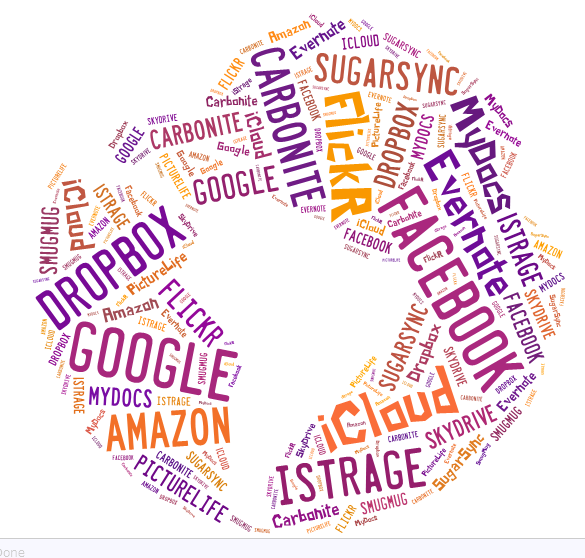
Just a few of the sites where people I know store data and photos.

Over the past several days I’ve heard more people say that they will stop using the cloud — a reaction to the stolen pictures, possibly taken from iCloud, of movie stars and celebrities (September 2014).

Hmmm…  How about being a bit more realistic?

This is a great teaching moment for 21st Century parents, kids, and anyone who works with children. We need to remind ourselves that, no matter what a website tells us, our security depends on the many steps that each of us takes to protect and reinforce our information — passwords, privacy settings, 2-step verifications. Most of use the cloud, and often we don’t even think about it or take our privacy that seriously until something goes wrong.

Continue reading “So I Just Won’t Use the Cloud! Really?”

Posted in 21st Century life, 21st Century parenting, parents and technology, privacy

Project Eavesdrop: NPR’s Story About Our Unintentional Sharing

detective-2
Picture courtesy of Ollie Olarte on Flickr. Click to visit his site.

Just what can our Internet activity tell about us, and who can find the information? What do we unintentionally share? We tell our children not to share specifics kinds of personal information, but much of that information is somewhere — in the digital ether — a result of our various digital footprints, searches, apps settings, and smartphone connections, and waiting to be discovered.

Given the news about the massive amount of data collected by the National Security Agency, NPR reporter Steve Henn set out to find out how much of our data “seeps” out, potentially allowing others to learn all kinds of personal information about a person. Henn used himself as a test subject.

He called his story Project Eavesdrop, and NPR featured a radio report and posted the story online during the second week of June 2014 (a time when so many of us, busy with the end of the school year or the beginning of summer activities, missed this story).   Continue reading “Project Eavesdrop: NPR’s Story About Our Unintentional Sharing”

Posted in 21st Century Learning, connected learning, online learning, online tracking, privacy

Is Privacy Protected When a Student Learns Online?

Image made with Wordfoto with a picture taken at the Library of Congress.

If you think that the digital world may be getting it together on the privacy front, at least when it comes to children, think again.

A disturbing article, Data Mining Your Children, published in Politico, describes how for-profit online learning companies provide digital textbooks, connected learning programs, and record keeping options while collecting an enormous amount of information on individual students. The question is, what will they do with this personal data? Politico is a Washington newspaper that covers national government policy and politics.           Continue reading “Is Privacy Protected When a Student Learns Online?”