The ComScore DataMine site features this graph depicting the growth of iPad ownership across income categories in the United States. And these numbers are before the iPad III goes on sale.
I’ve just finished re-reading The Price of Privilege, a 2008 book by Madeline Levine. Last week at a professional development event at my school, I heard Dr. Levine speak, while taking nearly three pages of notes and recalling some of the parenting strategies my husband and I used when our daughter, now out of graduate school, was in middle and high school.
Almost every concern that Dr. Levine raised — perfectionism, discontent, and insecurity — is familiar after years of parenting and teaching. I especially like her descriptions of effective parenting. Most importantly, when I read her book four years ago and reread it again last week, I thought about sleep and how much of a priority it needs to be for parents and children.
After the lecture my husband and I thought back to our daughter’s middle and high school years, considering all of the things we did well or could have done better. In the process we remembered the emphasis our family placed on getting enough sleep and eliminating computer screens each evening — sometimes to our daughter’s chagrin. Continue reading “Kids, Parenting, Gadgets, and Sleep…”→
The April 30-May 6, 2012 week-long activity, which for years was a turn-off-the-TV event, aims to encourage children and their families (and yes, adults with their digital devices), to be less dependent on activities in front of screens, encouraging all of us to consider other types of activities such as reading, playing outside, board games and exercise.
The point of Screen-Free Week is not to forget about digital activities, stop doing homework, and ignore the work that needs to be accomplished each day. Rather it’s a time to think carefully about the digital screen logjam in our lives and consider just how much time we are spending in front of TV, computers, iPods, iPhones, Blackberries, and other gadgets — and whether some of that time is better used for other things.
Just about everyone needs to come up with strategies to balance screen time activities with the rest of our lives, perhaps adding a bit more variation and creativity to our daily endeavors. But the week can also be a time to think about the quality of life. We should be asking ourselves, “How can we use our devices to learn and collaborate more, and are there ways they might help us grown into more productive citizens?”
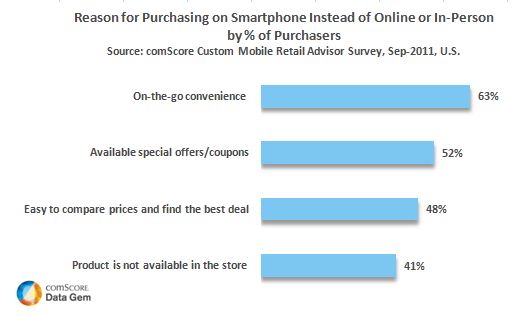
The December 6, 2011 ComScore Data Mine features this interesting data chart that graphs the reasons that people purchase smartphones. The leading reason?
People appreciate the convenience of smartphone ownership. Is staying in instant communication with kids one of these conveniences?
The challenge for parents when they purchase these gadgets for kids? Balancing appropriate use with convenience. Read the MediaTechParenting family mobile phone contract.
Check out graph and explanation at the ComScore site.
I’ve just read a November 28, 2011 Bloomberg article, iPad Crazed Toddlers Spur Holiday Sales. OK, the title is a bit overly dramatic, but it’s an interesting read, describing the demand for tablets of all kinds and kids’ motivation to use them.
Seriously, though, the tone of the article makes me worry a bit. As a confirmed techie, gadget lover, educational technology specialist, teacher, and parent, I know that children also need lots of outside play time and plenty of experiences working/playing with others. We don’t know what the jobs will be in 15 years when these kids are looking for employment, but we do know that their superior technology skills will matter little if they don’t have great people skills — understanding how to share, take turns, and work collaboratively.
The article reminds parents about the American Academy of Pediatrics recommendations about no screen time (or very little of it) for children under two years of age. And please — this is a plea from me — avoid, as much as possible, using these digital devices as electronic pacifiers, the term used in the article by Victoria Nash of the Oxford Internet Institute(England).
Read You Make the Call on Kids’ Phones in the Sunday, November 27, 2011 Washington Post. Written by columnist Michelle Singletaryand aimed at the parents of digital kids, the article examines the practice of giving children cell phones at younger and younger ages. The author believes that, in reality, cell phones are simply playful gadgets that easily confuse children about the difference between needing things and wanting things.







 Media! Tech! Parenting!
You must be logged in to post a comment.