
Posted in 21st Century parenting, acceptable use, digital parenting, modeling for kids, parents and technology

Sharenting? A Child’s Digital Future Requires Careful Consideration Today

It was so much easier when we shared in photo albums!

I’ve often written about sharenting — defined as digital age parents sharing their 21st Century kids’ photos, stories, and information via Facebook, blogs, and other public online social media.

If you are mulling over the sharenting topic and want more guidance and perspective, take a few minutes to read a just-published article over at Sonya Livingstone’s Parenting for a Digital Future blog. The article, written by Alicia Blum-Ross, Where and When Does a Parent’s Right to Share End Online?, discusses the ways that bloggers who are also parents think about sharing information online and the “digital dilemma” that they experience. Blum-Ross also explores how these parents consider the future that their children will experience while growing up and examining the digital information about themselves.

Continue reading “Sharenting? A Child’s Digital Future Requires Careful Consideration Today”
Posted in 21st Century Learning, 21st Century parenting, back-to-school, digital footprints, digital parenting, digital parenting checklist, parents and technology

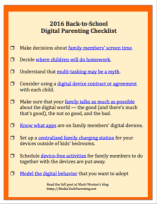
9 Digital Parenting Back-to-School Tips – 2016-17 (With Printable PDF)

Screen Shot 2016-08-21 at 9.44.02 PM
Click to download a PDF document.

You can also read a 2019-20 back-to-school update of this post.

What can parents and teachers do to ensure that digital kids, with their hand-held devices, connected school activities, homework, and other online activities, get off to a good start at the beginning of the school year?

Back-to-school preparation is more than school supplies, lunch boxes, and carpool arrangements. It also involves reviewing and articulating connected-life expectations with family members.

To help you consider the issues in your 21st Century child’s digital life, and your own, use this nine-item back-to-school digital parenting checklist to get started. Continue reading “9 Digital Parenting Back-to-School Tips – 2016-17 (With Printable PDF)”

Posted in 21st Century life, 21st Century teaching, advertising, civics, civility, credibility, digital devices, digital health and wellness, digital kids, digital life, ethical behavior, information credibility, media and family life, parents and technology, social media, teaching digital kids

Civility Is Now Devalued — So What Will Adults Do About It?

dry-cracked-earth-texture-408x544
Image from http://www.public-domain-image.com.

If there is ever a time to emphasize ideas on civility, commenting, fact-checking, and media literacy, it’s during an election. Children, preadolescents, and teens will learn much during the 2016 presidential campaign just from all the watching. (Read my post The Children are Watching and Seeing, Listening and Hearing.)

Our traditional expectations for civility and ethical behavior are cracking apart right before our eyes.

On the basis of what’s happened at recent political conventions and the beginning of the election season, young people will be witnessing name-calling, stereotyping, hateful comments, online hate, and in some cases veiled bodily threats. Kids will hear things on TV at home and on the televisions that are broadcasting in lounges, waiting rooms, doctor’s offices, and everywhere else. They will hear radios broadcasting the news at home and in other peoples’ homes. And, of course, there’s social media.

Continue reading “Civility Is Now Devalued — So What Will Adults Do About It?”

Posted in 21st Century life, 21st Century parenting, digital devices, digital devices and gadgets, digital life, parents and technology, smartphones, teamwork

The Right Age for a Smartphone? Interesting NY Times Article

os7iphone-2Take a few minutes to read What’s the Right Age for a Child to Get a Smartphone? by Brian X Chen. The July 20, 2016 New York Times article includes interviews with Internet Safety experts and contains some advice from other parents.

The Take-aways? (Well, we know most of this, but reminders are always useful.)                      Continue reading “The Right Age for a Smartphone? Interesting NY Times Article”

Posted in 21st Century life, 21st Century parenting, coding, collaborating with kids, Conversation skills, digital kids, family conversations, gadgets of convenience, modeling for kids, parents and technology

Digital Kids’ Summer – Collaborative Projects & a Printable

** Please feel free to share this post with parents at your school
or parent group using this PDF. **

IMG_4257Summertime, summertime, sum, sum, summertime!
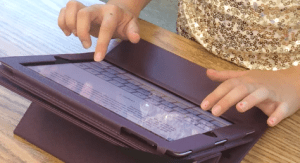
Summer 2016 is almost here. It’s a great time for family fun, outdoor activities, visiting museums and historical sites, and choosing from all sorts of camps and special programs. Problem is, many kids spend a lot of their summer vacation in front of screens, and it’s one of the hardest time of the year to focus on digital moderation.

With less frenetic schedules and no school, the summer months are a good time for parents to learn more about the digital whirl that’s such a huge part of kids’ 21st Century lives. So when school is out, plan to do some connected world exploring and learning together, concentrating on projects that can help family members — children and their parents — connect with interesting and meaningful work together. Everyone will figure out more about digital life and add some variety to the types of digital activities that they typically do.

Below are 10 family digital project summer suggestions — all activities require collaboration —  to consider for the upcoming summer vacation.

Ten Summer Digital Projects for Families                        Continue reading “Digital Kids’ Summer – Collaborative Projects & a Printable”

Posted in 21st century job hunting, 21st Century life, anonymity, anonymous apps, apps, citizenship, conversations on commenting, cyber-bullying, digital citizenship, digital parenting, educating digital natives, family conversations, parents and technology

Teach Children About Anonymity Before They Make Mistakes

childing typingAnonymity presents digital kids with a complicated social obstacle — one they must confront and understand if they are to protect themselves from potential problems. Digital anonymity is not a friendly concept for growing children. I’d argue, in fact, that it’s downright dangerous, but app makers continue to offer the feature. For now these apps are a part of many digital kids’ daily lives, often negatively affecting their digital wellness.
No child with a connected device is immune from possible trouble caused by anonymity, because issues can arise in an instant, often as a part of routine online social interactions. Anonymous opportunities take advantage of kids’ developing brains, encouraging them to make public mistakes in judgment, and enabling young people, sometimes as young as third or fourth grade, to act and communicate with less and less restraint. A mistake made with an app’s anonymity feature can be hurtful or humiliating.

Continue reading “Teach Children About Anonymity Before They Make Mistakes”

Posted in 21st Century Learning, 21st Century parenting, 21st Century vocabulary words, cyber-bullying, digital citizenship, digital learning, digital life, digital parenting, kids and privacy, parents and technology

Building Habits of Privacy Into the Conversation & the Curriculum

21st Century Vocabulary Words — Privacy

Young people confuse privacy with safety.

While most kids carefully follow the rules that parents and teachers set out — no names, addresses, telephone numbers, or other personal information — when it comes to the big privacy picture, it turns out that many children understand very little about their personal data, how it accumulates, and how it affects privacy. (Check out my privacy links at the end of this post.)

Thus we need an alternate privacy teaching strategy that helps 21st Century kids — all ages really — understand how their digital-world data accumulates — even when users observe the all-important safety rules.

Bruce Schneier, a fellow at the Berkman Center for Internet and Society at Harvard Law School, writes about and consults on data and security, and his blog is Schneier on Security. In a 2010 post, A Revised Taxonomy of Social Networking Data, Schneier suggests how to classify data into six personal categories, the data generated as we use social media (and I’ll add other websites and games), and how all this data creates an individual’s digital profile. (Note: profile is another 21st Century vocabulary word).

Continue reading “Building Habits of Privacy Into the Conversation & the Curriculum”