Posted in coding history, computer history, early computing, women and computing

ENIAC: The First U.S. Computer and How Women Made It Work

ENIAC 6People — young and old — enjoy learning about the first computer in the United States, ENIAC, booted up in 1946. Every 21st Century learner needs to know about this amazing machine and the story of the first programmers.

A few weeks ago I visited Philadelphia and had a special opportunity to visit ENIAC. This huge, old-fashioned computer is owned by the Smithsonian Institution  (read this article), but parts of it are still housed in a building at the University of Pennsylvania, almost exactly where it was originally set up. ENIAC could be  programmed to do extensive calculations much faster than humans could calculate.

The letters in ENIAC stand for Electronic Numerical Integrator And Computer.                             Continue reading “ENIAC: The First U.S. Computer and How Women Made It Work”

Posted in parents and technology

Privacy 2015 Part III: Pew Privacy Report Shows Adults’ Concern About Personal Info

Screen Shot 2015-03-19 at 2.08.04 PMA privacy report, just issued by the Pew Internet and American Life Project, addresses the views of American adults, now that the country is two years past the disclosure of digital world “information collecting” by the National Security Agency (NSA).

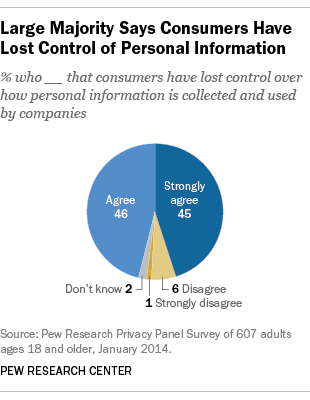
FT_15.01.15_privacy_personalInfoOne especially interesting finding of the report is that 91% of the adults surveyed believe they have lost control of their personal information (how it’s collected and how it is used). A majority of survey respondents also indicated that they would like more control over advertisers’ access to and uses of personal information. Read more about the report.

Often we do not think about the many digital footprints that adults leave behind in the digital world — digital footprints that give companies access to more information. Yet, as I work with children in the K-12 world, it is not uncommon for them to wonder aloud about the privacy of their parents. My students, as they learn about their own personal information dos and don’ts, also apply these lessons to the digital profiles of the adults in their lives. Continue reading “Privacy 2015 Part III: Pew Privacy Report Shows Adults’ Concern About Personal Info”

Posted in 21st Century life, data collecting, digital devices and gadgets, digital life, kids and privacy, parents and technology

Privacy 2015 Part II: Find Out How Invisible Trackers Collect Your Information

Screen Shot 2015-03-19 at 2.08.04 PMWe hear, over and over, about how people are tracked online. Now we have a way to watch for ourselves and learn. Download Ghostery and let it tell you who is keeping track of your data. When I downloaded it to my computers, it was so amazing that I could not believe my eyes!

Screen Shot 2015-03-19 at 2.57.06 PM
Ghostery identified 4 trackers on Word Press.

The quick install, available for every browser, makes it possible to identify and display any website tracker that is collecting information. As a user moves from website to website the number of trackers changes. It’s amazing, because, despite the fact that I have checked the box in my browser asking sites not to track me … they do.

At first I was skeptical, so I went to the Ghostery website to find out why a company would “out” so many other companies. There’s an enlightening video to watch and lots of information about how and why the company does what it does. Read more on the company’s about page.

If you don’t know much about tracking check out the first post in this series.

Continue reading “Privacy 2015 Part II: Find Out How Invisible Trackers Collect Your Information”

Posted in data collecting, data sharing, digital life, parents and technology, privacy

Privacy 2015 Part I: Parents Can’t Pay Too Much Attention

Screen Shot 2015-03-19 at 2.08.04 PMIt is a given in this age of connected life that our privacy is much diminished, and it does not matter whether we are children or adults. The trick seems to be for each us to make thoughtful decisions about what family members share and, as much as possible, be aware what is shared or collected about us.

For me, this has been an interesting week where privacy and kids’ privacy is concerned, because four distinct events occurred.

Continue reading “Privacy 2015 Part I: Parents Can’t Pay Too Much Attention”

Posted in 21st Century life, digital learning, parents and technology

So What Else Can Google Do?

Made with Tagul!
Made with Tagul!

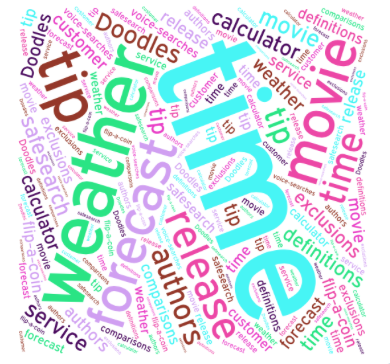
Did you know that, besides searching, Google can carry out a variety of simple tasks in daily life — making 21st Century connected life easier or at least a bit quicker? Amaze your children or students by trying out and sharing a few of these Google bells and whistles. A few of the tasks may also support learning activities.

  1. Use Google as a timer by typing set time to 24 minutes.
  2. Find a movie release by typing the name of the movie and the word release: e.g., Second Best Exotic Marigold Hotel release.
  3. Check out the sunrise and sunset times by typing sunrise in [town or city].
  4. Get the weather forecast by typing forecast [town or city].
  5. Get a definition by typing define [word here].
  6. Figure out a tip by typing tip calculator.
  7. Get songs by groups you like by typing songs by the [group name].
  8. Convert measurements by typing convert and the units that you want to convert to: e.g., convert 3 yards to meters.
  9. Find books by a certain author by typing books by [author’s name].
  10. Get a definition by typing define [word here].

Check out even more!      Continue reading “So What Else Can Google Do?”

Posted in 21st Century life, apps, digital kids, parents and technology, young innovators

12-Year-Old Researches Male & Female App Characters

Screen Shot 2015-03-05 at 10.51.32 AM
Symbols from http://www.flickr.com/photos/43812360@N05/6123054395 with my labels added.

With all the talk in today’s educational world about innovation, inventing, and making things, we sometimes forget that lots of good ideas still develop when an individual takes the time to organize a basic research project, sees it through to completion, and then clearly writes and reports about it. This process takes time.

Sometimes it seems that time is lacking when it comes to many of today’s digital products, an app for instance. Once it’s developed and deployed, it often feels like no one developing the product took enough time to think about and develop perspective about how many ways it might affect consumers.

Parents and educators will want to read I’m a 12-Year-Old Girl: Why Don’t the Characters in My Apps Look Like Me?,appearing in the March 4, 2015 Washington Post and written by Madeline Messer, a digitally native 12-year old. This young woman took the time to investigate the potential effects a product can have on individuals.

Continue reading “12-Year-Old Researches Male & Female App Characters”

Posted in 21st Century life, 21st Century parenting, data collecting, digital footprings, digital footprints, parent child conversations, parents and technology, searching

Google Dashboard: A Connected-World Teaching Tool for All Ages

A screen show from the Google Dashboard.
A screenshot from the Google Dashboard.

If you use Google, take a few minutes to check out the Google Dashboard and look over a detailed digital footprint snapshot of your Google activities. Learning about digital footprints is an important 21st Century connected-world skill.

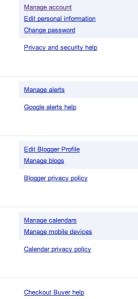
The Dashboard keeps track of everything — and I mean everything — that you do on Google. It’s a dynamic digital footprint collection. To sign in and examine your Gmail or Google Alerts is easy, and you can also check out the other features offered by Google such as Google Docs, Google Calendar, Blogger, or Google Reader (many more Google products are available and new ones become available on a regular basis).

Google Dashboard is an awesome connected-world teaching tool for 21st Century children at any age and for adults, because it makes a point — concretely — about the amount of information that Google accumulates on each of us. Many people are surprised, and a bit disconcerted, on a first visit, because the Dashboard depicts a good deal about each user.

Continue reading “Google Dashboard: A Connected-World Teaching Tool for All Ages”