Posted in digital citizenship, digital learning, family conversations, parents and technology, privacy

Safe Passwords: A Reminder for Parents, Kids, and Teachers

A recent New York Times article, Young, in Love, and Sharing Everything, Including a Password, reminds parents and teachers to take time to talk to adolescents about password privacy. Pulitzer Prize-winning journalist, Matt Richtel, reports that kids share passwords — just as they share gifts and secrets — as tokens of trust and affection. But often an adolescent relationship doesn’t last and neither does the trust. What happens afterward can lead to hurt and humiliation.

Don’t wait until pre-adolescent years to start talking about digital topics such as password privacy. Family conversations, at home and at school, can begin as soon as children receive their first passwords, and over time these talks help kids develop a sense of personal privacy. Discussions can be brief and range over lots of digital topics, but they should occur regularly.

Many adults will be pleasantly surprised that children want to talk about these issues. My post, The Digital Citizenship Minute at the Teaching Tolerance blog, highlights some of the topics fifth graders want adults to address.

Posted in digital citizenship, digital parenting, family conversations, parents and technology, privacy, resources to read

SOPA Best Coverage: We Need to Learn More Since It Will Be Back

So maybe, other than discovering that Wikipedia wasn’t working very well, you did not really get into all of the brouhaha about SOPA.

Fine, but if you read blogs or write for blogs or just do a lot on the web, you need to learn a lot about this issue. Below is a basic reading list, culled reliable press sources, to help you understand more.

What stands out in many of the articles, is how many of our representatives in Congress do not know or even understand enough about the digital world to be making policy about it. I wonder how many representatives and senators based a decision on a single staff memo or an index card with important (but perhaps poorly explained) bullet points? Right now the bill is not going anywhere, but this issue will come back.

Educate yourself by reading some of the articles below. Continue reading “SOPA Best Coverage: We Need to Learn More Since It Will Be Back”

Posted in digital devices and gadgets, digital parenting, family conversations, parents and technology, Screen-Free Week, setting technology limits, teaching digital kids

Screen Free Week — for Schools, Churches, and Families

Take the Screen Free Week Challenge!

Every year the Campaign for a Commercial-Free Childhood sponsors Screen Free Week. 

The April 30-May 6, 2012 week-long activity, which for years was a turn-off-the-TV event, aims to encourage children and their families (and yes, adults with their digital devices), to be less dependent on activities in front of screens, encouraging all of us to consider other types of activities such as reading, playing outside, board games and exercise.

The point of Screen-Free Week is not to forget about digital activities, stop doing homework, and ignore the work that needs to be accomplished each day. Rather it’s a time to think carefully about the digital screen logjam in our lives and consider just how much time we are spending in front of  TV, computers, iPods, iPhones, Blackberries, and other gadgets — and whether some of that time is better used for other things.

Just about everyone needs to come up with strategies to balance screen time activities with the rest of our lives, perhaps adding a bit more variation and creativity to our daily endeavors. But the week can also be a time to think about the quality of life. We should be asking ourselves, “How can we use our devices to learn and collaborate more, and are there ways they might help us grown into more productive citizens?”

The organization’s website describes the week as a celebration. Continue reading “Screen Free Week — for Schools, Churches, and Families”

Posted in parents and technology

Take Action on SOPA – If you Read or Write for Blogs

Take time today to call (that’s right telephone) Congressional offices

and tell them that this iteration of SOPA will encourage

all sorts of censorship — and it’s wrong!

Call the US Capitol operators and ask for your representatives’ office telephone numbers.

202-224-3121

Look up your Representatives or Senators here.

Express your opinion! Continue reading “Take Action on SOPA – If you Read or Write for Blogs”

Posted in gadgets of convenience, parents and technology

No More Overheated Laptop — Best New Gadget Support!

If you are at all like me, you use a laptop much of the time while it’s sitting — well —  in your lap. Problem is, they get hotter and hotter the longer we work, and eventually, it’s downright uncomfortable, not to mention bad for the computer. If I put the laptop on a pillow, my usual solution, it still gets hot and so does the pillow, which can’t be good.

For Christmas, in a package that claimed to be from Steve Jobs <grin>, I received a Targus Lap Chill Mat Notebook fan, and it has solved the heat problem. When I work, the flat plastic  fan sits on my lap underneath my laptop and connects, via USB, to my Macbook. As soon as it’s connected, the fan comes on, circulating air underneath the laptop and no heat accumulates. It’s a miracle!
Continue reading “No More Overheated Laptop — Best New Gadget Support!”

Posted in assessing learning, digital citizenship, digital parenting, parents and technology, teaching digital kids

Assessing Students but Not With Grades

I’ve just finished up a digital citizenship unit with my students, covering privacy, digital footprints, digital communication and the lack of human cues, and a bit about how easy it is for a person to cyber-bully using sarcasm, criticism, and flippant comments. It’s a lot to cover in a month, but we manage quite well.

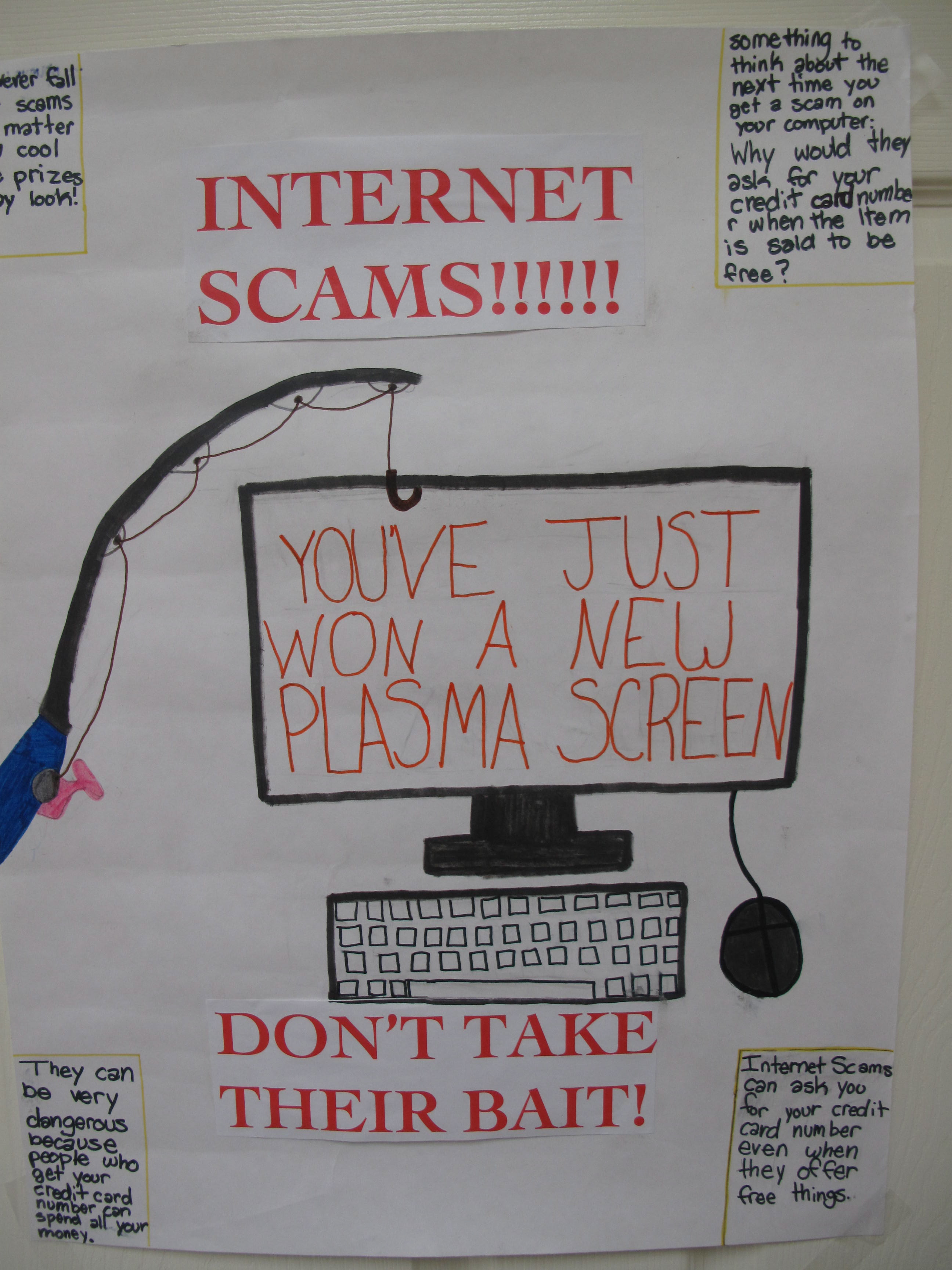
After we complete the classroom activities, and most of these are collaborative smaller projects, the children complete a final poster project. I expect the poster to communicate as much information as possible on one of the topics. The posters are not digital creations because we hang them in a school hallway — a digital citizenship exhibition — for a month in the winter.

I am always amazed at the way these posters demonstrate how much my students have learned. Some children focus on the artwork, while others are more text oriented. Still others use a computer, clip art, or a presentation tool, combining components to make their posters.  Continue reading “Assessing Students but Not With Grades”

Posted in 21st century job hunting, parents and technology

IBM Benefits from Young Adult Social Networking Skills

Read the entire article.

Perhaps the parents of digital kids don’t have to worry quite so much about the focus on

According to a San Jose Mercury News report, IBM is exploring ways to use social media to improve its business practices.  The company, working with San Jose State University graduate and undergraduate students, has identified potential ideas, related to social media, to connect and communicate.

The article, IBM Sees Students’ Facebook as More than a Waste of Time (yes, the headline could be grammatically tightened up),describes how the students, with so much experience using social media, are presenting all sorts of  ideas that can possibly transform the connections that employees make with one another and with customers.

Another example that demonstrates how multi-generational groups that include (and different perspectives) can come together to make good discoveries.

BONUS: This type of activity prepares students to understand and work in the adult world.