Posted in cultural changes, digital parenting, parent child conversations, parents and technology

Staying Power — Is there Such a Thing Anymore?

My First Palm (PDA)

I’ve been thinking a lot about staying power and about the importance of understanding just how fast things can change in the digital world. Both are great topics for family conversations about 21st Century life.

My Current iPhone 4S

In Bye Bye BlackBerry. How Long Will Apple Last? Forbes writer Adam Thierer describes a historical pattern — digital information giants rising and eventually declining when something better, more interesting, and useful comes along.

Using Blackberry as the current example, with occasional references to Palm devices, Thierer points out that these companies are classic examples of companies, “… with a static snapshot mentality disregarding the potential for new entry and technological disruption.”

I’ve never owned a personal computer other than a Mac, so I understand a lot about rising and falling fortunes and how Apple is currently riding high. I also, fondly remember my first Palm device and how revolutionary it seemed.

Still, it’s interesting to think about what new and exiting gizmos may be residing in someone’s garage, basement, hard drive — or imagination — and how revolutionary they may seem compared to the products we love right now.

Posted in cell phones, digital learning, digital parenting, electronic communication, online communication, parent child conversations, parents and technology

Sherry Turkle TED Lecture-Connected but Alone?

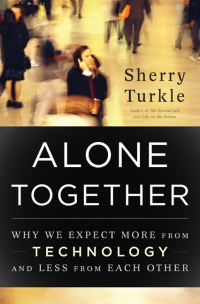
The TED Talk site just posted the most recent lecture by MIT professor and psychologist Sherry Turkle. It’s embedded below.

In her presentation, Professor Turkle illustrates several of the most compelling issues from her recent book, Alone Together. She points out that technology may give us an illusion of togetherness with others, but she challenges us to understand that digital connectedness is not a substitute for person-to-person interaction.

  • Are we hiding from each other even as we are connected?
  • With fewer face-to-face conversations with one another are we less able to learn how to have conversations with ourselves?
  • Do feelings that no one is really listening to us make us want to spend more time with machines that make us feel like these devices are listening to us?
  • Are people increasingly willing to settle for the pretend empathy of devices and robots?

Continue reading “Sherry Turkle TED Lecture-Connected but Alone?”

Posted in digital parenting, online databases, parent child conversations, parents and technology, social media, supervising kids

Effectively Guide Your Digital Kids-10 Tips for Grades 4-6 and Beyond

My design with images from the Apple website.

1.    Save Facebook, Google+, and other big-time social networking experiences for high school.

2.    Know your child’s passwords.

3.    Keep online computer activities out of the bedroom. Also, plan on no-screen wind-down time during the last half hour before bed. (Yes, even those bedtime friendly Kindles – why not use bedtime-friendly books?)

4.    Set up an overnight charging area for cell phones and other gadgets outside of the bedroom, preferably on another floor or part of your home.

5.    Consider writing up digital device contracts and using these agreements with your child. Feel free to take away privileges, or even the device, if your expectations are not met.

Continue reading “Effectively Guide Your Digital Kids-10 Tips for Grades 4-6 and Beyond”

Posted in cell phones, digital devices and gadgets, digital parenting, gadgets and sleep, parents and technology, teens and technology

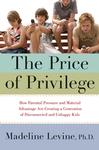
Is the Price of Privilege too Little Sleep?

I’ve just finished re-reading The Price of Privilege, a 2008 book by Madeline Levine. Last week at a professional development event at my school, I heard Dr. Levine speak, while taking nearly three pages of notes and recalling some of the parenting strategies my husband and I  used when our daughter, now out of graduate school, was in middle and high school.

Almost every concern that Dr. Levine raised — perfectionism, discontent, and insecurity — is familiar after years of parenting and teaching. I especially like her descriptions of effective parenting. Most importantly, when I read her book four years ago and reread it again last week, I thought about sleep and how much of a priority it needs to be for parents and children.

After the lecture my husband and I thought back to our daughter’s middle and high school years, considering all of the things we did well or could have done better. In the process, we remembered the emphasis our family placed on getting enough sleep and eliminating computer screens each evening — sometimes to our daughter’s chagrin. Continue reading “Is the Price of Privilege too Little Sleep?”

Posted in 21st Century Learning, commenting, conversations on commenting, cyber-bullying, digital citizenship, digital parenting, family conversations, parent education, parents and technology

Removing Racist and Hateful Comments: A Simple Relevancy Test

Click to hear Tyler’s dad reading a statement after the jury returned its verdict.

After the jury announced its verdict in New Jersey I watched Associated Press video statement read by Tyler Clementi’s father. Sad and clearly with a heavy heart, he nevertheless looked to the future in a way that most of us could not have done had we lost a child the way he lost Tyler. Then I glanced down at the YouTube comments — just about every one included a gay slur or offensive language, and I was disgusted. The comments were not relevant.

Racist and hateful online comments demean writers, video-makers, and people who thoughtfully share digital content. It’s becoming tiresome. Masquerading as run-of-the-mill responses at the end of articles and videos – they are actually cyber-bullies’ remarks left here and there with the goal of offending and hurting others. The time has long past for comment and blog editors everywhere  — but especially at Google’s YouTube — to set up and enforce guidelines.

I know that the United States Constitution guarantees freedom of speech; however, it’s not freedom of speech we are observing but the freedom to run off at the mouth and bully others in ways that are not relevant to the content. As a result we are teaching all sorts of silent lessons — the kind we don’t really intend to teach to young people as they grow up.

Continue reading “Removing Racist and Hateful Comments: A Simple Relevancy Test”

Posted in 21st Century Learning, digital learning, digital parenting, electronic reading, i-Books and e-Books, iPhones and iPads, resources to read

My Roundup of e-Books and e-Self-Publishing

KQED MediaShift posted a March 15, 2012 list of recently published articles on e-books and self-publishing. On this page you can also sign up for a regular self-publishing e-newsletter from MediaShift.

A Few More Self-publishing Resources From that I’ve Read Over the Past Few Months

Posted in 21st Century Learning, digital parenting, online education, online learning, parents and technology, teaching digital kids

Finding TED Talks Just Got Easier!

Finally!!

Identifying relevant TED Talks on various subjects just got easier.

Parents, teachers, lifelong learners: these talks contain wide-ranging information, ideas, and lots of content that 21st-century learners be used in reports, presentations, and other learning activities.

According to the e-mail with the graphic below, TED Talks will now be posted on iTunes organized by curated collections students, educators, families, and, of course, lifelong learners.  Click on the image to visit iTunes, choose a collection, and download the lectures that interest you. The link may be slow, but you can always go directly to iTunes.

Expect more from TED.

Check out this post about Teaching With TED. You can also read TED Talks for Teaching English. Another essay, by Georgia Tech professor Amy Bruckman, addresses the tremendous growing power of the TED Brand.