Posted in 21st Century parenting, digital kids, digital learning, digital learning resources, digital literacy, parents and technology

My Two Blog Posts at A Platform for Good

Blogging can be a solitary endeavor, so it’s exciting when another cool website publishes a blogger’s thoughts and ideas. Over the past several weeks I’ve had two blog posts published over at A Platform for Good (PFG), a part of the Family Online Safety Institute (FOSI).

PFG
Visit A Platform for Good

PFG aims to encourage parents, kids, and educators to connect with one another and think about “doing good” in the digital world. The website and the blog focus on a range of interesting topics with lots of ideas on digital parenting, learning, growing up in today’s world, and many other authentic opportunities  — all great for us to have access to in a connected world.

Continue reading “My Two Blog Posts at A Platform for Good”

Posted in 21st Century parenting, 21st Century teaching, digital citizenship, digital kids, digital parenting, digital world conversations, workshops and conferences

Soundbites From Day Two of FOSI 2013 – Conference Post #3

fosi2013While I could not spend the entire day at the FOSI2013 conference, I joined the event around 1:00 P.M. after a morning at school and just in time for a terrific panel, Child Psychology and the Effects of Technology. Later I attended a session, Creating Trust on Social Networks, with panel members from the social media industry who described in some detail how vendors and social media sites strive to commit themselves to user support, troubleshooting, problem-solving, and integrity — in theory, above profit concerns.

As usual, each of the break-out periods featured two sessions — topics that I really wanted to attend but scheduled at the same time — so I had the difficult task of making choices. Because FOSI2013 provided a detailed schedule before the conference began, I arrived with a pretty good idea about which session related more to the issues that I am currently thinking about and coping with at my school. Still, making this type of choice at a conference is always challenging. I’ve tentatively arranged to get together, face-to-face, with local colleagues who also attended the conference and swap notes about the sessions that we missed.

I might mention here that during a break my edtech colleague, David, and I struck up a conversation with Patricia, a conference attendee and government official from Kenya. She had arrived just before the conference and was leaving almost immediately afterward. He asked her if she would be attending the FOSI2014 conference next year and invited her to plan a few extra days and visit his school. I  chimed in and offered an invite to mine. Then we told Patricia that our independent school technology community is close-knit, and would welcome her at their schools, too.

To round out the afternoon, conference attendees all came back together to hear a group of experts discuss and distill some of the issues — privacy, digital citizenship, parenting, social media, connected life — that FOSI featured during the two-day conference. This was one of the most engaging conference activities, I think, because of the way the panelists — a journalist, an academician, a therapist, and a legal scholar — ranged back and forth over the topics connecting events and adding their own information.

Continue reading “Soundbites From Day Two of FOSI 2013 – Conference Post #3”

Posted in 21st Century parenting, 21st Century teaching, digital citizenship, digital kids, digital learning, digital parenting, educating digital natives, kids and privacy, parents and technology

Soundbites From Day One of FOSI 2013, Conference Post #2

fosi2013Some of these ideas come from researchers describing the results of various studies. Others come from presenters’ comments. My apologies for not connecting individuals with their comments. 

I am drawing from my 30 pages of actual handwritten notes (handwritten because the seats were not a comfortable height for me to use my iPad).

In the Digital World

  • Six billion people have access to a cell phone in today’s world — more than have access to clean toilets.
  • The enemy of empowerment is fear and lack of expertise.
  • Be the change that you want to see in the world. (a Gandhi quote)
  • Children are using the Internet at younger and younger ages.
  • Surveillance does not create safety — only the illusion of safety.
  • Think less about digital citizenship. The Internet is a huge part of life and we are citizens on and offline.
  • Digital world communication often eliminates a person’s visual and aural signals setting the scene for misunderstanding.

Teens                                             Continue reading “Soundbites From Day One of FOSI 2013, Conference Post #2”

Posted in 21st Century Learning, 21st Century parenting, digital citizenship, digital kids, digital learning, digital parenting, educating digital natives, parents and technology

Observations from FOSI 2013 – Conference Post #1

fosi2013I am away from school today, attending the Family Online Safety Institute (FOSI) 2013 conference in Washington, DC. I plan to post several times over the course of the two days, and because I am putting connected-world sharing above almost-perfect prose, I’ll make basic edits as I write but spend more time tonight and tomorrow fine-tuning my posts.

Check out the FOSI Annual Conference Program!

The conference, held in the Ronald Reagan International Trade Conference, features all sorts of digital life movers and shakers who offer information and guidance to parents, children, and educators.

One always has interesting first impressions at the beginning of any conference. Is it easy to get settled? Yes. Is the wifi ready and easy for us to use? Yes, and I am using it now. Are the people friendly and helpful? A definite yes. And finally, does the conference facility have a coat check? Yes! There’s nothing worse than toting around a coat all day during a conference.  It remains to be seen if it will be easy to recharge my laptop when necessary, but I expect that will not be difficult either.

So now I get to excitedly anticipate the FOSI program. I await the panel on new research. I’m eager to hear from danah boyd (lower case intentional), especially about her upcoming book, It’s Complicated. (Editor’s Note: Even when I knew just a few of the many wonderful things about danah I was already a fan just because she attended the same university as my daughter.) Another author I’ll be interested to hear is Catherine Steiner-Adair, whose book, The Big Disconnect, is my current read and featured on the front of this blog.

Continue reading “Observations from FOSI 2013 – Conference Post #1”

Posted in 21st Century parenting, 21st Century teaching, digital citizenship, digital kids, kids changing lives, online safety, parents and technology

Digital Childhood and Technology: Another Good NPR Series

All Tech Considered
Visit All Tech Considered

Parents and educators can learn a lot about children’s digital lives — and the importance of helping young people develop strong digital citizenship skills — by listening to a series of broadcasts from National Public Radio (NPR) on raising digital natives (also available in print). The radio reports focus on children’s experiences in daily connected life and present wide-ranging information about the responsibilities of parenting 21st Century digital kids. All of the stories are posted at All Tech Considered blog, but I’ve included links for each story below.

The entire set of news stories, shared by a number of different NPR reporters, contains information that can help parents and educators think more carefully about how to strengthen their roles in children’s lives.

Continue reading “Digital Childhood and Technology: Another Good NPR Series”

Posted in 21st Century Learning, 21st Century parenting, 21st Century teaching, digital citizenship, digital kids, ethical behavior, parents and technology

Is It Digital Citizenship or Just Plain Citizenship?

dewey quoteAs the lives of my students, online and off, grow more complex by the day, I spend a good deal of time helping them learn more about digital citizenship. Today the digitally connected, always-on world presents students, teachers, and parents with confusing questions and baffling behavior expectations.

But wait a minute!

Is this digital citizenship or just plain citizenship? Building strong 21st Century citizens is of paramount importance whether we are living our lives offline or on, and we need to avoid using old-fashioned compartmentalized instruction in a connected world.

The Merriam Webster Dictionary defines citizenship as “The qualities that a person is expected to have as a responsible member of a community,” and helping students shape themselves into responsible community members is what caring adults do. We model appropriate behavior and help children learn how to participate as respectful and ethical members of society. No matter where they work or play, our citizenship goals are the same.

Continue reading “Is It Digital Citizenship or Just Plain Citizenship?”

Posted in 21st Century Learning, digital footprints, digital kids, digital world conversations, parents and technology

Digital Footprint Series on All Things Considered

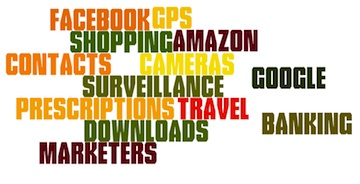
collecting dataWe cannot discuss digital footprints and privacy with children and family members too much or too often. The point is not to scare anyone — the virtual trails that we leave are becoming almost routine — but rather to help family members consider how much data we share, intentionally or otherwise, and whether at times we should consider making at least a few changes in our online behavior.

On September 30, 2013, NPR’s All Things Considered program aired the first of a series of reports on digital footprints, and it’s worth taking the time to listen or read and to learn more about just how much data is collected on each of us. I expect the other reports will be just as compelling. NPR is collaborating on the series with the Center for Investigative Reporting (CIROnline.org).

Reporter Daniel Zwerdling describes the obvious digital trails we leave behind with our computers, mobile phones, GPS-guided car trips, and credit card purchases, and also our less-than-obvious footprints from prescription drug purchases, traffic camera sitings, and wifi tracking and facial recognition cameras that track us in shopping malls. That we make digital footprints is not surprising, however, the amount of data that is collected about us and used to form profiles is extensive and worrisome.  Privacy — our privacy — has gone out the window.             Continue reading “Digital Footprint Series on All Things Considered”