Posted in digital parenting, media literacy, parents and technology, social media

The Children are Watching and Seeing, Listening and and Hearing

They watch us all the time. The students, that is. They listen to us sometimes. They learn from all that watching and listening.

                            –Theodore and Nancy Faust Sizer, The Students are Watching, 1999, Beacon Press
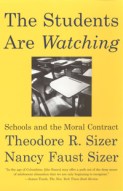
The Sizers wrote about classrooms and schools, explaining that students learn from what their teachers do and say and also from the things their teachers do not do or say. The authors illustrated their points in many ways, demonstrating how much our students learn from the things we do not do.

I read the Sizer’s book in the later 1990s with my growing child at home, so it was easy to see how the lessons applied not just to teachers but also to everyday family life. The message — that children learn from what we don’t do and don’t say as much as from the things we intentionally teach — applies well at home and at school.

This week, with so many media-rich events, I thought about the Sizers’ book. Adults spent a huge amount of time-consuming news about superstorm Sandy, the election, and for a few minutes, many of us gazed at a viral short video of a little girl crying out “No more Bronco Bama and Mitt Romney.” We encountered non-stop negative television commercials, disaster pictures and videos, television news programs, robo telephone calls, radios tuned into programs all day long (yes, I am guilty of keeping NPR on most of the day when I am home), and plain old-fashioned magazines and newspapers. Lot’s of us may have felt like crying. But my question is, “Why did Abby hear or see so much that she started to cry?”

Muppet Lydia Whatnot summed things up in her YouTube response

Continue reading “The Children are Watching and Seeing, Listening and and Hearing”
Posted in digital parenting, family conversations, media literacy, parent child conversations, parents and technology, web research

Before and After the Super Storm: Resources for Parents

Click to access the tips (in PDF form).

If ever there is a time to keep our media literacy skills front and center, it’s after a national disaster. Adults need to regulate and monitor what children see and, more importantly, adults need to remember that children see and hear a lot more than we sometimes think.

Check out the blog posting Protecting Children From the Media’s Storm Coverage. Written by K.J. Dell’Antonia, the New York Times Motherlode blogger, the November 2, 2012 article focuses on the need to limit children’s exposure to storm-related media coverage.
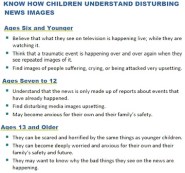
The Motherlode article directs readers to a two-page document that offers even more information about protecting children from prolonged traumatic event coverage — a free PDF available from the New York City Department of Health and Mental Hygiene website. The two-page article, Protecting Children from Disturbing Media Reports During Traumatic Events, offers tips for parents and caregivers, going into detail about what children understand at each age level.        Continue reading “Before and After the Super Storm: Resources for Parents”

Posted in blogging, choosing reliable resources, digital learning, digital parenting, digital photography, parents and technology, teaching digital kids

Hurricane Sandy: Finding Reliable Information That Helps You Learn as Well as Look

When a super storm event like Hurricane Sandy occurs, digital kids and their families get a good, and sometimes sobering opportunity to learn a lot more about the work of journalists — professional and citizen — as well as first responders. Much suffering, as well as amazing feats of service to others, occur during these events, so it’s important to view and consume the most authentic of resources available.

Hurricane Sandy damaged the
Ocean Grove Great Auditorium.
Photo by Paul Goldfinger  and Blogfinger.net. Used with permission.

Lots of Hurricane Sandy coverage can be found in newspapers, blogs, and other social media, offering us opportunities learn together as families — as we share the content about the storm, the terrible damage it caused, and the ways that people responded. Children and adults will also use these resources in the coming days to figure out how to help, and in the process we all strengthen our media literacy skills (important in today’s world) by identifying the best and most reliable sources of information.

The other day I discovered an amazing blog as I searched for coverage of the storm and its effects on Ocean Grove, New Jersey (where I spent many happy summers as a child). Run by Paul Goldfinger and colleagues, Blogfinger.net offers me on-the-scene hurricane reports from the little beach town, so dear to me and my family, and now without its own newspaper.

Blogfinger — I discovered it thanks to my cousin, also know as Sandy — turned out to be a terrific resource. It has solid  information, great pictures, and well-written narrative. The picture to the right, shows the damage to the Great Auditorium, a structure listed on the National Register of Historic Places, and a place where I’ve attended dozens of worship services and concerts. You can check out many other Ocean Grove photographs at the Blogfinger site.

One does not need to look far, however, to find examples of unreliable sources.                 Continue reading “Hurricane Sandy: Finding Reliable Information That Helps You Learn as Well as Look”

Posted in answers to media questions, digital citizenship, digital parenting, family conversations, media literacy, parent child conversations, parents and technology, teaching digital kids

Campaign Advertising — Media at Its Worst for Kids

The tenor of the political advertising in this election season is appalling, and it will get worse. Because no code of best practices exists when it comes to campaign advertising, the current presidential election cycle media will feature unending ads that stretch the truth or make up the facts outright and deliver them straight into the lives of kids. While it’s a fine opportunity to help citizens, young and old, strengthen their media literacy skills, television is over-exposing all of us to some unfortunate and distressing content.

Click to visit.

To Learn a lot more, listen to a recently broadcast Diane Rehm Show about the non-candidate SuperPACs that are spending enormous sums on political advertisements. Jane Mayer’s recent New Yorker article, Attack Dog, is another comprehensive article. Talking to children about what they are seeing on television is critical, especially during an election cycle.

In a February 26, 2012 piece published at the USA Today Teachers’ Lounge (link no longer available), media lit guru, Frank Baker pithily describes the situation. He writes:

Continue reading “Campaign Advertising — Media at Its Worst for Kids”

Posted in digital parenting, family conversations, media literacy, parents and technology, teaching

Media Literacy in Bhutan

Question: What’s the last nation in the world to have television reception?

Answer: Bhutan, which used to be an absolute monarchy and is now building democratic institutions as a constitutional monarchy.

Bhutan map from the CIA Factbook.

What a great bit of digital world trivia to begin a family media literacy conversation!

According to this press story from Ithaca College, the Kingdom of Bhutan invited representatives from the school’s media literacy initiative, Project Look Sharp, to work with the Ministry of Education and help train the country’s teachers to understand and use media literacy principles.

As Bhutan develops democratic institutions, encouraging citizens to assume the responsibilities of civic participation, the country’s leaders want to ensure that the strengths of traditional Buddhist life are not overwhelmed by the exposure to western media influences.

Continue reading “Media Literacy in Bhutan”

Posted in answers to media questions, digital parenting, media literacy, parents and technology, social media, social networking

You Can be Media Savvy with Your Kids in 2012!

Common Sense Media recently posted Six Ways to be a Media Savvy Parent in 2012. The December 2011 report suggests all sorts of ideas that can help parents (and other adults) develop stronger media (and media literacy) skills.

Suggestions include downloading a game to play with the kids, trying out a social media site, investigating YouTube, and much more. Some these can ideas will provide great fun for kids and parents over the holiday vacation.

Visit Common Sense Media and try out some of these features.

Thanks to my colleague and friend Renee Hawkins for spotting a good media post (one that I had missed). Renee blogs with another friend and colleague, Susan Davis, at The Flying Trapeze.

Posted in American Academy of Pediatrics, answers to media questions, digital devices and gadgets, media literacy, parents and technology

Discouraging News on the Media Lit Frontier

Zero to Eight: Children’s Media Use in America, p 11

The New York Times has reported on a Common Sense Media (CSM) sponsored study, Zero to Eight, Children’s Media Use in America (PDF). The Times article, Screen Time Higher Than Ever for Children, describes the study and points out that kids are in front of a screen more than ever despite the recommendations of their doctors.

After reading this I am feeling a bit more pessimistic than usual. Adults are used to tossing health caution to the wind for themselves, but we were vigilant about protecting the health of our children. Now we seem to disregard the recommendations of pediatricians — the very people who can help us do the most possible to ensure that our kids grow into strong and productive adults. Are we as a society less and less concerned about the development of strong minds? Times reporter Tamar Lewin writes:

Despite the American Academy of Pediatrics’ longstanding recommendations to the contrary, children under 8 are spending more time than ever in front of screens…

Continue reading “Discouraging News on the Media Lit Frontier”