Posted in acceptable use, digital citizenship, digital parenting, online safety, online security, parent education, parents and technology

Visit Google Family Safety Center – Bookmark It!

Comprehensive web-based resources on digital safety, cyber-bullying, media literacy, and general technology information can help parents learn more about the web and how their children use it. Most of these sites update their content daily with timely tips, strategies for parents and kids, blog postings, and other helpful links. Yet, with so many sites to choose from, parents may have difficulty keeping track of any single location, let alone navigating among the sites on a regular basis.

Now Google, as so often happens, has come up with a terrific solution — the Family Safety Center. The center is well laid out with clear explanations about safety tools and connections to many of the best digital and media safety sites — all partnering with Google.

Continue reading “Visit Google Family Safety Center – Bookmark It!”
Posted in acceptable use, digital parenting, home computer security, online security, parents and technology

Back-to-School Digital Reading Assignment #4: Online Safety Software Doesn’t Do It All

To Install or Not to Install — That is the Question!

When people ask me whether a family should install protection or filtering software at home, I always have one response. Protective software programs are fine, but limited. Yes, they keep a certain amount of inappropriate content away from children, but the problem of access to inappropriate content is not solved by simply protecting home computers and networks with software. Over the course of a day or week a child encounters many other connections to the world wide web — on laptops, smartphones, iPads, computers, in other people’s homes, and maybe even at a parent’s office. And many children simply figure out how to work around or even outwit the software.

Protecting children from bad content is critical, but they also need to know what to do and what strategies to use when confronted by the bad stuff. Does your child remember your expectations?  Will he or she know what to do?

Continue reading “Back-to-School Digital Reading Assignment #4: Online Safety Software Doesn’t Do It All”

Posted in digital parenting, online safety, online security, parents and technology, privacy

Disable or Limit Facebook Places: Eight Resources to Help

Just when we think we have a handle on a social networking, along comes another virtual gimmick to figure out. In this case Places is a Facebook mobile phone application designed to follow you around using the phone’s GPS, let people know where you are, and significantly reduce your privacy. Keeping a tight lid on anything tweens and younger adolescents do with Places will be a priority for parents this fall. A couple of suggestions…

  • Make Facebook Places a discussion topic and figure out a good time to talk with your family. Privacy is a concern, so don’t delay. With the start of the school year only a few weeks off, children with mobile smart phones will most likely try to make Places a part of their Facebook activities.
  • Think about the general Facebook and specific Places guidelines that you want to set for students in your family. Do this now, before Places becomes ingrained in the adolescent culture.

Continue reading “Disable or Limit Facebook Places: Eight Resources to Help”

Posted in Back-to-school digital reading, parents and technology, teens and technology

Teens and Hearing Loss

These days it seems like every person under 25 is walking around attached to earbuds. What are they listening to? Music on MP3 players — loud music. Over the years quite a bit of buzz has surfaced about teens and hearing loss. Moreover, pediatricians express ongoing concern and several past research projects (article links below) have identified the extent of hearing loss in adolescents.

Now just published research (abstract) by a team from Massachusetts General Hospital and Brigham and Women’s Hospital reports that the problem is serious and getting worse. 19.5 percent of teens may have hearing difficulties according to the study which used data up to 2005-06.

According to the Time Magazine article, the researchers studied teens age 12 – 19, and used data “… collected by the government’s National Health and Nutrition Examination Survey (NHANES), conducted over a six-year period in the 1990s and a two-year period more recently.” Read the Wikipedia NHANES explanation.

Good Links to Read on the Current Research and Several Past Studies

Continue reading “Teens and Hearing Loss”

Posted in Back-to-school digital reading, cell phones, interesting research, parents and technology, teens and technology

Back-to-School Digital Reading Assignment, #3: Teen Cell Phones

For extra insight into the cell phone behavior of your preteen or teenager, take a few minutes to read these 2008 survey results from Harris Interactive, conducted with 2,098 teenagers in the United States. The survey was paid for by CTIA: The Wireless Association, an industry group.  The results appear to be as timely today as they were two years ago. The Marketing Charts website depicts the results with emphasis points. Another cell phone and teen research survey,  Teens, Cell Phones, and Texting, conducted more recently and published in April 2010 by the Pew Internet and American Life Project, an organization independent of industry interests.

The survey results make it clear to all of us — parents and teachers — that mobile phones and smart phones continue to be influential in the world of pre-adolescents and teens and will probably become even more so in the future. These mini-gadgets are permanently anchored in their social lives — and in ours.

A few data highlights from the Harris survey are below. Check the websites for the bigger picture.

Harris Interactive Survey Highlights Include

Continue reading “Back-to-School Digital Reading Assignment, #3: Teen Cell Phones”

Posted in Back-to-school digital reading, homework, online databases, parents and technology

Staying Ahead With Solid Digital Research

September brings the start of a new school year, and once classes begin, it’s not long before the first research reports and projects are assigned. To get started, your child will head right to his or her computer; however, adult assistance can ensure that a student uses quality sources, thereby developing stronger research skills over the long run.

Just about any time digital children search for information at home, they fire up Google. While their teachers use substantial classroom time and energy introducing students to the best online research resources, children often need assistance applying the research lessons on their home computers. As often as possible adults should remind children that results from Google — as wonderful as Google searching is — provide a huge number of links, many of them of questionable quality.

A better way to search for information is to access library online resources and databases — the crown jewels of student research (Links at the bottom of this post will take readers to a few libraries that describe their virtual databases.) Searching in these databases decreases quantity and dramatically increases quality — which, in turn improves the caliber of a student’s assignment.

Continue reading “Staying Ahead With Solid Digital Research”

Posted in digital parenting, online security, parents and technology, privacy

Protecting Privacy Online

On the web just about everything we do is recorded or tracked in some way. The digital footprints of our online lives are collected for all sorts of reasons, advertising primary among them, and while some companies collect data on individuals, others collect data and then combine information to identify trends. Either way, personal online privacy is eroded. Guiding children toward an understanding that nothing they do on the web is private is one of the greatest responsibilities of digital era parenting

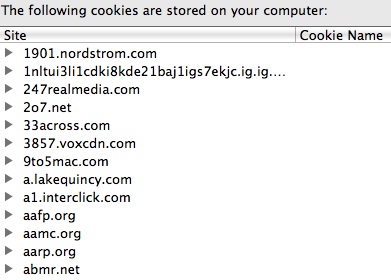
A few of the cookies on a computer.

The Wall Street Journal is publishing a series on privacy, describing how the digital documentation of our online lives is affecting our private lives and explaining the steps individuals and families can take to protect their privacy. A graphic in the series provides readers with step-by-step instructions to make Chrome, Firefox, Safari, and Internet Explorer protect privacy.

Another part of the Journal series, a July 30, 2010 article, Sites Feed Personal Details to New Tracking Industry, provides additional information about tracking, detailing the steps that occur when a group collects a user’s information and then sells that information to companies and advertisers.

Continue reading “Protecting Privacy Online”