Posted in family conversations, healthy media images, media literacy, parent child conversations, parent education, resources to read, risky behavior

Conversations About Skins from Common Sense Media

As usual, Common Sense Media is right on top of the latest media/television family dilemma, and the website has published a short piece to help parents talk with their teenage children about the MTV program, Skins. In Tough Talk: How Parents Can Use MTV’S Skins As a Jumping Off Point, Liz Perle writes, “MTV’s teen drama Skins (a remake of the even edgier British series) showcases every behavior that keeps parents of teenagers up at night.” Perle suggests conversation pointers that can help parents begin conversations on these all too nerve-wracking topics. While these subjects keep parents in a perpetual state of jitters, teenagers confront many of the issues the issues on a daily basis — though honestly the show itself seems overly contrived. Check out the article.

The point is – and this is a Common Sense Media mantra (about page) — no matter how uncomfortable the topic may be, the most important thing is to work hard to keep the dialogue going throughout the challenging teenage years. The conversations, even if they don’t go as smoothly as a parent wishes, nevertheless help adolescent kids think about making better choices.

Posted in cultural changes, online education, parent education, parents and technology

Online Education Moves into Our Lives

If you haven’t read the article, GWU Launches Online Prep School, appearing in the January 22, 2011 Washington Post, check it out. The piece, by reporter Daniel de Vise describes the digital school, but he also explains how a dramatic shift — toward digital learning — is occurring world of education as more and more people take computer-based online learning courses. The  article also examines whether online learning is a good learning tool in the world of adolescents. The jury is still out on this question, because of the strong organizational skills that are required to complete an online course. You can visit the GWU Online High School website and also the Stanford University Online High School website.

Posted in parents and technology, technology and health problems, technology in bedrooms

TV in Your Child’s Bedroom? Research to Consider

Are you tempted to allow a television in your child’s bedroom?

Recently the journal Preventive Medicine published research that explores the potential impacts of placing a television in a child’s bedroom. By evaluating existing health survey data researchers sought to discover whether certain behavioral and social characteristics were especially associated  with the presence of a television in a child’s bedroom (bedroom television or BTV). The article, TV’s in the Bedrooms of Children: Does it Impact Health and Behavior? (abstract), is not freely available on the web, but it can be purchased or read at a medical library.

To understand more about how BTV use might affect a child’s behavior the researchers used data from the 2007 U.S. National Survey of Children’s Health (NSCH), which gathered information through interviews of 46,687 family with children ages 6-17. As a part of the NSCH, parents were asked to estimate the amount of time their child spends watching television on an average weekday.  Continue reading “TV in Your Child’s Bedroom? Research to Consider”

Posted in digital devices and gadgets, digital parenting, parents and technology, risky behavior, scams and fraud

Technology Scams: An Overview

In the digital era, parents need basic knowledge of online scams that have the potential to cause mayhem on a family’s digital devices

A quick and easy-to-read overview of potential online  scams, Social-Media Scams Abound but They Can be Avoided, appeared in the Washington Post on November 14, 2010.  The Kiplinger Personal Finance article, by Casey Mysliwy, goes over three types of malicious behaviors that can trip-up even the most savvy digital media users. If you missed this description of potential digital problems, take some time to read the article as well as share it with family members who computers, the web, or smart phones. The three potential scams are:

  1. Messages that involve money transfers and seek personal information;
  2. Applications that offer a quiz, game, or other method that encourage you to share personal details; and
  3. Shortened URL (web addresses) that hide a destination’s true identity because the address is simply a group of characters.

You can also check out 5 Social Media Scams at the Norton AntiVirus site and New Jersey Officials Warn Residents About Social Media Scams at the New Jersey Today website.

Posted in cell phones, digital devices and gadgets, electronics show, parents and technology, technology changes

CES – Consumer Electronics Show

What’s a parent to do when an unrelenting parade of electronics gadgets and devices appears on the scene and especially on kids’ radars? How can we keep up, let alone be prepared and figure out a few things? To learn a bit, pay attention to the articles and blog posts coming out of the 2011 Consumer’s Electronic Show, occurring now and ending on January 9, 2010 — but the content will be timely for months. A good number of products, some on the cutting edges, debut at the show, though some are not available for purchase  right this minute, and more than a few others may not even be in production yet. Most of the items, however, will be at your local or online vendor quite soon.

For instance… Need a gadget to help you take better pictures because yours are always blurry or bothered by too much light? Check out the Kodak easy-share camera at left, due out soon, a product that is supposed to figure out how to take a good picture even when you have no idea how to do it.

Continue reading “CES – Consumer Electronics Show”

Posted in digital parenting, good books to read, parent education, parents and technology

Bullying and Cyber-bullying: Myths and Reality

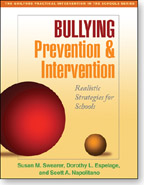
Read Five Myths About Bullying in the December 30, 2010 Washington Post. While the media focuses on the high-profile cases of bullying and cyber-bullying, the author of this article, Susan M. Swearer, a co-author of Bullying Prevention and Intervention: Realistic Strategies for Schools, writes that the relentless coverage may distract schools and parents from more traditional types of bullying. While technology has made bullying worse, a significant  number of students are bullied without the use of technology.  The author points out that:

While it’s hard to stereotype bullying behavior in every school in every town in America, experts agree that at least 25 percent of students across the nation are bullied in traditional ways: hit, shoved, kicked, gossiped about, intimidated or excluded from social groups.

The article mentions and links to several programs that have been successful at reducing bullying behavior. Swearer, who is an associate professor of school psychology at the University of Nebraska, Lincoln, points out that, “…when awareness of bullying becomes as much a part of school culture as reverence for athletics or glee club, we’ll have a shot at finally stopping it.”

Posted in cell phones, iPhones and iPads, parents and technology, technology support

Useful Info for iPhone and iPad Owners

If anyone in your family received a iPad or iPhone for a holiday gift (I discovered an iPad under my tree.), or if you already have these devices in your home, consider getting acquainted with the Today in iOS podcast series, a program series that devotes itself  to the world of  iPads and iPhones.

Originally called Today in iPhone — I’ve been listening since May 2009 — its name morphed in the spring of 2010 when Apple released the iPad. Subscribe to the podcast from iTunes or download the programs from the program website. Today in iOS also has its own nifty app, enabling users to download and listen to programs without going through the machinations of syncing and downloading from iTunes. Very handy.

Click to visit!

Whether you own a personal iOS devices or merely supervise your child’s ownership, this is the place to find interesting information about apps, answers to questions, and lots and lots of background information. Listeners can e-mail, call, or even use the recording app on their devices to make and send an audio message. An archive of past shows on the Today in iOS website, and sometimes I download a group of older programs and listen to them in while I am driving.

Continue reading “Useful Info for iPhone and iPad Owners”