Posted in cyber-bullying, digital parenting, electronic communication, online safety, parents and technology, social media, social media friends, teens and technology

Good, Bad, Ugly… Internet? – Danah Boyd

Check out Danah Boyd’s short commentary, The Good, the Bad, the Ugly … and the Internet in Boston Magazine. In the June 15, 2012 piece Boyd describes how fears about children’s safety have curtailed their time out in the real, face-to-face world for several generations. Today many parents have transferred their fears into the digital world.

Read some of Boyd’s blog posts here.

Boyd points out that many serious behavioral issues, bullying, for instance, have been and continue to be huge problems. Yet they tend to be more frequent and serious face-to-face than in the digital world (though the digital problems get more media coverage). As one of the most well-regarded observers of teen social networking behavior, Boyd conducts research for Harvard’s Berkman Center and for Microsoft.

Continue reading “Good, Bad, Ugly… Internet? – Danah Boyd”

Posted in cell phones, digital devices and gadgets, family conversations, online communication, parents and technology, setting technology limits

Some Time Out From Digital Devices?

In Google’s Eric Schmidt and the Curse of Constant Connection, Washington Post columnist Ruth Marcus reports on the Google executive’s commencement address at Boston University (BU). In her May 22, 2012 column Marcus describe how Schmidt made the case for a bit of balance — urging new graduates (even as they stayed connected during the graduation ceremony) to take an hour or so each day away from the digital devices that keep us so connected.

The full text of Schmidt’s speech is on the BU website, and it’s a good read for digital age parents who are seeking ways to schedule a bit more disconnected time with family and friends.

To learn more about the search for digital device moderation I recommend the book Hamlet’s Blackberry: A Practical Philosophy for Building a Good Life in the Digital Age. Author William Powers explores how people who lead connected lives (he does) need to find the time for reflection and interaction away from screens. And he describes how his family wants about setting some time to be together and disconnected.

Best Quote from Powers’ Book

If we’ve learned anything in the last decade about technology and human interaction, it’s that as screen time rises, direct human-to-human interaction falls off proportionally.

Posted in 21st Century Learning, copyright, digital parenting, Great TED Talks, parent child conversations, parents and technology, teaching digital kids

Copyright: Lessig on History, Creativity, and Sharing

In his 2008 TED talk, law professor Lawrence Lessig describes the history of copyright policy, illustrating the reasons why our laws in general and copyright laws in particular should evolve to reflect contemporary culture and information.

Thoughtful and thought-provoking, this lecture contains information that can be used as conversation starters for parents and teachers of digital kids.

Posted in 21st Century Learning, digital citizenship minute, digital learning, digital world conversations, parents and technology, teaching digital kids

The Digital Citizenship Minute: Digital Digressions in the Classroom

Read the piece at NetFamilyNews.org.

A year ago I asked my fifth-graders to write podcast scripts. They wrote about teasing, cyberbullying, gossip, intention vs. consequence, advertising, digital footprints, and the lack of facial cues in electronic communication. Working mostly in collaborative groups, my students recorded complete “’casts” in our informal laptop studio.

As always when it comes to 21st Century learning, a few students improved upon my lesson plan and asked to write podcasts for their other teachers. The resulting efforts helped students refine their digital citizenship perspectives. One student noted, “When an electronic problem [like cyberbullying] becomes a ‘big problem,’ teachers talk about it at school. How come we don’t talk about these things when they aren’t [big] problems?”

Continue reading “The Digital Citizenship Minute: Digital Digressions in the Classroom”

Posted in collaboration, digital learning, libraries, online research, parents and technology

Collaboration, Learning, and Libraries!!

Libraries have always been amazing places, but today, look no further than a college, university, or public library to observe an institution that has figured out how to support access to information and 21st Century learning.  Libraries are especially adept at encouraging patrons to collaborate.

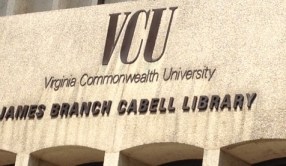
I am sitting in the James Branch Cabell Library at Virginia Commonwealth University in Richmond, VA. Officially I am here to search through the archives on the fourth floor, learning more about Virginia’s Massive Resistance era, but now it’s lunchtime and I am taking a break, walking around, and exploring a bit.

Libraries are very different from the time when I went to college or even a 10 years ago when I took  my last graduate course. Today every library that I visit is collaborative — welcoming interaction among patrons, connecting information from everywhere, and inviting people inside, even first time visitors like me.

If we are not willing to collaborate today, we are not learning especially well.

A Few Observations

Continue reading “Collaboration, Learning, and Libraries!!”

Posted in digital parenting, parent child conversations, parent education, parents and technology, social media, social networking

Learning More About What You Don’t Know

I am just back from a huge technology conference in Philadelphia, the International Society for Technology in Education(ISTE), and I blogged from the event uploading nine or ten entries on a separate MediaTechParenting page. I also tweeted — sometimes using Twitter myself and at other times just watching, reading, and processing the tweets of others.

During the week — before, during, and after the conference — Twitter was my most important communication too. Over the four days it let me know where especially great workshops and presentations were occurring, helped me discover other people who shared my interest, kept me up-to-date about who was blogging, informed me about presenters who were sharing resources beyond their presentation rooms, and yes, even announced the location of the special snacks each afternoon. Without the #ISTE11 Twitter handle, and also the continuing backchannel tweets on #edtech and #edchat, my week would have been slower, less interesting, and nowhere near as dynamic.

Continue reading “Learning More About What You Don’t Know”

Posted in Bookmark It!, digital citizenship, digital parenting, online safety, online security, parents and technology, resources to read

FTC Net Cetera and OnGuard Online Family Website – Bookmark It!

Visit OnGuard Online

Are you searching for reliable tutorials to help you learn more about managing digital-age parenting topics? Check out the short book Net Cetera: Chatting With Kids About Being Online. Simple, straightforward, and easy to read, this publication covers most of the relevant digital topics, and its comprehensive table of contents is a ready-to-use outline that can help to guide virtual world family conversations. Net Cetera, published by the Federal Trade Commission (FTC), is also available as a PDF download. Moreover, the booklet can be ordered in quantity for a PTA, book club, church activity or other parent group.

The FTC website, OnGuard Online, which features Net Cetera, is also a repository of information that can help parents to address concerns with their digital children. Each subject is covered with three sections, starting with a review of the “Quick Facts.” A more detailed explanation follows with a section of links that connect to additional online resources.

Topics include:

  • Kids Privacy
  • Computer Disposal
  • Identity Theft
  • Scams
  • Social Networking
Visit OnGuard Online


This site, and especially the Net Cetera booklet, is useful for everyone in a family, including grandparents or other seniors.  The type can be adjusted so that it is larger, and many of the topics covered provide information that is critical for aging family members to understand, and perhaps grandchildren can help do some of the teachings.