Posted in communicating with grandparents, digital learning, digital literacy, parents and technology, social media, social networking, technology changes

Senior Family Members Expand Social Media Access – With Kids’ Help

Those of us with seniors and elders in our families know how important it is, in this digital age, to ensure that children communicate with grandparents, older relatives, and even elder family friends.

In many families, grandparents and other senior relatives benefit and gain more technology skill with the help of their digital-age grandchildren, nieces, and nephews. Once a family senior gets immersed in intergenerational digital communication, he or she often wants even more connections — at first more contact with younger family members and then with … the world.
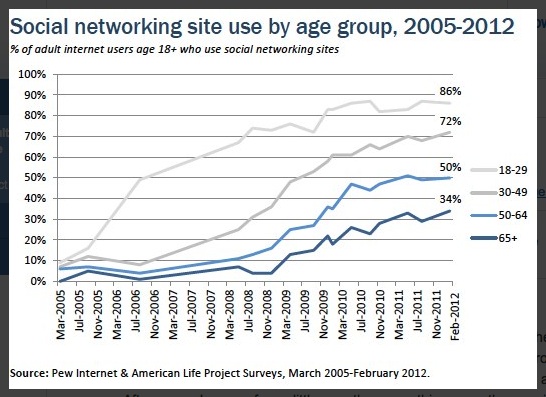
pew-internet-aging-social-networkingInterestingly, only a few years ago most seniors were satisfied with e-mail communication or the occasional video to watch. Not anymore. Today a growing number of people over 65 are enthusiastically latching on to social networking sites and using them on a fairly regular basis, and these numbers are growing.

This amazing graph depicts the percentage of adults at various ages who used social media sites over seven years, and it demonstrates how fast the use of these sites is increasing for all age groups, but especially for seniors.

Published in the Pew Internet’s July 2012 report on Older Adults and Internet Use, the information in the image comes from a Pew survey that collected data between March 2005 and February 2012.

Note the growth for the 50-64 age group and the over 65 age group (data that could hardly be detected back in 2005) over the years of the survey. Moreover, the social networking adoption percentage numbers for people 50 and older picked up a lot of steam, between July and November 2008.

Bottom line? Many more older adults are signing up and using social media sites, and their numbers are continuing to increase. One way that young family members can be especially helpful is to be on the lookout for seniors relatives who can use extra support as they learn more about living lives in the digital world.

The French essayist Joseph Joubert (1754-1824) wrote, “To teach is to learn twice.” Children relearn and review their own digital world lessons when they teach senior family members about learning and communicating in today’s always connected world. It doesn’t matter whether they are helping with privacy issues, teaching a senior to understand a cell phone, or demonstrating the many other virtual world tasks that a grandparent or elder relative might need to know. In helping that older family member learn something new, the child refocuses on the lesson.

That’s pretty cool for everyone involved.

Posted in digital citizenship, digital learning, digital parenting, family conversations, kids changing lives, parents and technology

8 Wishes Connected Kids Have For Their Parents

With more than 30 years as a teacher including over 20 in the educational technology field, I’ve heard many kids reflect thoughtfully, and not so thoughtfully, on their parents’ digital skills. Kids often wonder why parents don’t always model the digital citizenship expectations that they want their children to learn and apply.

I wish my parents wouldHere are the eight most common “I Wish” statements that I’ve heard expressed by children over the last 16 or 17 years. Two of them, I can report, my daughter also mentioned to me ages ago.

Kids Wish Their Parents and Other Adults Would

  1. Try to learn a lot more about computers in particular and technology in general.
  2. Stop saying they don’t know much about technology (mom’s especially)
  3. Do not use Blackberries and phones at sports games and school events
  4. Learn to play some of the kids’ online games.
  5. Understand more about helping with searches on the Internet.
  6. Understand how hard it is to learn the technology rules and regulations and not always threaten to take away technology access when there’s a problem.
  7. Stop automatically saying that new things like Wikipedia are questionable.
  8. Don’t act dumb about technology – act like you want to learn new things.
To learn a bit more read 4 Lessons for Parents in a Constantly Connected World over at the Mashable site.

Continue reading “8 Wishes Connected Kids Have For Their Parents”

Posted in digital change, digital devices, electronics show, parents and technology, technology changes

Best Coverage of the 2013 Consumer Electronics Show – My Annual Reading List

Each year the parents of digital age children need to pay at least a bit of attention to the highlights of the 2013 Consumer Electronic Show (CES).

Although 2013 CES in Las Vegas just ended, take some time to explore these posts about the gadgets, wireless devices, new trends, and the like — technology that your children may well be coveting in the near future.

Below are the blogs and other media reports that I enjoyed. At many of the sites, you can find other CES articles in addition to my link.

Posted in digital parenting, kids changing lives, monitoring kids online, online communication, parent child conversations, parents and technology

Great Digital Parenting Blog Posts at Net Family News

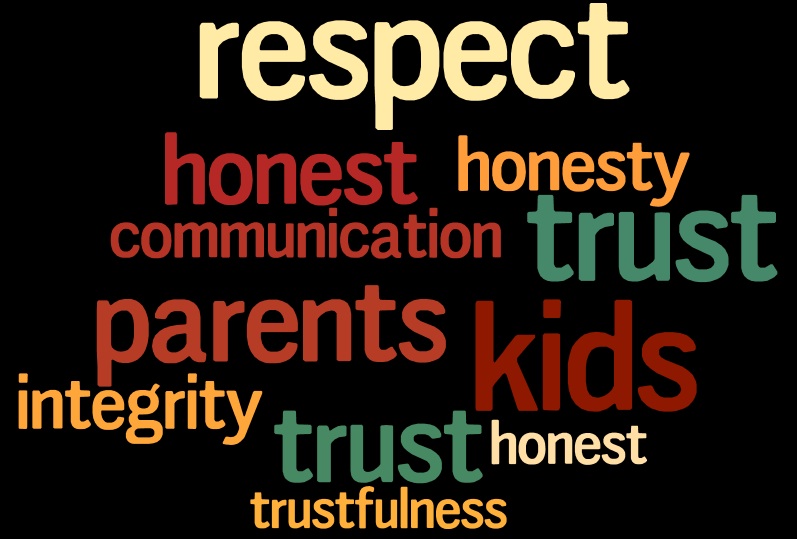
When I finished reading Anne Collier’s two Net Family News posts, The Trust Factor in Parenting Online Kids and Parenting or (Digital) Public Humiliation, I leaned back to process all of the content in these two short articles. “Well done!” I thought.

trust parents kids 2Take some time to read these thoughtful and well-written pieces that address the challenges of parenting digital kids and offer solid guidance. They sum up just about everything a parent needs to know.

Collier examines the need for parents to build insightful and trusting relationships with their digital world children. She notes that we adults should think carefully about any decision to use secretive monitoring and instead consider recognizing the need for honesty and trust whenever we address the lives of children and adolescents who work and play in the connected world.

There’s no substitute for a parent being online, observing and adding his or her two cents when required. Yes, it is time-consuming —  but it’s best to communicate openly by transparently monitoring children’s digital activities and modeling the trust and honesty that we want them to develop in their own lives. Perhaps, Collier muses, we are even making digital kids safer, since they are less likely to be seeking ways to hide out or at least take cover online.

Best Quote in Anne Collier’s Posts  (… but there are many other good ones so check out these articles and others at Net Family News.) Continue reading “Great Digital Parenting Blog Posts at Net Family News”

Posted in 21st Century Learning, collaboration, digital learning, online research, parents and technology

Now This Is What You Want Connected Kids to Do!

geography-44729_640
Pixabay Public Domain Images

Sometimes when I sit quietly in a computer lab at school and observe my students, I overhear the most wonderful conversations about learning. Today, as I sat in a corner working quietly, several fifth-grade students came in and sat down to work on essays. Focused on work, they took little note of me.

A delightful conversation ensued when one student asked the other student for help with the name of a country. As soon as I realized that an interesting 21st Century learning conversation was happening, I started typing their dialogue rather than my parent letter.

The two children went online together, searched, made all sorts of comments and decisions about what they saw, discovered a few things that they were not looking for, and finally located the information that they needed. But their searching led to additional questions.

The entire conversation lasted less than two minutes, but they learned a great deal.

Student #1: I am trying to write about the country that broke off from India when India became independent. Do you know its name?

Student #2: I’m not sure. I know it’s right next door.

Student #1: Hummm. Maybe it’s Pakistan?  But I’m not sure.

Student #2: Maybe. Let’s go online and find a world map.

Student #1: OK. Are you going to Google it?

Student #2: Yes and look. If we go into Images there are lots of maps.

At this point the two students are both looking at dozens of world maps on Google Images and pointing at some of them. They talk about which map to look at. They choose one, but when the enlarge it, it doesn’t work.                  Continue reading “Now This Is What You Want Connected Kids to Do!”

Posted in 21st Century Learning, blogging, digital learning, educating digital natives, parents and technology, web 2.0, writing

If You Really Want Your Digital Kid to Write Well – Start a Family Blog

After reading a January 5, 2013 post on Edudemic, How and Why Teachers Should Blog, I want to share a blogging experience at my school.

I have the honor of working with a small group of amazing third-grade teachers — my colleagues — and last summer they decided to begin blogging with their students. This past fall each of the teachers set up a classroom blog at KidBlog. This student-oriented blogging site is designed to offer maximum privacy to young writers, but it also offers the opportunity for more access — and more readers — if desired. Interestingly, while the three classroom blogs are all similar, each has slight variations that reflect the personalities of the kids and the ideas of the teacher.

Visit KidBlog!
Visit KidBlog!

After orienting their students to the idea of blogging — discussing appropriate tone, privacy, and respect — the teachers let the children write. Third graders have learned to read one another’s work and make comments and suggestions. Sometimes they share complete stories, and at other times they write more spontaneously.

Continue reading “If You Really Want Your Digital Kid to Write Well – Start a Family Blog”

Posted in cell phones, digital devices, digital parenting, mobile phones, parent child conversations, parents and technology

Mom Writes Phone Contract for Middle School Son

cell phone vocab  image wordfoto
This cell phone vocabulary image created with one of my pictures and the app Wordfoto.
Note: Please check out my Digital Contracts and Agreements Page if you want to learn more about this topic.

Take a look at a terrific letter about cell phone conduct, appropriately written for a middle or high school age student. In a Huffington Post article, To My 13-Year-Old, An iPhone Contract From Your Mom, With Love, Janet Burley Hoffman shares a mobile phone contract that she wrote for her son after giving him a cell phone for Christmas. The post also includes a link to a video of Hoffman and her son appearing on “Good Morning America.”

This piece is cleverly written, focusing on cell phone issues that worry many parents of pre-adolescent and adolescent children. Hoffman’s contract addresses, in non-lecture style, the concerns that arise especially as parents watch their children using digital devices.

Last fall, my post, So You Want a Family Digital Device Contract or Agreement, included links to a broad range of web resources that can help parents set up contracts or agreements with their digital kids.

Interesting Ideas that Janet Burley Hoffman Incorporated into This Contract Continue reading “Mom Writes Phone Contract for Middle School Son”