Posted in cyber-bullying, digital parenting, electronic communication, online safety, parents and technology, social media, social media friends, teens and technology

Good, Bad, Ugly… Internet? – Danah Boyd

Check out Danah Boyd’s short commentary, The Good, the Bad, the Ugly … and the Internet in Boston Magazine. In the June 15, 2012 piece Boyd describes how fears about children’s safety have curtailed their time out in the real, face-to-face world for several generations. Today many parents have transferred their fears into the digital world.

Read some of Boyd’s blog posts here.

Boyd points out that many serious behavioral issues, bullying, for instance, have been and continue to be huge problems. Yet they tend to be more frequent and serious face-to-face than in the digital world (though the digital problems get more media coverage). As one of the most well-regarded observers of teen social networking behavior, Boyd conducts research for Harvard’s Berkman Center and for Microsoft.


Continue reading “Good, Bad, Ugly… Internet? – Danah Boyd”

Posted in 21st Century Learning, collaboration, digital learning, parents and technology

What in the World is a Wiki?

A wiki is an online document, viewed in a web browser, that allows a user or users to add and accumulate information on a topic. Usually, but not always, people work collaboratively on a wiki, so it’s a terrific learning tool.

The word wiki comes from a Hawaiian word that means fast.

Anyone can set up a wiki and invite others to contribute. All of the pages are visible and can be edited in the browser. What is unusual about a wiki, compared to many other forms of writing, is the ability of all users to edit and change the work of fellow collaborators, definitely a “we’re all working together project” that teaches group members to cooperate with one another and respect their work. A wiki document can include text, links, pictures, and video.

The In Plain English Wiki tutorial provides a good introduction filled with useful information. Also, check out the comprehensive wiki explanation with an emphasis on wikis in the workplace at OreillyNet. A wiki tutorial at TeachersFirst walks people through the basics of starting a wiki and includes a page with wiki ideas for the classroom. Wikipedia, as its name implies, is a wiki.

A Few Suggestions for Wikis at Home Continue reading “What in the World is a Wiki?”

Posted in parents and technology

Friend Your Kid on Facebook? Check Out the Restricted Group

Lots of people friend their children on Facebook. When I speak with groups of parents someone almost always mentions how parent/child friending solves the problem of knowing a bit more about what is happening in a child’s social media universe.

Except…

Facebook allows users to set up tiers of friends, giving each group specific types of access to status updates. One such friending level is “restricted.”

I’ve experimented with various levels of Facebook friendship over the past several months. I’ve discovered it that it’s easy to put people into various groups, and I can target some of my status updates to certain groups. I now have six or seven groups.

Continue reading “Friend Your Kid on Facebook? Check Out the Restricted Group”

Posted in 21st Century Learning, blogging, digital learning, digital parenting, parent education, parents and technology

You Can Start a Family Blog – Summer 2012

Visit Start a Family Blog and Get Started!

This summer think about starting a family blog. It’s a terrific communication project as well as a collaborative learning opportunity for everyone — kids, parents, grandparents, cousins, aunts, and uncles.

Last year I taught a short online blogging course to parents at my school. My Start a Family Blog classhosted on a WordPress blog, is still available. The posts will guide interested families through the basics of starting a blog for relatives and friends.

Over at some novel ideas, a blog authored by librarian Stacy Nockowitz would be bloggers will find a comprehensive and rich list of resource links to help get started. She organizes her links into categories:

    • Blogging Basics
    • Blogging Resources
    • Blogs About Blogging
    • Blogging Platforms
    • Images

Also included at the bottom of the resource page is a cool glossary of blogging terms.

Posted in cell phones, digital parenting, electronic communication, gadget ownership, mobile phones, parents and technology, social media friends

Are Teens Moving Away from Facebook?

Take a few minutes to read Some Teens Aren’t Liking Facebook as Much as Older Users, a May 30, 2012 business article in the Los Angeles Times. Facebook’s growth is slowing, and many teens, after absorbing lessons about privacy and the need to share less personal information, now seek to socialize online in smaller community groups with people they know.

Reporters Jessica Guynn and Ryan Faughnder point out that students are also far more eager to use mobile services designed for their smartphones. Interestingly, parents are still avid Facebook users.

Best Quotes from the Article

  • Teens… can also be more selective about what they share and with whom, and feel less social pressure to “friend” everyone in their school or friends or friends.
  • Teens who belong to the first truly mobile generation — their most common form of communication is text messaging — are increasingly gravitating to services made for their smartphones and tablets.
Posted in cell phones, digital parenting, mobile phones, parents and technology

Getting a Cell Phone for a Child in Summer 2012?

Check out Techlicious!

The Techlicious blog features an information-filled post, with resources for parents who want to learn more about features and limits-setting as they go about considering whether to purchase a cell phone for a child. In her May 28, 2012 piece Suzanne Kantra describes some of the newest parental control packages on the market at large mobile phone carriers.

Kantra compares and contrasts various features that  address  a variety of parent concerns including:

      • Keeping track of kids
      • Text messaging limits
      • Entertainment

Below are a few past blog posts from MediaTechParenting on mobile phones and kids.

Posted in 21st Century Learning, digital learning, digital parenting, evaluating web site resources, family conversations, online research, parents and technology, teaching digital kids

Help Students Evaluate Digital Sources-Howard Rheingold Video

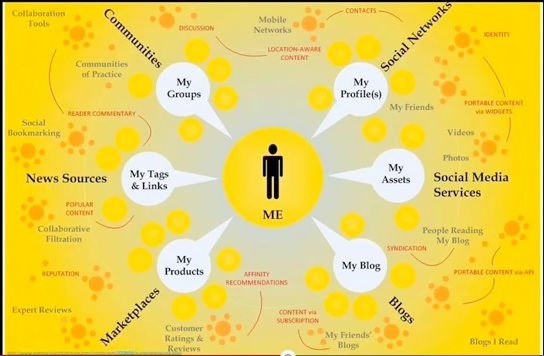
Rheingold’s vision of a person’s personal trust network copied from the video.

Teaching children to evaluate resources and determine credibility is the biggest challenge of our 21st Century world. Until now authoritative textbooks have dominated the world of education, but not anymore.

In the video below, Howard Rheingold, the digital thinker, professor (Stanford and UC Berkeley), and personal learning network advocate, describes how parents and educators should help students develop the ability to ask questions when they discover digital information, thereby evaluating the quality or lack of it. Rheingold calls this “crap detection,” a term originally coined by Ernest Hemmingway.

We need to teach kids, Rheingold points out, “how to search and how to find” and how to be sure that what is found is of good quality. The long-range goal is for each individual to develop what Rheingold calls a “personal trust network.”

Continue reading “Help Students Evaluate Digital Sources-Howard Rheingold Video”