The blog Techlicious has a great posting on Facebook privacy updates, especially vis-a-vis groups that a user joins. In Facebook Groups and App Dashboard Provide New Privacy Features Josh Kirschner, offers his suggestions about how to set up private groups, and he also writes and embeds a video about the third-party dashboard that Facebook is rolling out.
Best, but not surprising quote, “… assume everything you post could become public at any time.”
When you talk about social networking, texting, and other digital activities with your children, you cannot use the word privacy too much in your conversations.
Guidelines to Help Avoid Misunderstandings and Unintended Consequences
Ask if it is OK to take a person’s picture, especially in unconventional settings.
If you snap a picture of another individual, you own that picture, but you do not own that person’s image. You can’t automatically post a friend’s image online or in public without permission.
Avoid e-mailing, texting, or posting silly, inappropriate, or embarrassing pictures. Your lighthearted intentions may cause unexpected or unintended consequences. No one wants to be embarrassed in public, and this is the biggest way people get in trouble with digital photography. Sometimes this can even lead to accusations of cyber-bullying.
When person you know is upset or in distress, do not take a picture unless an image will help solve a problem or keep that person from getting hurt.
Carefully choose your own personal pictures for online posting. Once uploaded or e-mailed, a picture lives somewhere out on the web forever. You never really get it back, even if you delete it from a site or throw away the e-mail.
Do not modify someone’s image with Photoshop or other image editing program without that person’s permission.
Always honor the requests that an individual makes about a personal picture.
Remember that “a picture is worth a thousand words” — but you have no control of those words once an image is in cyberspace via e-mail, text, chat, or website.
Privacy is important for adults and children. Now an investigation has found that children who use well-known web sites are opening the door for small information-collecting programs called trackers to be installed on their computers.
In a September 17, 2010 article, The Wall Street Journal (WSJ) reported on its investigation into tracking technologies that are widely used by popular websites visited by children and adolescents. The article, On the Web Children Face Intensive Tracking, explains how investigators examined 50 popular children’s Internet sites to find out how much tracking occurs. They found that these sites install large numbers of tracking programs on personal computers without the knowledge of children and their parents.
Just when we think we have a handle on a social networking, along comes another virtual gimmick to figure out. In this case Places isa Facebook mobile phone application designed to follow you around using the phone’s GPS, let people know where you are, and significantly reduce your privacy. Keeping a tight lid on anything tweens and younger adolescents do with Places will be a priority for parents this fall. A couple of suggestions…
Make Facebook Places a discussion topic and figure out a good time to talk with your family. Privacy is a concern, so don’t delay. With the start of the school year only a few weeks off, children with mobile smart phones will most likely try to make Places a part of their Facebook activities.
Think about the general Facebook and specific Places guidelines that you want to set for students in your family. Do this now, before Places becomes ingrained in the adolescent culture.
On the web just about everything we do is recorded or tracked in some way. The digital footprints of our online lives are collected for all sorts of reasons, advertising primary among them, and while some companies collect data on individuals, others collect data and then combine information to identify trends. Either way, personal online privacy is eroded. Guiding children toward an understanding that nothing they do on the web is private is one of the greatest responsibilities of digital era parenting
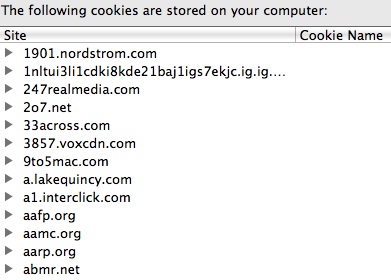
A few of the cookies on a computer.
The Wall Street Journal is publishing a series on privacy, describing how the digital documentation of our online lives is affecting our private lives and explaining the steps individuals and families can take to protect their privacy. A graphic in the series provides readers with step-by-step instructions to make Chrome, Firefox, Safari, and Internet Explorer protect privacy.
Another part of the Journal series, a July 30, 2010 article, Sites Feed Personal Details to New Tracking Industry, provides additional information about tracking, detailing the steps that occur when a group collects a user’s information and then sells that information to companies and advertisers.



 Media! Tech! Parenting!
You must be logged in to post a comment.