Posted in 21st Century life, 21st Century parenting, citizenship, civics, parents and technology, video games

iCivics: Sandra Day O’Connor is a Video Game Entrepreneur

Screen Shot 2016-03-29 at 4.48.36 PM
Click to visit iCivics!

When she retired as a Justice of the Supreme Court, Justice Sandra Day O’Connor could have headed to the golf course or just relaxed. But she did not. Instead, she started an educational organization, iCivics, and she has been instrumental in the release and promotion of that group’s free video games — 19 of them!

iCivics is a non-profit founded by Justice O’Connor, and its goal is to “empower teachers and prepare the next generation of 21st Century students to become knowledgeable and engaged citizens.” Read the iCivics story.        

The organization has also created video games along with lesson plans and resource materials that aim to fill in the gaps in students’ civics education. Unfortunately, the subject has often fallen by the wayside in many schools, so the focus of the games is to help kids learn about the different branches of government and about their responsibilities as citizens. The games encourage figuring out and solving problems rather than simply memorizing information.                     Continue reading “iCivics: Sandra Day O’Connor is a Video Game Entrepreneur”

Posted in 21st Century life, 21st Century parenting, digital devices, digital kids, digital parenting, parents and technology

Screenagers: An Excellent New Documentary & Digital Parenting Resource

Watch the official trailer below.

I just finished reading a New York Times Well Blog article about Screenagers, a new documentary that addresses the challenge that too much screen time presents for families. The March 15, 2016 piece by Jennifer Jolly interviews Dr. Dulaney Ruston (read about some of her past projects), the director of the documentary, Screenagers. Dr. Ruston is also in the film.

This movie shares evidence-based scientific research on screen time — a reason the movie will become an important resource for educators and parents as they struggle with the issue of how to manage 21st Century young people and screen time. The experts in the film offer advice about how to support and guide young people as they grow up in a densely digital age. Thank goodness the film focuses on facts and does not inspire fear.

The issue of parents designing and using contracts or agreements and how much they help parents and kids focus on important screen times issues come up in the article and in the documentary. You can check out a comprehensive list of sites that offer these types of contracts and agreements on MediaTechParenting.net. You can also read this blog’s digital parenting checklist.

View the Screenagers Official Trailer                                Continue reading “Screenagers: An Excellent New Documentary & Digital Parenting Resource”

Posted in 21st Century life, 21st Century parenting, digital devices, digital kids, digital life, mentoring digital kids, parents and technology

Another Digital Parenting Book That’s Scary – Sigh…

fear riskSo many digital parenting books and articles generate fear and anxiety, and American Girls: Social Media and the Secret Lives of Teenagers is no exception. The big question is whether or not this book, or any of the others, can inspire parents to get serious, learn about the relationships and issues their children encounter with poorly supervised mobile devices, and then figure out how to guide and, yes, supervise their children.
Journalist Nancy Jo Sales offered us a preview of her book in a 2013 Vanity Fair article, Friends Without Benefits, and now that I’ve read both the book and the article, I’d recommend going for the article. The book definitely offers many more interviews with girls, providing an intensive gaze through the prism of 21st Century adolescent digital life.

Continue reading “Another Digital Parenting Book That’s Scary – Sigh…”

Posted in 21st Century life, 21st Century parenting, digital devices, digital life, media diet, parents and technology

Screen Time: Myths & Facts (and More)

Screen Shot 2016-03-03 at 7.44.51 PMCheck out a cool infographic over at Tuned in Parents that addresses many screen time questions. The image was created using information from a broad array of evidence-based research conducted by organizations such as Common Sense Media, The American Academy of Pediatrics, Zero to Three, PBS, and a number of research sources, and the infographic addresses many of the questions that parents continuously mull over.

Screen time is for many of us is a conundrum. Most parents and teachers (and grandparents, too) wonder just how to balance the time children spend with screens. Our goal, after all, is to create digital wellness for our children and ourselves — a sometimes lofty goal.

We have many questions including: Continue reading “Screen Time: Myths & Facts (and More)”

Posted in 21st Century Learning, 21st Century life, evaluating web site resources, information credibility, parents and technology

Building Habits of Evaluation into the Conversation & the Curriculum

Screen Shot 2016-04-01 at 11.28.15 AM
21st Century Vocabulary Words – Evaluation

A few days ago at the public library, I overheard two teachers talking excitedly about a curriculum unit that they were developing. As the discussion progressed, they also began noting their frustration with the cavalier attitudes students demonstrate toward online resources. I was not surprised by the conversation.

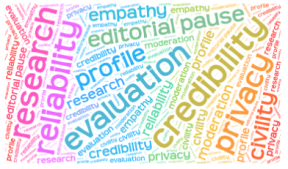
Young people who are growing up today seem to navigate effortlessly through digital materials—learning resources, games, publications, websites, and apps—but we adults often forget their limited fluency when it comes to identifying the quality, reliability, and credibility of information. If they are to become good evaluators kids need lots of practice and plenty of time spent observing adult models.

As the educators continued talking, I thought about two 21st Century learning vocabulary words—evaluation and credibility—and mulled over how we get young people, in an age of unlimited content and information, to develop stronger habits of evaluation.
Continue reading “Building Habits of Evaluation into the Conversation & the Curriculum”

Posted in 21st Century life, 21st Century parenting, 21st Century teaching, data collecting, digital footprints, digital life

Talking about Privacy & Digital Footprints In Grades 7-12

footpathOver the past couple of years, I’ve heard middle and high school kids say that they are sick-and-tired of hearing about their digital footprints — with many exclaiming that they already know what they need to know. My thought? They understand how they make digital footprints, but they don’t always make good decisions when it comes to avoiding the not-so-good digital trails.
What older students — those in late middle and high school — need is a reframed conversation, one that does not focus exclusively on what they do, focusing instead on the broad and complex issue of 21st Century privacy. Continue reading “Talking about Privacy & Digital Footprints In Grades 7-12”

Posted in 21st Century life, digital change, early childhood, electronic toys, language development, parents and technology

Traditional Toys, Electronic Toys, and Language Development

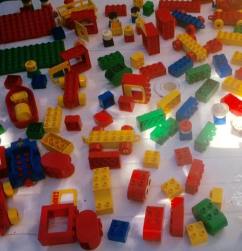
Lego blocks for early childhood playing, conversing, and learning.
Lego blocks for early childhood playing and learning.

In December I read an article about a study published in the journal JAMA Pediatrics describing how different types and amounts of parent/child speech interactions during infant play may increase or decrease, depending on the type of toys that the child uses.

The new research, though conducted on a small sample of participants, finds an association between talking electronic toys and and reduced parent/child interaction during playtime, and the results add to an existing body of literature that observes how electronic toys affect a child’s language development.

In her article, Association of the Type of Toy Used During Play With the Quantity and Quality of Parent-Infant Communication, (abstract) researcher Anna V. Sosa, PhD. discusses her research, carried out with 26 parent and older infant pairs (dyads). The article is not too difficult to read, but it is available only at a library with access to the journal. Continue reading “Traditional Toys, Electronic Toys, and Language Development”