Posted in answers to media questions, digital citizenship, digital photography, media literacy, parents and technology, privacy

Common Sense Media – Protecting Kids’ Privacy

Click to Visit Common Sense Media

Common Sense Media (CSM) is an advocacy group that I’ve noted a number of times on this blog. The group promotes media education rather than censorship and hands-on parent connections with their children’s media lives. President Obama mentioned CSM in his presidential campaign, lauding the organization’s “sanity not censorship” mission.

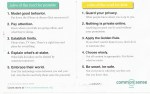
Currently Common Sense Media is focusing on privacy and kids with its Protect Our Privacy – Protect Our Kids campaign. The six goals of this effort, to which I’ve added a bit of additional explanation, include: Continue reading “Common Sense Media – Protecting Kids’ Privacy”

Posted in Back-to-school digital reading, digital parenting, digital world reading habits, homework, parents and technology, research on the web, web research

Digital Reading: How Much Does Your Child Trust Search Links?

If you enjoy this post, check out my August 2010 post about using online databases, Staying Ahead With Online Resources, about online data.

The next time you watch your child begin a web search for a school project or other academic activity, take a few minutes to observe more closely how he or she selects web resources. In Trust Online: Young Adults’ Evaluation of Web Content (this abstract site leads to a free PDF of the article), professor Eszter Hargittai and colleagues form the Web Use Project at Northwestern University, describe how students tend to place huge amounts of trust in the initial hits retrieved by search engines such as Google and Yahoo.

With first year students in a required writing course at the University of Illinois Chicago (chosen because of its highly diverse student body) researchers conducted a written survey of 1060 students enrolled in the classes. Next researchers selected a stratified random sample of 192 students to observe in person as each student performed 12 specific web-based tasks. Learn more about a stratified random sample.

Interesting Observations

  • To complete a web-based task, students usually went to a search engine.
  • After search engines presented links, students tended to follow the first few links, apparently assuming that the first links in a search were reliable resources to pursue.
  • When they looked at a list of provided links, some had difficulty knowing the difference between regular links and sponsored links.
  • As they followed these links, students did not appear concerned about who authored the sites that they found (only 10 percent of the students commented about a site’s authors or the credentials presented).
  • To complete tasks students relied on brand names, and corporate brands dominated.
  • SparkNotes, an online version of Cliff Notes, dominated.
  • For credible sources many students favored .gov and .edu sites as more credible sites.
  • Many expressed trust in .org, because they are all not-for-profit sites, although these days just about anyone can get a .org web address.
  • To verify information, less than half of the observed students consulted a second website.
Posted in answers to media questions, digital parenting, healthy media images, media literacy, parents and technology

Watch What You Watch – New Media PSA for Girls

A couple of weeks ago a group of media literacy advocates gathered in the Washington, DC area for the Healthy Media for Youth Summit, focusing on the importance of media literacy and the need to address negative female media images. According to a press release, the group  “…considered and identified ways to promote media messages that inspire, empower, and engage youth.”  Attendees watched the premier of this amazing and engaging public service video announcement.

After you watch the video, pass on the link to parents and teachers who will share it with young people. Any parent with a daughter moving into middle school and adolescence knows how frustrating it is to watch a child interact with unhealthy media images in magazines, movies, television shows, and now spread all over the World Wide Web. Parents of boys have similar concerns, though this particular PSA is aimed at young women and girls.

Continue reading “Watch What You Watch – New Media PSA for Girls”

Posted in acceptable use, digital citizenship, digital parenting, parent education, parents and technology, resources to read

Check Out Common Sense Media

Common Sense Media, a not-for-profit advocacy organization designed for families, offers trustworthy information, media evaluations, and all sort of online tools to help  parents, kids, and educators become more sophisticated consumers. Think of Common Sense Media as an information portal rather than a mere website. Parents, no matter the age of children in the family, can consult the organization’s web  site for age appropriate information about movies, current media events, digital citizenship advice, and much more. A separate part of the website provides information for educators and schools. Common Sense Media is  non-partisan, and you can learn more at the Common Sense Media FAQ.

A few of the organizational core beliefs (others can be found at the website) include: Continue reading “Check Out Common Sense Media”

Posted in answers to media questions, digital parenting, media literacy, parent education, parents and technology

The Center on Media and Child Health-Meet the Mediatrician – Bookmark It

Do you constantly ask questions about the influence of media on your children? The Center on Media and Child Health (CMCH) website at Boston Children’s Hospital is a reservoir of information for parents, teachers, pediatricians, and other professionals. Led by pediatrician Michael Rich, MD, MPH, a professor at Harvard Medical School, the mission of the organization is to “…empower both children and those who care for them to create and consume media in ways that optimize children’s health and development.”

The Center and its staff are especially concerned with helping parents become skilled at overseeing the media that children consume. The philosophy is not to banish media — that is impossible anyway — but to help adults and children learn how to manage it skillfully, as well as to understand direct and subliminal media messages. You can also visit the CMCH blog for regular and timely posts about children, adolescents, media and research.

In addition to the resources at the CMCH Dr. Rich writes a column, Ask the Mediatrician, answering questions about media and children. Anyone can submit a question, and an archive of past questions and answers is posted at the site. A button link to this feature is in the middle of the right-hand column.

One of My Favorite Quotes from Dr. Michael Rich

In America we make a distinction between education and entertainment. We learn important values and serious information in school, at church, and in the doctor’s office. But television, movies and other media are entertainment, relaxing “down time for our minds.” Unfortunately, the education/entertainment dichotomy is both artificial and false…Children spend more time using media than they spend at school, with parents, or in any other activity except for sleep. Media are teaching our children, and they are incorporating what they learn into their lives. We must pay more attention to the lessons they are learning.

“Every Moment is a Teachable Moment,” Pediatrics, July 1, 2001 (p.180)