Posted in 21st Century Learning, 21st Century parenting, digital citizenship, digital footprints, digital kids, digital learning, parents and technology

How We Teach Digital Citizenship Makes a Difference

Digital Citizenship Posters Become a Hallway Exhibit
Digital Citizenship Posters Become a Month Long Hallway Exhibit

When it comes to digital citizenship, we cannot just lecture or watch videos.

Everyone learns best by doing — whether it’s tying a shoe, mastering letter sounds, figuring out a science concept, learning to drive, parenting a new baby, or any other activity, including what we need to figure out on computers and digital devices. When people tell us how to do something by talking a lot, most of us can’t wait for the person to stop talking so we can try to do it ourselves.

Now consider how we have gone about teaching 21st Century children — at home and at school — about digital devices and digital world behavior. Mostly adults talk and talk, telling children, pre-adolescents, and teens about all the things that can go wrong and explaining what we don’t want them to do.

Over the past 15 years, I’ve spent way too much time talking to kids about digital life issues and not nearly enough time doing things with them. So these past few years I’ve changed the way I teach.                              Continue reading “How We Teach Digital Citizenship Makes a Difference”
Posted in 21st Century Learning, digital footprints, digital kids, digital world conversations, parents and technology

Digital Footprint Series on All Things Considered

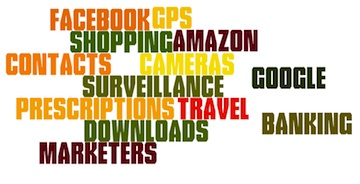
collecting dataWe cannot discuss digital footprints and privacy with children and family members too much or too often. The point is not to scare anyone — the virtual trails that we leave are becoming almost routine — but rather to help family members consider how much data we share, intentionally or otherwise, and whether at times we should consider making at least a few changes in our online behavior.

On September 30, 2013, NPR’s All Things Considered program aired the first of a series of reports on digital footprints, and it’s worth taking the time to listen or read and to learn more about just how much data is collected on each of us. I expect the other reports will be just as compelling. NPR is collaborating on the series with the Center for Investigative Reporting (CIROnline.org).

Reporter Daniel Zwerdling describes the obvious digital trails we leave behind with our computers, mobile phones, GPS-guided car trips, and credit card purchases, and also our less-than-obvious footprints from prescription drug purchases, traffic camera sitings, and wifi tracking and facial recognition cameras that track us in shopping malls. That we make digital footprints is not surprising, however, the amount of data that is collected about us and used to form profiles is extensive and worrisome.  Privacy — our privacy — has gone out the window.             Continue reading “Digital Footprint Series on All Things Considered”

Posted in digital citizenship, digital footprints, digital parenting, kids and privacy, privacy

Privacy Matters So Talk With Kids About It

Privacy spiral
Created with Festisite

After recent news reports about the National Security Agency (NSA) and its data collecting, we adults are thinking much more about the lack of privacy in our lives. We need to remember, however, that including children and adolescents in the conversation is important if they are to become competent and confident digital citizens.

With our online profiles, social media accounts, mobile devices, and files saved to the cloud, almost no one doubts that we have less privacy; however, what is an ideological or big discussion issue for adults is far more complicated and abstract for children. For most adults the sentinel issue — how much data collection intrudes on a family’s or individual’s personal life — is a primary focus. The issue for children, on the other hand, is that without a basic understanding of privacy concepts they lack the information and the skills that they need to recognize and avoid potential problems.

Many years ago my parents designated important topics for dinner table conversations — broad subjects that we recycled again and again as the four of us shared family meals. When one or the other parent said, “We should talk about that at dinner,” my brother and I knew it was something that Mom and Dad wanted us to take seriously.

Today children and adolescents need to experience this same type of dinner table conversation to help them learn about privacy and develop strategies for maintaining as much of it as possible.   Continue reading “Privacy Matters So Talk With Kids About It”

Posted in 21st Century parenting, 21st Century teaching, data sharing, digital devices, digital downloading, privacy

Spring Clean Your Digital Profile

624464b40948768834_ckm6idcwa
Download the document at A Platform for Good.

The idea of spring cleaning each individual’s digital profile is terrific — something for parents and teachers to do themselves and then share with children.

Just like we tidy up our homes and our gardens in March, April, and May, it’s a good time to put our digital domiciles on the to-do list. Paying attention to the upkeep of our digital footprints and devices allows us to clean up and polish online images and minimize potential problems on our devices and gadgets. In the process, we learn a lot about ourselves, but also about the details that others can learn about us online.

So check out the Family Online Safety Institute’s (FOSI) digital life spring cleaning mini-poster over at the organization’s newish web space, A Platform for GoodFOSI designed A Platform for Good as an informational site that helps parents, teachers, and teens connect, share, and do good online.  The website’s about page shares this thought about its mission:

Our vision for A Platform for Good is to start a dialogue about what it means to participate responsibly in a digital world. While recognizing the potential risks, we will celebrate technology as a vehicle for opportunity and social change.

The clean-up-your-digital-life mini-poster, available by link or download, asks each of us to take some time to dust off our online lives. Suggestions include ensuring that our passwords are strong, Googling ourselves to see what comes up from a search, and examining our devices to be sure that they are secure and up-to-date. The Platform for Good document also encourages individuals — adults and children — to evaluate the privacy settings on any social network accounts (many adults and children reside on these sites as if they are second homes or at least daily digital playgrounds).

So why should we go through this process?          Continue reading “Spring Clean Your Digital Profile”

Posted in conversations on commenting, digital footprints, digital learning, digital parenting, digital world conversations, family conversations, parents and technology

Encouraging Digital Kids to Write Polished Comments

Comment

Part of becoming a strong 21st Century digital learner is mastering the art of writing and sharing comments online.

If you read comments at the end of articles or blog postings, you have surely discovered more than a few inappropriate and sometimes distasteful remarks. Sometimes people leave these comments anonymously. Posted by folks who do not understand why websites invite visitors to share thoughts and ideas, many unfiltered remarks are permanently attached to websites — personal indiscretions waiting for the whole world to discover. Even leaving an anonymous comment is not particularly secure.

Read a short post and watch a video on newspaper comments, uploaded by the Nieman Journalism Lab at Harvard. Some newspapers sites, such as the Boston Globe, post a short and succinct comment policy with a link to a more detailed document.

Helping children avoid public website blunders is one reason to discuss commenting etiquette. Children don’t know or they forget that all comments leave digital footprint trails, little paths of information that last much longer than a child’s pre-adolescent and even teenage years.

Continue reading “Encouraging Digital Kids to Write Polished Comments”

Posted in 21st Century Learning, digital citizenship, digital learning, family conversations, parents and technology, privacy, teaching digital kids

Digital Footprints Video – Check it Out!

A well done and interesting presentation about digital footprints found at Harvard’s Berkman Center for Internet and Society website.

Good for middle school as well as older students. Parts of this video can be shared with fifth graders, but the whole video may a bit too scary for that age.

Parents, on the other hand, may consider this as an excellent resource for family conversations about digital life.

You might also enjoying reading my post, Digital Footprints, Changing What We Teach.

Posted in 21st Century Learning, digital citizenship, digital learning, digital literacy, parents and technology, web 2.0

Digital Footprints: Changing What We Teach

Check out Richardson’s Book.

Recently, after reading Will Richardson’s article Footprints in the Digital Age, I began thinking about how much attention we pay to online safety and security without thinking nearly as much about teaching kids how to be literate consumers and competent creators of content. Richardson’s article started me thinking about how I might refine the way I teach digital citizenship to fifth graders.

While safety and security will never be left out of the curriculum, the 2008 Educational Leadership article convinced me to put more effort into helping my students think of digital footprints as only one part of the digital life equation. The other part of this equation involves teaching children to think proactively about the online narratives that they are creating and helping them begin to understand how other people will be searching for each of them — and for appropriate reasons. My students and their parents need to become curators of the digital content in their profiles, just as any highly skilled museum curator creates an exhibition.

A strong digital profile, Richardson writes, “Google’s well.”        Continue reading “Digital Footprints: Changing What We Teach”