Posted in Back-to-school digital reading, parents and technology, teens and technology

Teens and Hearing Loss

These days it seems like every person under 25 is walking around attached to earbuds. What are they listening to? Music on MP3 players — loud music. Over the years quite a bit of buzz has surfaced about teens and hearing loss. Moreover, pediatricians express ongoing concern and several past research projects (article links below) have identified the extent of hearing loss in adolescents.
Now just published research (abstract) by a team from Massachusetts General Hospital and Brigham and Women’s Hospital reports that the problem is serious and getting worse. 19.5 percent of teens may have hearing difficulties according to the study which used data up to 2005-06.

According to the Time Magazine article, the researchers studied teens age 12 – 19, and used data “… collected by the government’s National Health and Nutrition Examination Survey (NHANES), conducted over a six-year period in the 1990s and a two-year period more recently.” Read the Wikipedia NHANES explanation.

Good Links to Read on the Current Research and Several Past Studies

Continue reading “Teens and Hearing Loss”

Posted in Back-to-school digital reading, cell phones, interesting research, parents and technology, teens and technology

Back-to-School Digital Reading Assignment, #3: Teen Cell Phones

For extra insight into the cell phone behavior of your preteen or teenager, take a few minutes to read these 2008 survey results from Harris Interactive, conducted with 2,098 teenagers in the United States. The survey was paid for by CTIA: The Wireless Association, an industry group.  The results appear to be as timely today as they were two years ago. The Marketing Charts website depicts the results with emphasis points. Another cell phone and teen research survey,  Teens, Cell Phones, and Texting, conducted more recently and published in April 2010 by the Pew Internet and American Life Project, an organization independent of industry interests.

The survey results make it clear to all of us — parents and teachers — that mobile phones and smart phones continue to be influential in the world of pre-adolescents and teens and will probably become even more so in the future. These mini-gadgets are permanently anchored in their social lives — and in ours.

A few data highlights from the Harris survey are below. Check the websites for the bigger picture.

Harris Interactive Survey Highlights Include

Continue reading “Back-to-School Digital Reading Assignment, #3: Teen Cell Phones”

Posted in Back-to-school digital reading, homework, online databases, parents and technology

Staying Ahead With Solid Digital Research

September brings the start of a new school year, and once classes begin, it’s not long before the first research reports and projects are assigned. To get started, your child will head right to his or her computer; however, adult assistance can ensure that a student uses quality sources, thereby developing stronger research skills over the long run.

Just about any time digital children search for information at home, they fire up Google. While their teachers use substantial classroom time and energy introducing students to the best online research resources, children often need assistance applying the research lessons on their home computers. As often as possible adults should remind children that results from Google — as wonderful as Google searching is — provide a huge number of links, many of them of questionable quality.

A better way to search for information is to access library online resources and databases — the crown jewels of student research (Links at the bottom of this post will take readers to a few libraries that describe their virtual databases.) Searching in these databases decreases quantity and dramatically increases quality — which, in turn improves the caliber of a student’s assignment.

Continue reading “Staying Ahead With Solid Digital Research”

Posted in digital parenting, online security, parents and technology, privacy

Protecting Privacy Online

On the web just about everything we do is recorded or tracked in some way. The digital footprints of our online lives are collected for all sorts of reasons, advertising primary among them, and while some companies collect data on individuals, others collect data and then combine information to identify trends. Either way, personal online privacy is eroded. Guiding children toward an understanding that nothing they do on the web is private is one of the greatest responsibilities of digital era parenting

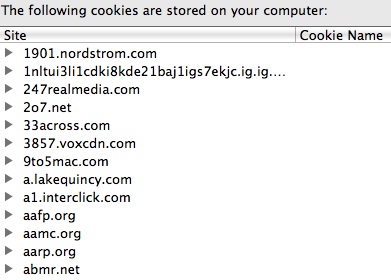
A few of the cookies on a computer.

The Wall Street Journal is publishing a series on privacy, describing how the digital documentation of our online lives is affecting our private lives and explaining the steps individuals and families can take to protect their privacy. A graphic in the series provides readers with step-by-step instructions to make Chrome, Firefox, Safari, and Internet Explorer protect privacy.

Another part of the Journal series, a July 30, 2010 article, Sites Feed Personal Details to New Tracking Industry, provides additional information about tracking, detailing the steps that occur when a group collects a user’s information and then sells that information to companies and advertisers.

Continue reading “Protecting Privacy Online”

Posted in acceptable use, Back-to-school digital reading, digital citizenship, digital parenting, parents and technology

Back-to-School Digital Reading Assignment, #2: Plagiarism

In an age of instant cut and paste, copying the words or ideas of others is easy, so today many students ignore the need to credit sources. According to an August 1, 2010, New York Times article, Plagiarism Lines Blur for Students in Digital Age, many digital natives have difficulty understanding the concepts of attribution, intellectual property, and copyright. Moreover, the article points out that, with so much public conversation and criticism about Wikipedia, many young writers believe that crediting the online encyclopedia is unnecessary.

The Times article is a helpful back-to-school read, because it clarifies a critical issue confronting students — one that affects the quality of their work. By addressing the need to cite sources and maintain personal integrity, parents provide solid support for their children, and they help children avoid problems that arise when Internet sources  in assignments without attribution. Family conversations need to occur early and often, building a child’s respect for digital citizenship.

Continue reading “Back-to-School Digital Reading Assignment, #2: Plagiarism”

Posted in acceptable use, digital citizenship, digital parenting, online safety, parents and technology

Facebook Safety Page – Bookmark It

According to a short article  in School Library Journal and a Facebook blog post, the world’s largest social networking site now has a new safety page as well as an advisory committee of well-known online safety organizations. Both articles offer Facebook users a detailed guided tour of the new site where teens, parents, and educators can go for up-to-date information.

Users can navigate to safety information in several ways. A Facebook safety page looks just like any Facebook page with useful links and a wall with a fairly lively conversation. This page will also post important documents, educational materials, and safety initiatives. Continue reading “Facebook Safety Page – Bookmark It”

Posted in great sites for students, homework time, parents and technology

The Library of Congress Website: Go Exploring with Primary Sources – Bookmark-It

The United States Library of Congress started with Thomas Jefferson’s personal library – 6,487 books. Now it’s an enormous collection of information on almost any topic a person wants to study. The library’s history page notes that “… it has become the largest repository of recorded knowledge  in the world and a symbol of the vital connection between knowledge and democracy.”

The resourceful staff at the Library have a finger on the cultural pulse of the country, so not only do the collections include books, papers, music, film, historical documents, and images, but now the library is digitizing its collection. As of February 2009 there were 15.3 million digitized items and anyone can access and download this information to a computer. According to the Library of Congress blog (subscribers welcomed), if all of those digitized items could be saved to CD-ROM disks, the pile would be a mile high, and that was more than a year ago.

The Library of Congress website is just the right place to get started with research for a class project or homework assignment. Start by going the section for kids and families, with features that are mostly, but not exclusively, useful to elementary and middle school students. Some of the searchable features in this section include: Continue reading “The Library of Congress Website: Go Exploring with Primary Sources – Bookmark-It”