
For years, when I taught seminars in digital citizenship to third, fourth, and fifth graders, the primary topic was always digital footprints. Oh, we discussed and worked on lots of other 21st Century connected-world issues, civility, for instance, but everything seemed to wend its way back to those always-proliferating digital footprints.
We watched and rewatched my favorite digital dossier video from the Berkman Klein Center at Harvard. The students kept diaries and also asked their parents to do so. They found an online calculator to explore and considered how their permanent digital footprints might look a few years down the road. We made a list of all the potential places that might collect digital footprints, one year creating a list that started at the ceiling, went all the way to the floor and then back up to the ceiling again.
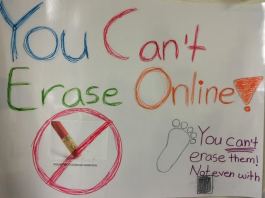
My students were always amazed at the size of their digital dossiers which included, in addition to email, apps, social media, and websites, a range of digital markings that they never considered such as credit cards, license plates, grocery store purchases, EZ pass travel, Amazon purchases, app downloads, and so much more. So when the time came for a final project — more than half or each fifth-grade class chose to concentrate on a digital footprint topic. Two of their posters are shared here. Continue reading “Those Digital Footprints Keep Multiplying”
 It appears that Echo Dot records what children say, saves that personal information, and apparently, it’s still saved even after parents delete It. A group of child advocacy organizations has
  Every day, it seems, we hear of another hack of credit cards or the theft of personal data from health records. It’s difficult to keep track of it all, much less protect passwords (are yours secure?), various accounts for home and work, personal information and so much more. Yet it’s not just hackers. Many legitimate companies collect and share personal data, and they do it without an individual’s consent. It seems like more and more companies are cavalier about the privacy of their customers.


 It seems so simple when we install apps. Download, click agree and OK a few times, and use. But it’s not as simple as it seems because we may be unintentionally giving free access to lots of our data. When is the last time you read the user agreement before clicking “agree?” When was the last tune you made sure your 21st Century digital kid to read the agreement? The app install process is not that simple a process after all, because your data is valuable, and not just for you.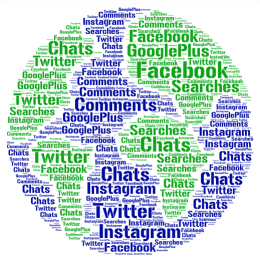
 Media! Tech! Parenting!
You must be logged in to post a comment.