
Posted in 21st Century life, digital life, digital parenting, family conversations, parents and technology, social media, teaching digital kids

So What Happens to Social Media Data? Read the Terms of Service!

unnamedI am preparing to make a presentation to a group of well-informed teens at a school. In the process, I’ve reread the terms of service at a range of social media sites to remind myself about what can potentially happen to the pictures, comments, videos, and other content that we share on social media.

Social media is a part of life in today’s 21st Century world. Rather than wringing our hands about these apps, and the things that can go wrong, it’s a far better strategy for adults to proactively learn about social media, know what their digital children are using, and help them understand the power of social media apps. Moreover, every social media user — young and old — needs to develop strategies to use when things have the potential to go wrong.

Check out the terms of service for your favorite social media site. What do you think these policies mean for the pre-adolescents or teens in your life? The social media companies design these statements — albeit long documents — to make it clear what happens and what does not. What can you do to ensure that your child develops the necessary tools and strategies to think carefully about what content to post and share and what content to avoid sharing? Ongoing conversations about living in the digital world are a critical part of family life.

Each of the clips is from one of the social media websites, and I’ve added a link to each site’s complete terms of service document.  Most of the companies want us to understand these documents.

Continue reading “So What Happens to Social Media Data? Read the Terms of Service!”
Posted in digital footprints, digital kids, family conversations, parent child conversations, parents and technology

How Many Digital Footprints Does Your Family Make?

Screen Shot 2015-02-05 at 3.12.51 PMHave you ever thought long enough about digital footprints to imagine how many digital tracks family members or students make in a day or two?

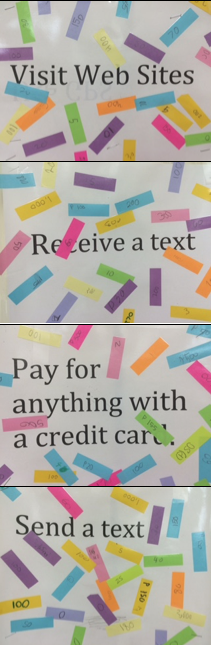
Early in the school year fifth graders and their parents kept a short diary, estimating the footprints in a range of categories and then returned to school with the results. Footprints were estimated for sending texts, banking, receiving texts, purchasing groceries, cell phone calls, online banking, web sites, online purchases, and about a dozen more categories.

Continue reading “How Many Digital Footprints Does Your Family Make?”

Posted in 21st Century parenting, acceptable use, digital parenting, family conversations, gadget ownership, parents and technology

Needed: Digital Rules-of-the-Road for Kids’ New Smart Devices

made_at_www.txt2pic.comAfter the December holidays, lots of digital kids will begin using new handheld devices, but as these new gadgets come out of their boxes, parents need to update or introduce a family digital device action plan. A family’s plan is similar to the rules-of-the-road guide that is so critical to new drivers.

These days most flashy new smartphones, iPads, tablets, music players, computers, laptops, notebooks, and video games are connected to the exciting, but rough and tumble world of the Internet, and much of the time these devices are used in places where adults are not present. So sometime during the first week of gadget ownership – or better yet, as the devices come out of their boxes – parents and children need to sit together and review digital behavior and expectations.

To help come up with your expectations, check out a comprehensive list of Internet sites with information about family digital life contracts and agreements. Many parents include these agreements in the box so the conversation begins as soon as a child opens the gift.                               Continue reading “Needed: Digital Rules-of-the-Road for Kids’ New Smart Devices”

Posted in digital devices, digital parenting, family conversations, parent education, parents and technology, setting technology limits

Many Tech Executives Are Low Tech Parents

iPad MelangeWhen a new iPhone, iPad, Android, extra cool website, or app debuts, many of us, right along with our kids, can’t wait to indulge. One only has to observe homes, schools, shopping malls, athletic events, or even carpool lines (both parents and kids) to see the extent of our devotion to digital devices — sometimes in lieu of face-to-face interaction.

So what surprised me about a New York Times article Steve Jobs Was a Low Tech Parent was that at the height of the early iPad onslaught, Steve Jobs did not give one to his kids. The September 10, 2014 article, by technology reporter Nick Bilton, points out that Jobs was not alone. Many tech executives, it turns out, are conservative about the amount of time their children have access to digital activities and gadgets. Many of these digital world leaders, Bilton writes,: “…strictly limit their children’s screen time, often banning all gadgets on school nights, and allocating ascetic time limits on weekends.”  Others, the reporter points out, don’t even let their children have social media accounts.                    Continue reading “Many Tech Executives Are Low Tech Parents”

Posted in 21st Century Learning, 21st Century parenting, Back-to-school digital reading, data collecting, digital devices, digital kids, family conversations, parents and technology, supervising digital kids

5 Digital Parenting Questions to Ask As Your Kids Return to School

Now that we are all returning to school routines, take the time to make a few 21st Century family decisions — choices that can help the device-users in your family grow more careful, thoughtful, and serious about their connected world  responsibilities. With so much going on the digital world, parenting today is a bit like riding a roller coaster. But some carefully considered decisions can set the stage for fewer digital world scrapes and bumps in a family’s life.

1. Where will digital devices be charged at night? Most educators recommend that families charge devices in a centralized location away from bedrooms. Many parents also set an evening time limit after which mobile phones, iPads, and even the Internet cannot be used.made_at_www.txt2pic.com

2. If students have significant amounts of online homework, where will they work? Dining room table? Family room? Den? Most educators and pediatricians suggest that students do  homework on computers that are located in places where other people also spend time and not in the bedroom. Check out How Does Multitasking Change the Way Kids Learn over at the KQED Mindshift website.

Continue reading “5 Digital Parenting Questions to Ask As Your Kids Return to School”

Posted in 21st Century parenting, connected learning, digital kids, digital life, family conversations, Internet statistics, parents and technology

Amaze Digital Kids with Internet Statistics!

Royal PingdomDo you wish you could amaze the digital kids in your life with trivia or fun facts about the connected world?

For the past couple of years, the Royal Pingdom site has posted a yearly overview of Internet statistics. The post, Internet 2012 in Numbers, shares some interesting figures, and they will indeed help you amaze the digital natives in your life. Moreover, these statistics can serve as excellent conversation starters and provide good context to help connected learners understand more about the size and scope of the digital world that they take for granted.

Here’s a sampling from the 2012 post. By the end of the year the Internet featured:

  • 425 million active Gmail users
  • 635 million web sites
  • 51 new web sites added during the year
  • 246 million domain name registrations
  • 2.4 billion Internet users and 565 million of them are in China
  • 175 million Tweets per day
  • 40.5 years as the average age of a Facebook user
  • 4 billion hours watched on YouTube per month

Check out the many other stats and some nifty graphs. Remember, though, that the statistics are from 2012. Royal Pingdom has also compiled numbers for 2008, 2009, 2010, and 2011, so you can have some fun comparing and contrasting the numbers from year to year (and watching them grow). The site has not posted statistics for 2013 – at least not yet.

Posted in digital learning, Facebook, family conversations, parents and technology, privacy, social media

Privacy Settings Can’t Always Protect You

All of us — children, parents, and teachers — need to think about the security of our privacy settings. Part of learning to live in the digital world involves understanding and competently using these settings, but we also must recognize their limitations.

Privacy WaveOnce we post or share digital content, the privacy of the information depends on the good judgment of others. No matter how securely the  settings, our friends, who in theory understand our expectations, can err in judgment by copying, taking screen shots, or sharing the content in another digital location. When we post data via social media, we cede control of that information to others who may not abide by our privacy preferences.

In a Wired article, Don’t Make My Mistake: Always Think Before You Tweet, Randi Zuckerman, the sister of Facebook founder Mark Zuckerman, describes how she shared a picture with friends, only to have one of those friends share it in a more public way and eventually widely via Twitter. The picture caused a huge media stir, with people laughing that Zuckerman, the sister of the Facebook founder, did not understand the privacy settings. But she understood perfectly — it was her friend who did not get it.

Best Quote

Continue reading “Privacy Settings Can’t Always Protect You”