Posted in 21st Century Learning, choosing reliable resources, digital photography, evaluating web site resources, healthy media images, parents and technology, social media

7 Questions to Ask Before Sharing Hurricane Sandy Media With Kids

The Pier Before the Storm
Photo by Marti Weston, 2008

Parents and teachers of digital kids should make it a habit to evaluate media for authenticity and reliability rather than automatically sharing dramatic images with children. Evaluating media is a critical 21st Century skill — for adults and children

The other day a friend sent me a link to a storm picture. The image featured a familiar ocean pier with huge waves about to crash onto its farthest end. (The photo at left is the pier long before the storm). While the drama of the image intrigued me, on reflection I was bothered because I could not learn anything about the website that hosted the image. Other than labeling the town and the storm, the photograph offered no other identifying narrative.

With its ethereal quality, the image looked as if the pier was superimposed over a dramatic ocean scene — the waves and spray crashing at one end while the rest of the structure was clear without any water or spray obstructions. Moreover, since I was familiar with the location, I could not figure out where the photographer stood to take the picture. Perhaps I was wrong, but since I could not discover anything more about the picture, I decided not to send it to anyone else, and I am not even posting it here.

When a huge emergency like Hurricane Sandy occurs, digital pictures and videos circulate all over the web and via social media. A fair amount of these digital materials misrepresent the situation. To avoid focusing too much on the misrepresentations we need to apply some 21st Century common sense. Continue reading “7 Questions to Ask Before Sharing Hurricane Sandy Media With Kids”

Posted in 21st Century Learning, digital citizenship, digital learning, evaluating web site resources, parents and technology

New Google Lessons: Understanding YouTube and Digital Citizenship

Visit the Google lessons site.

Check out the Google interactive lessons, videos, and slides, all focused on digital citizenship, privacy, and YouTube best practices. Useful for teachers as well as parents, these discrete units are easy to use and share, especially when students need an organizational framework before beginning to look for school project resources. Each lesson is readily downloadable as a Google Doc and even for other presentation media such as PowerPoint.

Many of the Google videos include tips that can help students use YouTube more effectively while honoring copyright principles and evaluating content carefully. Google developed these digital resources for secondary students, but in many schools, the videos will also be valuable for middle schoolers. Even fifth grade teachers may find that some of the videos can help them in the context of curriculum units.

A conundrum exists, of course…          Continue reading “New Google Lessons: Understanding YouTube and Digital Citizenship”

Posted in 21st Century Learning, digital learning, digital parenting, evaluating web site resources, family conversations, online research, parents and technology, teaching digital kids

Help Students Evaluate Digital Sources-Howard Rheingold Video

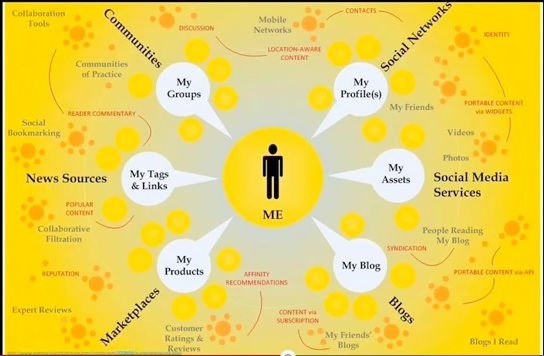
Rheingold’s vision of a person’s personal trust network copied from the video.

Teaching children to evaluate resources and determine credibility is the biggest challenge of our 21st Century world. Until now authoritative textbooks have dominated the world of education, but not anymore.

In the video below, Howard Rheingold, the digital thinker, professor (Stanford and UC Berkeley), and personal learning network advocate, describes how parents and educators should help students develop the ability to ask questions when they discover digital information, thereby evaluating the quality or lack of it. Rheingold calls this “crap detection,” a term originally coined by Ernest Hemmingway.

We need to teach kids, Rheingold points out, “how to search and how to find” and how to be sure that what is found is of good quality. The long-range goal is for each individual to develop what Rheingold calls a “personal trust network.”

Continue reading “Help Students Evaluate Digital Sources-Howard Rheingold Video”

Posted in attributing sources, digital learning, digital parenting, evaluating web site resources, parents and technology

10 Tips to Ensure that You Use Accurate Digital Information

Even in today’s fast-paced virtual world, these tips never seem to age. Help kids learn to make good choices.

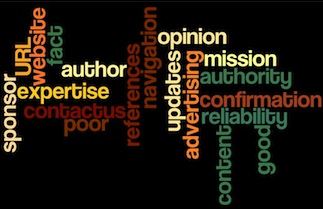
1.  Who made the site? Is it from a university or other institution? Is it for-profit or non-profit. Corporate?  Look for an “about” link that describes the site.

2.  When was the site made and how often is the site updated? Somewhere, usually at top or bottom it should tell. Is this site updated recently?  If not this may be a reason to check out another website on your topic.

3.  Is it possible to contact the webmaster or the sponsor of the site? Is there a “contact us” link somewhere on the page?

4.  How much advertising is on the page, and how aggressive is it? Good sites that use advertising are careful to keep it from being “in your face.”

5.  Does the site state its mission? Why was it set up?

Continue reading “10 Tips to Ensure that You Use Accurate Digital Information”