Posted in acceptable use, Bookmark It!, digital citizenship, digital parenting, family conversations, parents and technology

NetSmartz: Digital Suggestions for Summer Family Fun

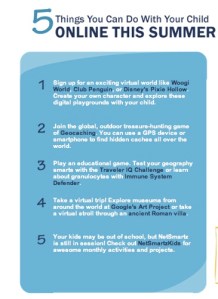
This set of summer digital activities, 5 Things You Can Do Online With Your Child This Summer, arrived in my e-mail a week or so ago. The list includes simple, but open-ended activities, each one enjoyable by itself, but with the potential to lead parents and children in many additional and enjoyable digital directions during the summer vacation. The ideas come from NetSmartz.

NetSmartz is an interactive and educational program for parents and kids, connected with the National Center for Missing & Exploited Children® (NCMEC). NetSmartz uses its considerable resources and clout to educate, engage, and empower children and their families about digital care and safety.

Visit the NetSmartz parents’ site. — Visit the site for Kids. — Visit the site for teens.

NetSmartz also features a wide range of digital safety educational resources for educators and law enforcement professionals.

No blog, though, at least not one that I can find. Puzzling since they provide some excellent information on blogging. Why not an example of what good blogging looks like — maybe one for parents and one for adolescents?

Posted in digital citizenship, digital parenting, parent child conversations, parents and technology

Choosing a Screen Name this Summer? 5 Tips for Families

Strange screen names seem to pop up in the summer more than any other time of the year.

The best screen names are boring. In a virtual world, where even a nuanced word association can invite unfortunate behavior, taking care when choosing these online names is critical. The easiest solution is to use a first name, nickname, or a different name, perhaps paired with numbers at the beginning or end. Many years ago I used 29Marti1607, a name that attracted little attention except once when someone asked me if my ancestors had lived in colonial Jamestown (settled in 1607).

Children experiment with edgy screen names as one way to look and feel cool, and as they get older, their choices often push limits, unintentionally drawing attention. A suggestive name in any number of categories can encourage the people who interact with your child — even people who are friends — to behave impulsively in the web world where adult supervision is minimal. It is way too easy for two-way communication to go awry.

A Few Screen Name Selection Tips Continue reading “Choosing a Screen Name this Summer? 5 Tips for Families”

Posted in digital citizenship, digital parenting, media literacy, parent child conversations, parents and technology

Kids, Parents, and Those Very Public Digital Mistakes

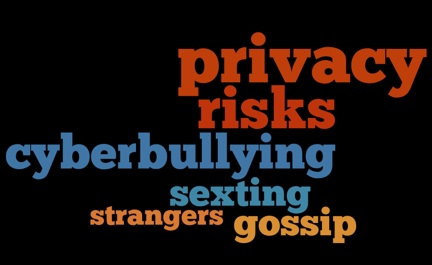
Made with Wordle.

Attention!

Another public figure has made yet another public digital gaffe, giving parents one more opportunity to engage the family in a discussion about the unrelenting power of digital tools.

Representative Weiner (D-NY) is just the latest, and it looks like public figures and celebrities will continue to make these public mistakes, like clockwork, for a long time to come. We can laugh at the ineptness of these public personalities, but the bottom line is that we are all one instant gratification click away from making a public and embarrassing error.

Although we may worry about the safety of our children and their activities on the web, most of these problems, while alarmingly publicized and widely and repetitively covered in the media, are not the biggest risk for children.

What we should dread, however, is the potential harm from a digital misjudgment spontaneously sent off via e-mail, text, Twitter, voicemail, or whatever else we all find to use in the future. Instant digital missives, unlike the gossipy handwritten notes we adults used to pass around to a few people at school, can instantly become public and humiliating. Or they can lie quietly, waiting in the vastness of the web, until some reason arises for people to seek out information about us.

The New York Times article, Erasing the Digital Past, is a must-read for everyone who uses electronic tools and toys, pointing out that the electronic world is public, permanent, and non-erasable. Watch the digital footprint video (embedded at the bottom of this post) from Harvard’s Berkman Center for Internet and Society to learn even more. Continue reading “Kids, Parents, and Those Very Public Digital Mistakes”

Posted in cyber-bullying, digital citizenship, digital parenting, family conversations, online safety, parent child conversations, parent education, parents and technology, teens and technology

Teens, Parent Anxiety, and the Internet

Made with Wordle!

Day after day frightening stories bombard us with warnings about what might happen to children and teens when they use the Internet and World Wide Web, so it’s useful to remind ourselves that these digital resources can provide our children with unparalleled opportunities to learn, socialize, and become active citizens. An article, Our Overblown Paranoia About the Internet and Teens, recently published in the online publication, Salon, provides just such a reminder.

Pediatrician Rahul Parikh, who practices in the San Francisco Bay area, points out that, despite all of our anxiety about teens and Internet risks, no statistics really exist to offer a full picture of the incidence of exposure to risk. Those few that do are often biased because of a common problem for research, posing questions to get the desired answer. Situations that do occur are often covered by a hysterical media, making us feel like a problem happens over and over, just around the corner. Continue reading “Teens, Parent Anxiety, and the Internet”

Posted in digital citizenship, digital parenting, electronic communication, parents and technology, social media, teens and technology

7 Ways Today’s Teens Communicate — Some Surprises

Check out this cool graphic from the Pew Internet and American Life Project.

These graphs (click on the image to go to a larger picture at the Pew site) depict the various ways teens communicate. Notice how low e-mail ranks among the electronic forms of communication that today’s teens use. The data come from a survey of teens age 12 – 17 conducted as a part of the research for Pew’s report, Teens and Mobile Phones.

From the Pew Website

The graphic below shows daily use of a variety of communication technologies – and suggests that while text messaging as a daily activity for teens has grown astronomically over the past three years, other communicative technologies have remained relatively stable or have declined slightly, suggesting that the increase in texting has layered on top of the other modes of communication that teens employ.

Other Interesting Pew Internet Reports include Social Media and Young Adults and Teens and Sexting, both released in 2010.

Thanks to Pew for reminding me of this research via Twitter (@PewInternet).

Posted in Bookmark It!, digital citizenship, digital parenting, online safety, online security, parents and technology, resources to read

FTC Net Cetera and OnGuard Online Family Website – Bookmark It!

Visit OnGuard Online

Are you searching for reliable tutorials to help you learn more about managing digital-age parenting topics? Check out the short book Net Cetera: Chatting With Kids About Being Online. Simple, straightforward, and easy to read, this publication covers most of the relevant digital topics, and its comprehensive table of contents is a ready-to-use outline that can help to guide virtual world family conversations. Net Cetera, published by the Federal Trade Commission (FTC), is also available as a PDF download. Moreover, the booklet can be ordered in quantity for a PTA, book club, church activity or other parent group.

The FTC website, OnGuard Online, which features Net Cetera, is also a repository of information that can help parents to address concerns with their digital children. Each subject is covered with three sections, starting with a review of the “Quick Facts.” A more detailed explanation follows with a section of links that connect to additional online resources.

Topics include:

  • Kids Privacy
  • Computer Disposal
  • Identity Theft
  • Scams
  • Social Networking
Visit OnGuard Online


This site, and especially the Net Cetera booklet, is useful for everyone in a family, including grandparents or other seniors.  The type can be adjusted so that it is larger, and many of the topics covered provide information that is critical for aging family members to understand, and perhaps grandchildren can help do some of the teachings.

Posted in acceptable use, American Academy of Pediatrics, cell phones, digital citizenship, digital devices and gadgets, digital parenting, digital photography, parents and technology

Evaluating websites: Be Sure of the Quality!

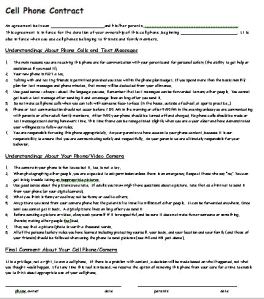
Download the phone contract PDF.

It’s May and every year at this time I work extensively with fifth graders on podcasts and other multimedia projects. Each year the students’ conversations drift toward their anticipation of sixth grade, middle school … and new cell phones. A connection exists, in their minds, between the first year of Middle School and getting the all-important digital accessory. Actually, the kids feel it’s an accessory, but their parents consider it a lifeline — something to keep them connected to their children whenever it’s necessary (and sometimes when it isn’t that necessary).

A good getting-started article to read is the New York Times piece When to Buy Your Child a Cell Phone, written by reporter Stephanie Olsen in June 2010. While quite a few children now have cell phones in sixth grade, a few parents prefer to wait to purchase a child’s phone for a year or so beyond the start of Middle School. Common Sense Media’s cell phone page provides lots of helpful information for parents, including a short video to assist with the decision-making process. The American Academy of Pediatrics (AAP) Healthy Children website also has an article, Cell Phones, What’s the Right Age?

Continue reading “Evaluating websites: Be Sure of the Quality!”