Last June I wrote How Much Privacy Do I Have? DuckDuckGo Gives More, describing how I am using the DuckDuckGo search engine for most of my online inquiries. Interestingly after six months using the alternative, I’ve made some observations and noticed some changes. I’m so glad that I switched.
Although I believed that I had taken significant steps to maintain a modicum of privacy in my 21st Century digital life, I was wrong.
I am less than halfway through Bruce Schneier’s book, Data and Goliath, all about the hidden methods of collecting our personal data, and already I am discovering that my personal privacy plan has many holes. I’m not that different from most adults. Privacy, however, is going away, and we collaborate in the process by not making any specific decisions and by going along with the ways the Internet tracks us. We do have choices, and we educators and parents need to learn a lot more about maintaining privacy and then share what we’ve learned with young people.
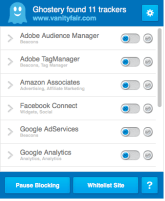
Vanity Fair has 11 trackers and widgets.
In the book’s first chapters Schneier addresses data collection, how trackers get added to my computers and digital devices as little files called cookies. With a quick search, I found over 1,000 cookies and cache files on my laptop, despite the fact that I only allow cookies from places that I visit (about 650 were cookies). Some of these are useful and don’t bother me — like the cookies for the several catalogs where I regularly make purchases, the newspapers which I read, and the educational and musical organizations which I like. Read more about cache. Continue reading “How Much Privacy Do I Have? DuckDuckGo Gives More”→
A bank of computers in a data center. Via Pixabay.
Finding good resources to help young people learn and understand more about data and photo collecting is key to building strong citizens in our 21st Century digital world. We adults can also learn a lot in the process.
Interestingly, no matter how we set privacy settings (stipulating who can see our images), the sites where we post and share continually accumulate information about us — much, but not all, gleaned from the photos themselves. Yes, it’s about digital footprints, but it’s much bigger than that.
Over the past couple of years, I’ve heard middle and high school kids say that they are sick-and-tired of hearing about their digital footprints — with many exclaiming that they already know what they need to know. My thought? They understand how they make digital footprints, but they don’t always make good decisions when it comes to avoiding the not-so-good digital trails.
While we have many good reasons for wearing fitness trackers, Raskin’s piece explains how the device companies accumulate, post, and use our data. More importantly, she describes how the fitness data has inspired public health initiatives — just one more reason to wear a tracker. With all the concern about personal data in our 21st Century lives, it’s nice to know that sometimes the information can be put to good use.
Exactly one year ago, I began wearing my JawboneUP 24 personal fitness bracelet. The first day I put it on, expecting to record 10,000 steps without thinking much about it. Boy, was I wrong. Despite the fact that I exercised four to five times a week, it turned out that many days I was barely getting over 5,000. For weeks I had to focus on accumulating the other 5,000. Over the first month, however, I discovered that I liked keeping track of my steps, and by the day things got easier and easier.
We hear, over and over, about how people are tracked online. Now we have a way to watch for ourselves and learn. Download Ghostery and let it tell you who is keeping track of your data. When I downloaded it to my computers, it was so amazing that I could not believe my eyes!
Ghostery identified 4 trackers on Word Press.
The quick install, available for every browser, makes it possible to identify and display any website tracker that is collecting information. As a user moves from website to website the number of trackers changes. It’s amazing, because, despite the fact that I have checked the box in my browser asking sites not to track me … they do.
At first I was skeptical, so I went to the Ghostery website to find out why a company would “out” so many other companies. There’s an enlightening video to watch and lots of information about how and why the company does what it does. Read more on the company’s about page.
It is a given in this age of connected life that our privacy is much diminished, and it does not matter whether we are children or adults. The trick seems to be for each us to make thoughtful decisions about what family members share and, as much as possible, be aware what is shared or collected about us.
For me, this has been an interesting week where privacy and kids’ privacy is concerned, because four distinct events occurred.




 Over the past couple of years, I’ve heard middle and high school kids say that they are sick-and-tired of hearing about their digital footprints — with many exclaiming that they already know what they need to know. My thought? They understand how they make digital footprints, but they don’t always make good decisions when it comes to avoiding the not-so-good digital trails.


 Media! Tech! Parenting!
You must be logged in to post a comment.