
Posted in 21st Century Learning, 21st Century parenting, digital change, digital devices, digital wellness, digital-device-free times, mentoring digital kids, modeling for kids, parents and technology

After Buying a Device & Before Giving It to Kids — 2016 Update

iphone-6s
My new iPhone, purchased in early 2016.

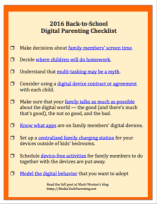
Every 21st Century parent needs a holiday digital parenting checklist that describes the tasks to accomplish between purchasing a new digital device and watching a child gleefully unwrap it. This list gives parents a head start, identifying challenges, offering explanations, anticipating problems, and most importantly, setting the stage for responsible and respectful use of exciting but extraordinarily powerful devices.

The time adults spend preparing for new devices that enter a family’s life is well spent and spending that time up front may well prevent a huge time drain later on after a your child experiences a connected world problem. Parents are simultaneously guides, limits setters, and lifeguards, whether or not they know as much about digital life as their children.
The MediaTechParenting 2016
         Digital Parents’ Holiday and Beyond Checklist        

Continue reading “After Buying a Device & Before Giving It to Kids — 2016 Update”

Posted in 21st Century Learning, coding, collaboration, hackathon, parents and technology, programming, teamwork

Hackathon Participants Figure a Way to Identify Fake News

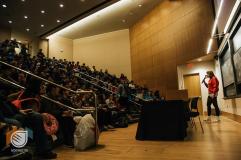
Photo used with permission of Hack Princeton Team

A week or so ago four college students at a Princeton University hackathon came up with a way to identify fake news on Facebook. You can read about the specific fake news solution at a Business Insider article, Students Solve Facebook’s Fake News Problem in 36 Hours.

A hackathon is an event attended by students who gather for a few days to focus on solving problems by using their programming skills. Collaboration is key. According to Zachary Liu, a manager for the Princeton event, about 600 students attended from over 80 universities.

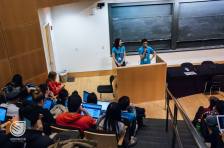
Photo used with permission of Hack Princeton Team

A hackathon is 21st Century learning at its best. The aim of each event is to identify problems that need solving and encourage students to work collaboratively, using their programming (coding) skills, to figure out potential solutions.

At the Princeton event, and at many other hackathons around the country, there is no charge for room and board, and in some cases buses pick up participants at different schools. Travel costs can be reimbursed.      Continue reading “Hackathon Participants Figure a Way to Identify Fake News”

Posted in 21st Century Learning, 21st Century life, 21st Century teaching, citizenship, civics, civility, parents and technology

Post-Election Resources that Support Learning, Dialogue, and Understanding

unnamedAs an educator, parent, and grandparent, I’m heartbroken about the increase in hateful and offensive activities that so many children have witnessed, front and center, during the long months of the 2016 presidential campaign. Just how do we talk to kids when they’ve observed and heard so much?
I ask this question because we parents and educators know the actions to take (where to help and support others, places to volunteer, etc.), the values we want to model (kindness, respect, honoring differences, integrity), and the civics concepts that we need to be certain our students understand — but our task will far more difficult in the 2016 post-election world.

Below is a list or election response and media literacy resources that I’ve found especially useful this past week, materials that I selected because they offer ideas that we can use long-term, not just in the days following the election. Please be in touch if you find other resources that might be added to this list.                   Continue reading “Post-Election Resources that Support Learning, Dialogue, and Understanding”

Posted in 21st Century Learning, 21st Century life, 21st Century parenting, 21st Century teaching, online communication, online security, parents and technology, privacy, public vs private comments, teachers, teaching digital kids

Digital Communication Disrupts the Rules of Civility, Privacy, & Integrity

Click to read the article.
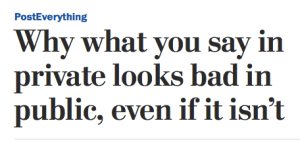
Click to read the Washington Post article.

After spending years teaching digital citizenship and civility in the K-12 world, I’ve now come to the conclusion that we parents and teachers should, in the midst of teaching children, stress that there is never privacy online. Yes, I know that we already teach this — or try to — in most schools and homes, but election 2016, accompanied by the theft and sharing of emails and other connected world materials, is scary. It has proven that everyone can be hurt by what they say online — even when what is said is not intended to generate hurtfulness.

To learn much more about the lack of privacy in private communication read Deborah Tannen’s October 28, 2016 Washington Post column, Why What You Say In Private Looks Bad in Public, Even if It Isn’t. Tannen is a professor at Georgetown University and the author of the bestseller, You Just Don’t Understand.

Our confidential comments may differ from what we say in public. When our candid thoughts become widely available — yes, through hacking, but with kids, it’s through intentional sharing, gossip, or the unintentional mistakes that kids make — words can often be interpreted negatively. Moreover, at least for the time being, we live in a world where stealing a public figure’s private communications and making them public appears to be OK.

Good Quotes from Deborah Tannen’s Article  (Read the entire article for much more)           Continue reading “Digital Communication Disrupts the Rules of Civility, Privacy, & Integrity”

Posted in 21st Century Learning, 21st Century parenting, back-to-school, digital footprints, digital parenting, digital parenting checklist, parents and technology

9 Digital Parenting Back-to-School Tips – 2016-17 (With Printable PDF)

Screen Shot 2016-08-21 at 9.44.02 PM
Click to download a PDF document.

You can also read a 2019-20 back-to-school update of this post.

What can parents and teachers do to ensure that digital kids, with their hand-held devices, connected school activities, homework, and other online activities, get off to a good start at the beginning of the school year?

Back-to-school preparation is more than school supplies, lunch boxes, and carpool arrangements. It also involves reviewing and articulating connected-life expectations with family members.

To help you consider the issues in your 21st Century child’s digital life, and your own, use this nine-item back-to-school digital parenting checklist to get started. Continue reading “9 Digital Parenting Back-to-School Tips – 2016-17 (With Printable PDF)”

Posted in 21st Century Learning, 21st Century teaching, connected learning, constructing modern knowledge, digital change, digital devices, educational technology, maker movement

Farewell Dr. Papert: May Your Technology & Learning Vision Live Forever!

Massachusetts Institute of Technology’s Professor Seymour Papert passed away recently.

A picture I took onside the MIT Media Lab.
A picture I took inside the MIT Media Lab.

While he had been fragile for some time following an accident, his extraordinary influence on teaching and learning, including how he really created the maker movement more than 25 years ago, will continue for many years to come.

Without his wisdom and vision, many educators in the school technology fields, where I spent most of my career,  would not have been fortunate enough to pursue exciting and deeply meaningful vocations. Every school, every teacher, every educational technology specialist, and every K-12 technology director can trace their professional activities back to Dr. Papert’s deep understanding of the power of learning with computers and digital devices. The Media Lab remembrance page notes that:

Papert’s career traversed a trio of influential movements: child development, artificial intelligence, and educational technologies. Based on his insights into children’s thinking and learning, Papert recognized that computers could be used not just to deliver information and instruction, but also to empower children to experiment, explore, and express themselves.

Continue reading “Farewell Dr. Papert: May Your Technology & Learning Vision Live Forever!”