Posted in libraries, parents and technology, reading, research on the web

Parents, Libraries, and Reading in Today’s Digital World

parents libraries reading PewLibraries continue to play a significant role in the development of young readers, even as digital resources increase and children engage in more digital activities.

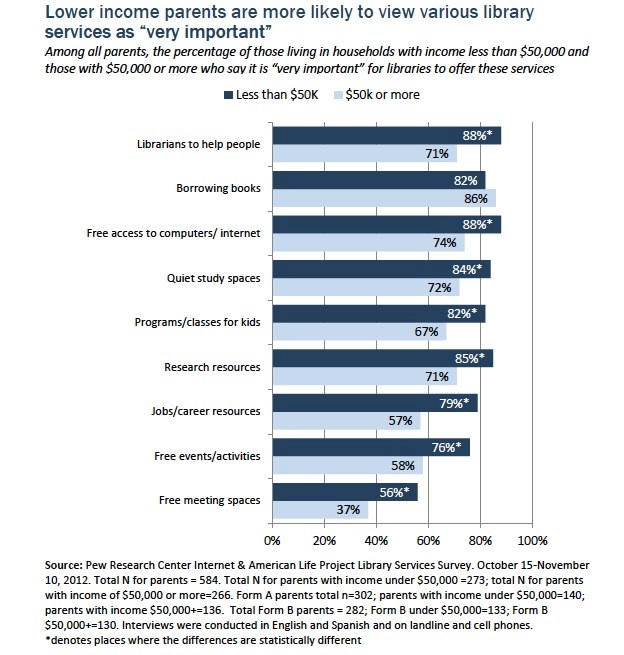
Recent research by the Pew Internet and American Life Organization finds that families with incomes under $50,000 consider libraries to be an important resource in the lives of their children.

Whether they are considering digital or non-digital opportunities, these families are more likely to rate library services as important than parents in families with higher incomes.

Some interesting research findings, quoted from the report:

  • 94% of parents say libraries are important for their children and 79% describe libraries as “very important.” That is especially true of parents of young children (those under 6), some 84% of whom describe libraries as very important.
  • 84% of these parents who say libraries are important and a major reason they want their children to have access to libraries is that libraries help inculcate their children’s love of reading and books.
  • 81% say a major reason libraries are important is that libraries provide their children with information and resources not available at home.

Too see other graphs and learn more about the research released on May 1, 2013, read the report, Parents, Children, Libraries, and Reading.
Posted in digital change, digital parenting, educating digital natives, kids changing lives, parents and technology, teachers, teaching digital kids

Do Today’s Digital Kids Learn Differently?

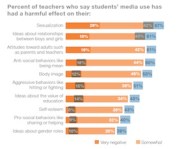
Image from Children, Teans, and Entertainment Media: The View from the Classroom
Image from Children, Teens, and Entertainment Media: The View from the Classroom

In case you missed it, check out the November 1, 2012 New York Times article, Technology Changing How Students Learn, Teachers Say.

Technology reporter Matt Richtel shares information about two recent studies that examine, on the basis of educator surveys, how today’s digital children may be learning differently than in the past. Although individual responses are subjective, the results of the surveys “are considered significant because of the vantage points of teachers who spend hours a day observing students.”

One survey, conducted by the Pew Internet and American Life Project, examined responses from 2,462 teachers. The other, conducted by Common Sense Media, surveyed 685 educators.

It all comes down to attention span. In both surveys, teachers expressed concern that students, used to fast-paced, always changing activities, are less able to focus on an academic task for a prolonged period.

Continue reading “Do Today’s Digital Kids Learn Differently?”

Posted in apps, digital devices and gadgets, digital parenting, parents and technology, privacy

Lots More People are Using Smartphone Location Services

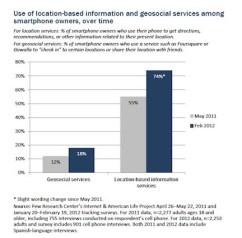
Source: Pew Internet and American Life Project

The Pew Internet & American Life Project has just published new survey results finding that 74% of smartphone owners — that’s three-quarters — appear to be using location services on their phones.

This statistic is double what it was when Pew conducted a similar survey in May 2011. The increase in location services occurs despite privacy concerns about tracking and data collection. Check out the report to look at the data by age, gender, and ethnic group, depicted in a range of charts and graphs.

I am still minimizing or turning off the number of location services that I use on my phone. While some of us use more location services than others on our smartphones, it’s critical for parents to know how location services work and how to limit access on the phones that their children around each day. Many apps ask to turn on location services during the installation process.

Do you know about Foursquare ? If it’s on an adolescent’s cell phone a parent needs to learn about it. Find out more about location services by reading a post that I wrote about location services, Location, Location, Location – Services that Is.

Each adult needs to figure out how much privacy is necessary or desired in his or her digital life and also in the digital lives of children. People seeking one right answer won’t find it, however, it’s best to take the time to understand the devices that family members carry and apps that they use.

Posted in digital parenting, family conversations, media literacy, parents and technology, social media, social networking, teens and technology

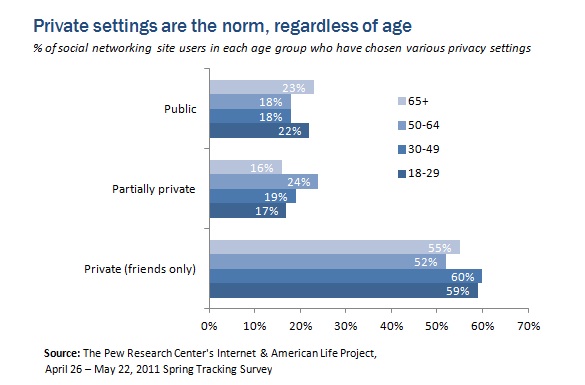
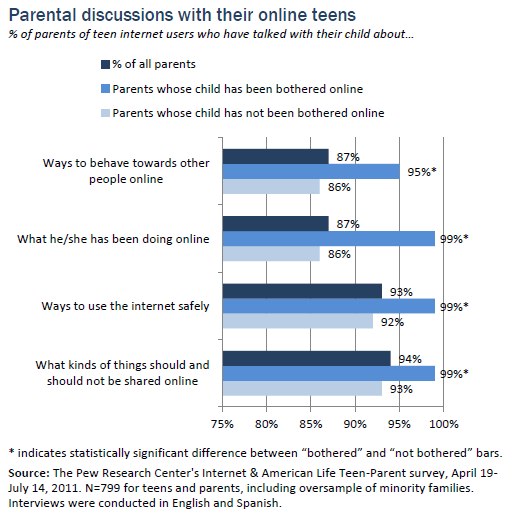
Pew Report on Teen Behavior and Social Media Sites

Pew infographic. Click and view larger version of this image.

Take a few minutes to read at least the main points of the November 2011 report on teens and social networking, published in November 2011 by the Pew Internet and American Life Project. The executive summary is a fairly quick read.

During the spring and summer of 2011 researchers made calls to 799 teens between the ages of 12 and 17, and they also spoke with a parent or guardian of each adolescent. Interestingly, a large number of the teens surveyed reported that their parents and teachers provided them with the best and most helpful advice on digital citizenship issues and other virtual concerns. The media were the third most significant influence.

Browse all of the infographics from this Pew Internet report.

A Few Other Interesting Points

Continue reading “Pew Report on Teen Behavior and Social Media Sites”

Posted in parents and technology, research on the web, social media, social media friends, social networking

Communicating on Social Media: As American as Apple Pie?

Check out the full report at http://bit.ly/vNhmnw

The Pew Internet and American Life Project recently published new social media data, this time asking why American adults use social networks.

From my point of view, keeping in touch with people is a grand old American tradition, as traditional as apple pie. Over the years whether it’s over the backyard fence, via snail mail letter, postcard, telephone, or e-mail, Americans like to connect and communicate.

Interestingly, according to this new Pew data, adults become involved with social media — Facebook, Twitter, Linkedin, and others — because of the ease of keeping in touch. People use a social medium if it makes communicating with friends and family easy and fun.

Moreover, users like that social media now offers faster and faster ways to reconnect with the people from the past — something that was far more difficult in the “olden days.”

Posted in digital citizenship, digital parenting, electronic communication, parents and technology, social media, teens and technology

7 Ways Today’s Teens Communicate — Some Surprises

Check out this cool graphic from the Pew Internet and American Life Project.

These graphs (click on the image to go to a larger picture at the Pew site) depict the various ways teens communicate. Notice how low e-mail ranks among the electronic forms of communication that today’s teens use. The data come from a survey of teens age 12 – 17 conducted as a part of the research for Pew’s report, Teens and Mobile Phones.

From the Pew Website

The graphic below shows daily use of a variety of communication technologies – and suggests that while text messaging as a daily activity for teens has grown astronomically over the past three years, other communicative technologies have remained relatively stable or have declined slightly, suggesting that the increase in texting has layered on top of the other modes of communication that teens employ.

Other Interesting Pew Internet Reports include Social Media and Young Adults and Teens and Sexting, both released in 2010.

Thanks to Pew for reminding me of this research via Twitter (@PewInternet).