Twitter is becoming a more influential part of everyday 21st Century life. However, we all need to understand that not all tweets are sent by people.
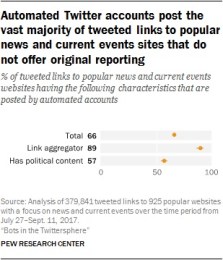
Recently Pew Internet researchers designed a Twitter study aiming to figure out what portion of tweet traffic comes from bots. Bots are automated programs that tweet or retweet information around the web, but they do so without the help of people.
Bots are not necessarily bad or nefarious. Tweets that announce weather, traffic, remind you of a concert starting time, or warn communities of nearby problems serve a constructive purpose, but they are often sent by bots. Continue reading “Twitter’s Got Bots: Lots of Them”→
After spending years teaching digital citizenship and civility in the K-12 world, I’ve now come to the conclusion that we parents and teachers should, in the midst of teaching children, stress that there is never privacy online. Yes, I know that we already teach this — or try to — in most schools and homes, but election 2016, accompanied by the theft and sharing of emails and other connected world materials, is scary. It has proven that everyone can be hurt by what they say online — even when what is said is not intended to generate hurtfulness.
Our confidential comments may differ from what we say in public. When our candid thoughts become widely available — yes, through hacking, but with kids, it’s through intentional sharing, gossip, or the unintentional mistakes that kids make — words can often be interpreted negatively. Moreover, at least for the time being, we live in a world where stealing a public figure’s private communications and making them public appears to be OK.

 Media! Tech! Parenting!
You must be logged in to post a comment.