Posted in 21st Century Learning, digital learning, digital parenting, evaluating web site resources, online research, parents and technology, research on the web

10 Ways to Help Students Evaluate Digital Information

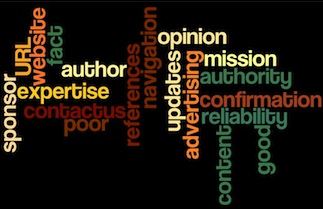
goodwebsitebadwebsiteAlthough I am a big fan of encouraging students to begin any research project with curated resources such as the online databases at a school or public library, I know that many learners head straight for Google.
When students make garden-variety searches on Google, teach them to investigate and ask questions about what they find, especially if they are planning to use a website to learn more about a topic. The strongest 21st Century learners will make the process of asking evaluative questions second nature — examining each and every site before deciding whether or not to use the information.

Questions to Ask About Any Digital Resource          Continue reading “10 Ways to Help Students Evaluate Digital Information”

Posted in digital change, digital parenting, educating digital natives, kids changing lives, parents and technology, teachers, teaching digital kids

Do Today’s Digital Kids Learn Differently?

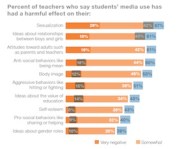
Image from Children, Teans, and Entertainment Media: The View from the Classroom
Image from Children, Teens, and Entertainment Media: The View from the Classroom

In case you missed it, check out the November 1, 2012 New York Times article, Technology Changing How Students Learn, Teachers Say.

Technology reporter Matt Richtel shares information about two recent studies that examine, on the basis of educator surveys, how today’s digital children may be learning differently than in the past. Although individual responses are subjective, the results of the surveys “are considered significant because of the vantage points of teachers who spend hours a day observing students.”

One survey, conducted by the Pew Internet and American Life Project, examined responses from 2,462 teachers. The other, conducted by Common Sense Media, surveyed 685 educators.

It all comes down to attention span. In both surveys, teachers expressed concern that students, used to fast-paced, always changing activities, are less able to focus on an academic task for a prolonged period.

Continue reading “Do Today’s Digital Kids Learn Differently?”

Posted in 21st Century Learning, digital learning, digital parenting, family conversations, online learning, parents and technology

Helping Children Navigate Digital Streets: Ideas for Parents (and Teachers, Too)

Several times recently I’ve mentioned a colleague’s blog post, A Letter to Parents of Digital-Age Students. Published at Getting Smart, this piece is so good that I’ve already shared it with half-a-dozen colleagues and handed it to several parents at my school.

Read the post.

Susan Lucille Davis, a colleague of mine and — lucky for me — a member of my personal learning network, writes about the strategies that we adults must use if we want our children to become savvy and safe digital consumers. The task for adults, whether we know a lot or a little about technology, is to support, guide, and help children as they go about learning to manage the challenges in today’s digital world. We must be adult trail guides.

While Susan Davis directs her post primarily toward parents, educators can also take her information to heart.

Three Important Points in this Article                            Continue reading “Helping Children Navigate Digital Streets: Ideas for Parents (and Teachers, Too)”

Posted in digital parenting, good books to read, innovation, parent education, parents and technology

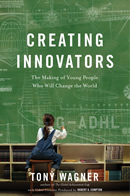
Creating Innovators by Tony Wagner: A Short Review

For some time on this blog I’ve listed Creating Innovators as my current read.

Tony Wagner’s book looks at young adults who are successfully navigating a transforming world of work, where a deep understanding of teamwork and innovation is a prerequisite for success. His profiles focus especially on the educational and parenting experiences that helped each young person flourish. Wagner prods us to identify what we — educators, parents, concerned adults — need to do to engage young learners and help many more of them grow into innovative and creative thinkers.

Creating Innovators features two blended tracks — one text and the other media. Wagner supplements the traditional book with a host of videos that extend and amplify what we have just read. QR codes in each chapter make it easy to access the videos, so we need only scan the image with a smartphone app and off we go to view the related media. If a reader does not own a smartphone — and I’ve discovered that for financial reasons quite a few of my younger colleagues don’t — Wagner’s website includes a page with links to all of the videos.      Continue reading “Creating Innovators by Tony Wagner: A Short Review”

Posted in 21st Century Learning, collaboration, digital learning, parents and technology

What in the World is a Wiki?

A wiki is an online document, viewed in a web browser, that allows a user or users to add and accumulate information on a topic. Usually, but not always, people work collaboratively on a wiki, so it’s a terrific learning tool.

The word wiki comes from a Hawaiian word that means fast.

Anyone can set up a wiki and invite others to contribute. All of the pages are visible and can be edited in the browser. What is unusual about a wiki, compared to many other forms of writing, is the ability of all users to edit and change the work of fellow collaborators, definitely a “we’re all working together project” that teaches group members to cooperate with one another and respect their work. A wiki document can include text, links, pictures, and video.

The In Plain English Wiki tutorial provides a good introduction filled with useful information. Also, check out the comprehensive wiki explanation with an emphasis on wikis in the workplace at OreillyNet. A wiki tutorial at TeachersFirst walks people through the basics of starting a wiki and includes a page with wiki ideas for the classroom. Wikipedia, as its name implies, is a wiki.

A Few Suggestions for Wikis at Home Continue reading “What in the World is a Wiki?”

Posted in 21st Century Learning, digital learning, digital parenting, evaluating web site resources, family conversations, online research, parents and technology, teaching digital kids

Help Students Evaluate Digital Sources-Howard Rheingold Video

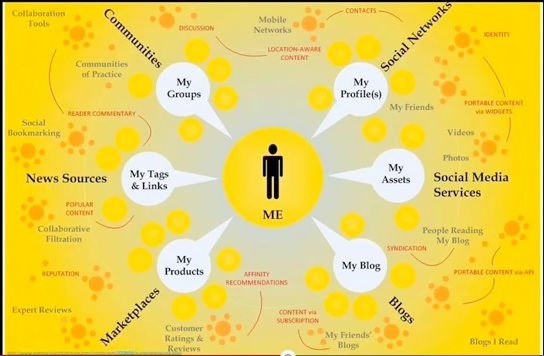
Rheingold’s vision of a person’s personal trust network copied from the video.

Teaching children to evaluate resources and determine credibility is the biggest challenge of our 21st Century world. Until now authoritative textbooks have dominated the world of education, but not anymore.

In the video below, Howard Rheingold, the digital thinker, professor (Stanford and UC Berkeley), and personal learning network advocate, describes how parents and educators should help students develop the ability to ask questions when they discover digital information, thereby evaluating the quality or lack of it. Rheingold calls this “crap detection,” a term originally coined by Ernest Hemmingway.

We need to teach kids, Rheingold points out, “how to search and how to find” and how to be sure that what is found is of good quality. The long-range goal is for each individual to develop what Rheingold calls a “personal trust network.”

Continue reading “Help Students Evaluate Digital Sources-Howard Rheingold Video”

Posted in 21st Century Learning, digital learning, Evaluating Web Resources, networking, parents and technology

My Extreme Professional Development

Over the past 10 days I have attended multiple, jam-packed professional development events. I’m beginning to think of it in reality show lingo as my extreme professional development experience, because I’ve encountered so many colleagues along with ideas, hands-on strategies, learning theories, and thoughtful approaches, all focused on becoming better teachers, collaborators, and learners in the 21st Century. One over-arching idea applies to all of my activities: learning, unlearning, and relearning are now routine. Anyone not comfortable with these three concepts — connected and in tandem — needs to get acquainted with them ASAP.

I’m reminded of a quote from futurist Alvin Toffler, “The illiterate of the future are not those that cannot read or write. They are those that can not learn, unlearn, and relearn.

My extreme adventure started about 10 days ago when I presented in the Virginia Shenandoah Valley at the Virginia Association of Press Women. I described how technology has transformed the way we all learn and how specific content is now less important than our skill at discovering information, evaluating it, and using it well. The digital content is out there for everyone to find, I told the group. The role of adults and teachers is to ensure that as we teach one area of content we also ensure that children are developing the skills to recognize, evaluate, and use quality information.

I drove home on Saturday and left again on Sunday for the annual AIMS Technology Retreat on the Maryland Eastern Shore.

Continue reading “My Extreme Professional Development”