Posted in 21st Century Learning, 21st Century teaching, cell phones, digital change, digital devices, digital parenting, iPhones and iPads, parents and technology, teaching digital kids, values in digital life

Managing Change and Learning in a World With Updates

os7 iphone 1It never fails!

Just when you feel good about your digital world learning curve, a new device operating system brings a serious case of update-time discomfort. While none of us ever stops learning, sometimes these periods of relearning tasks that, in theory, we already know pretty well can be daunting.

I work with educational technology in a school, where updates are part of the job. Yet each time I need to relearn routine tasks I get a healthy reminder that when it comes to digital skill problem-solving and tinkering, I remain a digital immigrant — always a bit slower at figuring out new things than most of my digitally native students.    [See note at the end of this post.]

A few nights ago, when I read the stories about the new iOS7 for my iPhone, I resolved to wait a week or two and let any glitches work themselves out. But the next afternoon, Julian, a middle school student, stopped by my technology office asking questions about the cool new iOS7 system that he was downloading — that very minute. I did not know the answers to his questions.

Aha, I thought. Some of my students may need my help. So the next morning at 5:30, I downloaded the new operating system on my iPhone. An hour later with a somewhat different looking device, I fumbled around, located my Audible account, and listened to my latest recorded book as I drove to school — while patting myself on the back. I can manage the new iOS7 — not to mention change.

Then I arrived at school, got out of the car, and could not turn off my book. For more than five minutes I stood in the parking lot tapping at vaguely familiar iPhone icons and finally managed to turn it off. But in the process I turned on some bluegrass music. I had no idea where that music was coming from, because as far as I know, bluegrass does not reside on my iPhone.

Continue reading “Managing Change and Learning in a World With Updates”

Posted in 21st Century Learning, 21st Century parenting, 21st Century teaching, digital world conversations, parents and technology, starting the school year

The Annual Beloit College Mindset List Is Out!

Check out the Mindset Lists of American History.
Check out the Mindset book!

Want to learn a bit about the students who are entering college right now and infer a bit about digital kids at other ages? Check out this year’s Beloit College Mindset list for the class of 2017.

Started in 1998 by two faculty members at Beloit, the list was originally created as a way for faculty and staff at the college to learn more about how easy it is for adults talk about things that they take for granted but that their students don’t know.  The website includes past years’ lists.

As parents and teachers, we gain far more credibility with digital-age children when we understand that many of the things we refer to are not a part of their mindset, and when we make an effort to understand the context of their young lives.

A Few of My Favorite Items from This Year’s Mindset List

(But there are 60 items out students on the list.) Continue reading “The Annual Beloit College Mindset List Is Out!”

Posted in 21st Century Learning, 21st Century parenting, brain, parents and technology

Multi-tasking May Be a Myth Says John Medina

brain-rules-cover-172In today’s always-connected world we feel proud of our ability to do several things at once, and many adults are even more amazed as they watch their children managing multiple tasks at the same time.

It turns out, however, that we may need to rearrange the way we work, reconsider our understanding of multi-tasking, and rethink how we supervise children when they are attending to learning activities. According to Professor John Medina, a respected molecular biologist and author of the 2008 book, Brain Rules, the brain cannot multitask efficiently. Multi-tasking during homework times may decrease a 21st Century student’s ability to learn efficiently.

Medina’s book, an entertaining read, discusses 12 important brain rules and devotes one chapter to multitasking. Addressing the widely accepted view that in the digital age we all multi-task effectively, Dr. Medina explains why the brain has trouble with multi-tasking and why this practice can cause difficulty for learners, workers, and especially for pre-teens and adolescents. Many entertaining video explanations of the 12 brain rules are posted on his website.                                                          Continue reading “Multi-tasking May Be a Myth Says John Medina”

Posted in digital kids, digital parenting, kids' advice for parents, parent child conversations, parents and technology

Advice from Digital Kids to Parents

Given the chance, kids can offer remarkable insight — good ideas for their parents to consider.

I’ve heard many kids reflect thoughtfully, and not so thoughtfully, on their parents’ digital skills. I often hear my students wonder aloud about why parents don’t always model the digital citizenship expectations that they want their children to learn and apply.

I wish my parents wouldBelow are the nine most common “I Wish” statements expressed over the past several years by digital children that I teach.  Two of them, I’ll admit, were even mentioned to me by my daughter some years ago. Mea culpa…

Kids Wish Their Parents and Other Adults Would

  1. Try to learn a lot more about computers in particular and technology in general.
  2. Stop saying they don’t know much about technology (mom’s especially)
  3. Not use Blackberries and phones at sports games and school events.
  4. Don’t talk on the phone so much in the car.
  5. Learn to play some of the kids’ online games.
  6. Understand more about helping with searches on the Internet.
  7. Understand how hard it is to learn the technology rules and regulations and not always threaten to take away technology access when there’s a problem.
  8. Stop automatically saying that new things like Wikipedia are questionable.
  9. Try not to act dumb about technology. Even if you don’t understand something, please act like you want to learn new things.        Continue reading “Advice from Digital Kids to Parents”
Posted in digital citizenship, digital devices and gadgets, digital kids, digital learning, digital parenting, parents and technology

Back-to-School Digital Parenting Tips – 2013

The back-to-school season is a great time for adults to think about what they can do to help children avoid some of the typical online and social media mistakes and difficulties.

backtoschool cyber rules

These adult strategies can help elementary and middle school children develop safe, secure, and disciplined digital life skills.

Teachers can also share this list with the parents of their students.

Posted in 21st Century Learning, 21st Century parenting, acceptable use, cell phones, digital devices, digital devices and gadgets, parents and technology

Getting Your Child a Cell Phone This Summer? Read This First!

It’s summer 2013…

…and lots of families will soon purchase a new mobile phone for a fifth, sixth, or seventh grade child.

cell phoneRemember, however, you are not just handing over a telephone. A child is getting a mini-computer — a digital device  that takes pictures, shares locations, communicates via text, e-mail, and phone calls, and easily installs apps that connect in all sorts of other ways. A new cell phone networks your child in nearly unlimited ways to the entire world, and most of what he or she sends on the web via cell phone will never be deleted.

Before handing over the new mobile device, 21st Century parents need to think about how they want digital kids to use their new prized possessions and also about what they don’t want children to do.

Adults can be specific and clear about what is acceptable by setting up a cell phone user contract. Use an agreement word-for-word from the list of links on this blog. Or copy one of the contracts as a template and write a more personalized version that is appropriate for your family. Today’s kids are 21st Century learners, eager to use and explore the digital world — a great way to be — but parents need to set clear expectations that help to ensure that a child explores and experiments as much as possible without humiliation and  embarrassment.            Continue reading “Getting Your Child a Cell Phone This Summer? Read This First!”

Posted in libraries, parents and technology, reading, research on the web

Parents, Libraries, and Reading in Today’s Digital World

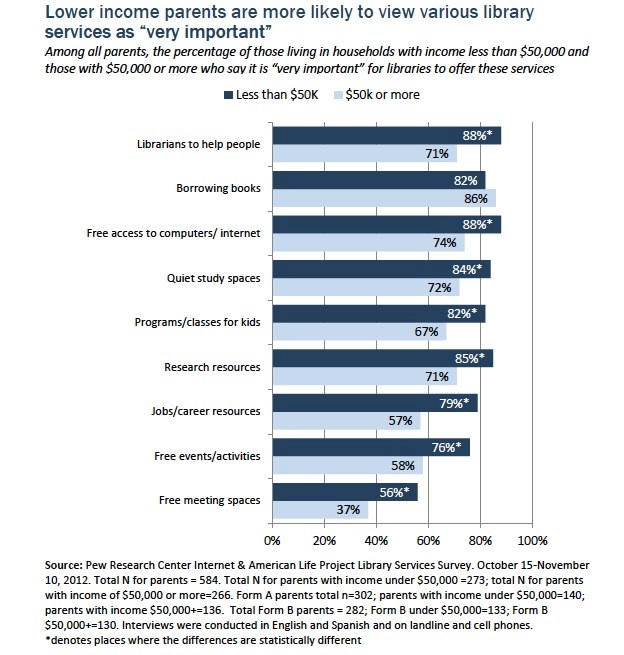
parents libraries reading PewLibraries continue to play a significant role in the development of young readers, even as digital resources increase and children engage in more digital activities.

Recent research by the Pew Internet and American Life Organization finds that families with incomes under $50,000 consider libraries to be an important resource in the lives of their children.

Whether they are considering digital or non-digital opportunities, these families are more likely to rate library services as important than parents in families with higher incomes.

Some interesting research findings, quoted from the report:

  • 94% of parents say libraries are important for their children and 79% describe libraries as “very important.” That is especially true of parents of young children (those under 6), some 84% of whom describe libraries as very important.
  • 84% of these parents who say libraries are important and a major reason they want their children to have access to libraries is that libraries help inculcate their children’s love of reading and books.
  • 81% say a major reason libraries are important is that libraries provide their children with information and resources not available at home.

Too see other graphs and learn more about the research released on May 1, 2013, read the report, Parents, Children, Libraries, and Reading.