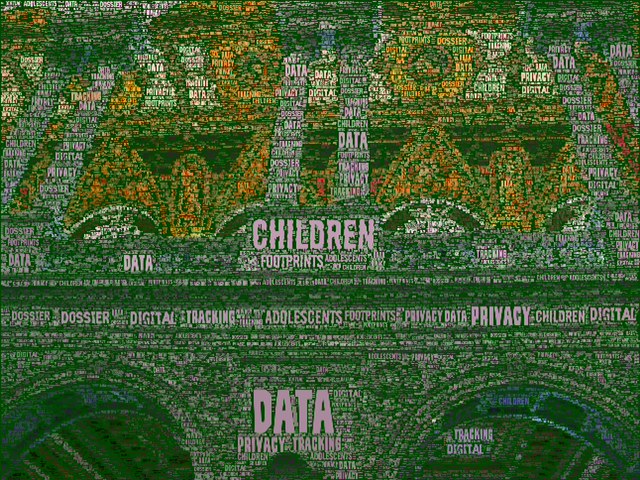
Image made with Wordfoto with a picture taken at the Library of Congress.
Much of what a child or teen does online gets added to a digital profile. Even when information is not supposed to be collected, it accumulates – somewhere. Moreover, when a child or adolescent acts impulsively or thoughtlessly online, no way exists to erase or delete a digital mistake. Harvard’s Berkman Center for Internet and Society posts a great digital dossier videothat parents and educators may want to use as a conversation tool.
To learn a lot more about the state of privacy policy, especially as it concerns children and adolescents, read the article Congress Revisits Online Privacy Legislation over at Boston.com.
Another public figure has made yet another public digital gaffe, giving parents one more opportunity to engage the family in a discussion about the unrelenting power of digital tools.
Representative Weiner (D-NY) is just the latest, and it looks like public figures and celebrities will continue to make these public mistakes, like clockwork, for a long time to come. We can laugh at the ineptness of these public personalities, but the bottom line is that we are all one instant gratification click away from making a public and embarrassing error.
Although we may worry about the safety of our children and their activities on the web, most of these problems, while alarmingly publicized and widely and repetitively covered in the media, are not the biggest risk for children.
What we should dread, however, is the potential harm from a digital misjudgment spontaneously sent off via e-mail, text, Twitter, voicemail, or whatever else we all find to use in the future. Instant digital missives, unlike the gossipy handwritten notes we adults used to pass around to a few people at school, can instantly become public and humiliating. Or they can lie quietly, waiting in the vastness of the web, until some reason arises for people to seek out information about us.
If you have ever written a comment at the end of an article or blog posting, you have surely read more than a few inappropriate and sometimes distasteful remarks. Sometimes people leave these comments anonymously. Posted by folks who do not understand why websites invite visitors to share thoughts and ideas, many unfiltered remarks are permanently attached to websites — indiscretions waiting for the whole world to discover.
Helping your child avoid public website blunders is one reason to discuss commenting etiquette. Often children don’t know or forget that their comments leave a digital footprint trail that will last much longer than their per-adolescent and even teenage years. Often confusion arises because many children first encounter commenting opportunities in places where adult supervision is scarce. As a result an impulsive idea can beat out good common sense even when a child knows better. Bottom line — response and commenting areas are not places to leave nasty, rude, and hateful conversation.



 Media! Tech! Parenting!
You must be logged in to post a comment.