Posted in 21st Century Learning, digital citizenship, digital devices and gadgets, digital parenting, leadership, research on the web

Back-to-School Research Tips: Use Curated Online Databases

September brings the start of a new school year, and once classes begin, it’s not long before the first research reports and projects are assigned. To get started, your child will head right to his or her computer; however, adult assistance at home ensures that a student uses quality sources, as well as develop stronger 21st Century research skills.

Just about any time digital kids search for information at home, they fire up Google. While their teachers use substantial classroom time and energy introducing students to the best online research resources, children often need assistance, not to mention frequent reminders about applying these research lessons on their home computers.

As often as possible adults should remind children that results from Google — as wonderful as Google searching is — provide a huge number of links, many of them of questionable quality. A better way to search for information is to access library online resources and databases — the crown jewels of student research (Links at the bottom of this post will take readers to a few libraries that describe their virtual databases.) Searching in these databases decreases quantity and dramatically increases quality — which, in turn, improves the caliber of a student’s assignment. A web page chart at Illinois Institute of Technology compares  Google searches and database inquiries. A library tutorial from Western Oregon University also compares research on Google and online databases.                       Continue reading “Back-to-School Research Tips: Use Curated Online Databases”

Posted in Back-to-school digital reading, parents and technology, starting the school year, teachers, teaching

Teachers Helped My Daughter Become Who She Is Today

I spent time on my porch thinking about the good teachers who helped my daughter thrive.

Another school year started this week, right after a relaxed three-day Labor Day weekend. But my three-days were more special than most, because I spent the time with my thirty-something daughter. As I thought about beginning the school year my mind kept wandering back to the years the two of us started school together, she as a student and me as a teacher.

I listened to my daughter, now a physician, talk about her work and her life, marveling at her competence, eagerness to learn, empathy, discipline, and, yes, her sense of fun. More than once during our conversations I thought about the teachers who helped her develop and strengthen these skills, people who took her interests into consideration — as well as the required topics.

A preschool teacher encouraged my daughter to get up and keep going after a fall or a spat, and her kindergarten teacher recognized her love of books but also reminded her to relax and play. In second grade her teacher came to the rescue when my daughter wanted to bring a book to read at recess, and this same gifted educator suggested that she “become an author” and write her own books.

Once a week in second grade each child was encouraged think of a hard word and learn how to spell it. Boy was my husband surprised one day, as he worked on his public health policy dissertation, when our daughter, age seven, came up to his desk and happily spelled epidemiology. She told him that she liked the way the word looked when she saw it on his pages and asked to know more about what it meant. I just know that teacher suggested that she ask her dad for more information.             Continue reading “Teachers Helped My Daughter Become Who She Is Today”

Posted in parents and technology

Enjoying Solitude Is OK — for Kids and Adults

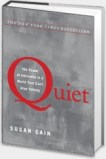
I am an introvert. Yet until I read Mrs. Day’s Class Notes and her review of the book Quiet: The Power of Introverts in a World That Can’t Stop Talking by Susan Cain, I had not thought much about it. I’ve always known, however, that I prefer quieter times and places.

Image from Susan Cain’s website.

Learning and working in social worlds with extroverted people is not a problem for most introverts or for me, and as I think about it, many of the quiet people whom I know tend to think longer about a topic, reach for extra resources, or even pose thoughtful questions in a conversation rather than offer quick answers. I’m looking forward to reading Cain’s book.

Many of the children who drop by my technology classroom in the early mornings or late afternoons may be introverts (though seldom shy or awkward). Often these kids choose to pass the time with a smaller crowd of people, and the computer lab serves just that purpose, allowing one or two people to work together quietly. Sometimes I look around and observe children sitting at a computer but reading a book.

Note to self: Some kids are OK when they choose time alone instead of socializing constantly.

As for me, in extremely social situations — big events or parties where others are happily interacting all around the room — moving around and chatting takes effort. I don’t mind doing it, but it requires concentration. In my work I comfortably interact with groups of students and colleagues, helping them learn how to use 21st Century learning tools to increase learning, but I also appreciate the quiet peacefulness of my office in early mornings or late afternoons and quiet discussions with colleagues. On days off I’m grateful to read books, work at my sewing machine, or putter in my garden.      Continue reading “Enjoying Solitude Is OK — for Kids and Adults”

Posted in 21st Century Learning, cultural changes, digital learning, digital parenting, parent education, parents and technology, teaching digital kids

Beloit College 2016 Mindset List: How Fast Life Changes

The new Beloit College 2016 Mindset List — a great start-of-the-school-year conversation piece for adults — is out.

Watch a video about the list.

At the beginning of each academic year, several faculty members at Beloit compile a list to demonstrate how students in the entering freshman college class experience life, learning, and culture differently from many of the adults they know. Some items are silly, others compare digital kids with their parents’ generation; some I don’t understand; and others I can fit into a bit of context, but they are mostly unfamiliar to me.

The list’s mission is to remind educators and parents that it takes energy and openness to new literacies to understand how dramatically the “growing-up” and learning processes change over time (and many of these have nothing to do with digital life). 

Every fall I look forward to the release of this list, which Beloit releases just before the start of the school year. I’ve included a few of my favorites from this year.          Continue reading “Beloit College 2016 Mindset List: How Fast Life Changes”

Posted in 21st Century Learning, family conversations, leadership, parent child conversations, parents and technology, reading

Reading Promotes Leadership Skills — Even in a Digital World

As parents, children, and teachers prepare for the start of a new academic year, many may enjoy reading the Harvard Business Review blog (HBR Blog) post For Those Who Want to Lead, Read. Parents of digital kids may want to take the time to share this short, thoughtful. and well-written article with family members as a back-to-school activity.

In today’s digital world, many people — including individuals who consider themselves literate — are not reading books as often or as deeply as in the past. In this HBR Blog post, John Coleman notes that reading digital chunks of content is far more common today. He provides inspiring examples of leaders who are well-read and describes in detail how reading benefits individuals who aspire to lead. Plenty of links take readers back to the sources of information that are mentioned in the article.

Best Quotes (Choosing only two was really difficult.)

  • Even as global literacy rates are high (84%), people are reading less and less deeply.
  • … Deep, broad reading habits are often a defining characteristic of our greatest leaders and can catalyze insight, innovation, empathy, and personal effectiveness.

For Those Who Want to Lead, Read concludes with recommendations that can support people who want to read more. After you peruse these suggestions, take a few minutes to think about how you might encourage the people in your family (or your students) to develop and maintain a deeper and more literary reading life?

You can also check out the post, How to Raise a Lifelong Reader at the Common Sense Media website.

Posted in digital parenting, good books to read, innovation, parent education, parents and technology

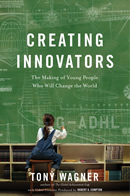
Creating Innovators by Tony Wagner: A Short Review

For some time on this blog I’ve listed Creating Innovators as my current read.

Tony Wagner’s book looks at young adults who are successfully navigating a transforming world of work, where a deep understanding of teamwork and innovation is a prerequisite for success. His profiles focus especially on the educational and parenting experiences that helped each young person flourish. Wagner prods us to identify what we — educators, parents, concerned adults — need to do to engage young learners and help many more of them grow into innovative and creative thinkers.

Creating Innovators features two blended tracks — one text and the other media. Wagner supplements the traditional book with a host of videos that extend and amplify what we have just read. QR codes in each chapter make it easy to access the videos, so we need only scan the image with a smartphone app and off we go to view the related media. If a reader does not own a smartphone — and I’ve discovered that for financial reasons quite a few of my younger colleagues don’t — Wagner’s website includes a page with links to all of the videos.      Continue reading “Creating Innovators by Tony Wagner: A Short Review”