Posted in 21st Century Learning, 21st Century parenting, 21st Century teaching, digital citizenship, digital kids, ethical behavior, parents and technology

Is It Digital Citizenship or Just Plain Citizenship?

dewey quoteAs the lives of my students, online and off, grow more complex by the day, I spend a good deal of time helping them learn more about digital citizenship. Today the digitally connected, always-on world presents students, teachers, and parents with confusing questions and baffling behavior expectations.

But wait a minute!

Is this digital citizenship or just plain citizenship? Building strong 21st Century citizens is of paramount importance whether we are living our lives offline or on, and we need to avoid using old-fashioned compartmentalized instruction in a connected world.

The Merriam Webster Dictionary defines citizenship as “The qualities that a person is expected to have as a responsible member of a community,” and helping students shape themselves into responsible community members is what caring adults do. We model appropriate behavior and help children learn how to participate as respectful and ethical members of society. No matter where they work or play, our citizenship goals are the same.

Continue reading “Is It Digital Citizenship or Just Plain Citizenship?”
Posted in 21st Century Learning, parents and technology, video use

If So Many Adults Use Online Video – Imagine How Many Kids Use It?

Check out the video below that explains the results of a survey about how adults use video online. The Pew Internet and American Life Project conducted the survey in July 2013.

According to the report, “Over the past four years, the percent of American adult Internet users who upload or post videos online has doubled from 14% in 2009 to 31% today.”  Read the full report and look at the graphics.  Nearly eight and ten adults use video on the web in some way, with the youngest group, ages 18-29 doing the most.

Can you imagine what 21st Century adolescent and pre-adolescent learners must be doing with video?  Parents who have not taken the time to learn a bit about the ways their digital children use video will be at a disadvantage. Moreover, it will be difficult for adults to ascertain the amount of screen time their children are getting.


Posted in 21st Century Learning, digital footprints, digital kids, digital world conversations, parents and technology

Digital Footprint Series on All Things Considered

collecting dataWe cannot discuss digital footprints and privacy with children and family members too much or too often. The point is not to scare anyone — the virtual trails that we leave are becoming almost routine — but rather to help family members consider how much data we share, intentionally or otherwise, and whether at times we should consider making at least a few changes in our online behavior.

On September 30, 2013, NPR’s All Things Considered program aired the first of a series of reports on digital footprints, and it’s worth taking the time to listen or read and to learn more about just how much data is collected on each of us. I expect the other reports will be just as compelling. NPR is collaborating on the series with the Center for Investigative Reporting (CIROnline.org).

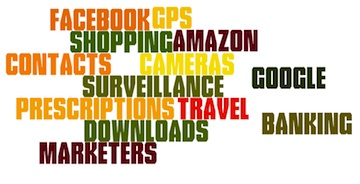
Reporter Daniel Zwerdling describes the obvious digital trails we leave behind with our computers, mobile phones, GPS-guided car trips, and credit card purchases, and also our less-than-obvious footprints from prescription drug purchases, traffic camera sitings, and wifi tracking and facial recognition cameras that track us in shopping malls. That we make digital footprints is not surprising, however, the amount of data that is collected about us and used to form profiles is extensive and worrisome.  Privacy — our privacy — has gone out the window.             Continue reading “Digital Footprint Series on All Things Considered”

Posted in 21st Century Learning, 21st Century parenting, blogging, commenting, conversations on commenting, digital footprints, family conversations, parents and technology

Encouraging Digital Kids to Write Polished Comments

commenting sprialPart of becoming a strong 21st Century digital learner is mastering the art of writing and sharing comments online.

If you read comments at the end of articles or blog postings — even at some of the respected newspapers and magazines — you have surely discovered more than a few inappropriate and sometimes distasteful remarks. Sometimes people leave these comments anonymously — individuals who do not understand why websites invite visitors to share thoughts and ideas. Sadly, many unfiltered remarks are permanently attached to websites — personal indiscretions (digital footprints) waiting for the whole world to discover. Even leaving an anonymous comment is not particularly secure, though many people — kids and adults — think they are off the hook and hiding when they leave comments without a name attached.

Read a short post and watch a video on newspaper comments, uploaded by the Nieman Journalism Lab at Harvard. Some newspapers sites, such as the Boston Globehave updated their policies and now post a short and succinct comment policy that tells users what the publication expects from comment writers.

Helping your child avoid public website blunders, not to mention future humiliation, is one reason to discuss commenting etiquette on a regular basis. Children don’t know or they forget that all comments leave digital footprint trails, little paths of information that last much longer than a child’s pre-adolescent and even teenage years.

Confusion arises because many children first encounter commenting opportunities in places where adult supervision is scarce. As a result, an impulsive idea can beat out good common sense even when a child knows better. Bottom line — response and commenting areas are not places to leave nasty, sarcastic, rude, or hateful conversation.

Continue reading “Encouraging Digital Kids to Write Polished Comments”

Posted in 21st Century Learning, 21st Century teaching, cell phones, digital change, digital devices, digital parenting, iPhones and iPads, parents and technology, teaching digital kids, values in digital life

Managing Change and Learning in a World With Updates

os7 iphone 1It never fails!

Just when you feel good about your digital world learning curve, a new device operating system brings a serious case of update-time discomfort. While none of us ever stops learning, sometimes these periods of relearning tasks that, in theory, we already know pretty well can be daunting.

I work with educational technology in a school, where updates are part of the job. Yet each time I need to relearn routine tasks I get a healthy reminder that when it comes to digital skill problem-solving and tinkering, I remain a digital immigrant — always a bit slower at figuring out new things than most of my digitally native students.    [See note at the end of this post.]

A few nights ago, when I read the stories about the new iOS7 for my iPhone, I resolved to wait a week or two and let any glitches work themselves out. But the next afternoon, Julian, a middle school student, stopped by my technology office asking questions about the cool new iOS7 system that he was downloading — that very minute. I did not know the answers to his questions.

Aha, I thought. Some of my students may need my help. So the next morning at 5:30, I downloaded the new operating system on my iPhone. An hour later with a somewhat different looking device, I fumbled around, located my Audible account, and listened to my latest recorded book as I drove to school — while patting myself on the back. I can manage the new iOS7 — not to mention change.

Then I arrived at school, got out of the car, and could not turn off my book. For more than five minutes I stood in the parking lot tapping at vaguely familiar iPhone icons and finally managed to turn it off. But in the process I turned on some bluegrass music. I had no idea where that music was coming from, because as far as I know, bluegrass does not reside on my iPhone.

Continue reading “Managing Change and Learning in a World With Updates”

Posted in 21st Century Learning, 21st Century parenting, 21st Century teaching, digital world conversations, parents and technology, starting the school year

The Annual Beloit College Mindset List Is Out!

Check out the Mindset Lists of American History.
Check out the Mindset book!

Want to learn a bit about the students who are entering college right now and infer a bit about digital kids at other ages? Check out this year’s Beloit College Mindset list for the class of 2017.

Started in 1998 by two faculty members at Beloit, the list was originally created as a way for faculty and staff at the college to learn more about how easy it is for adults talk about things that they take for granted but that their students don’t know.  The website includes past years’ lists.

As parents and teachers, we gain far more credibility with digital-age children when we understand that many of the things we refer to are not a part of their mindset, and when we make an effort to understand the context of their young lives.

A Few of My Favorite Items from This Year’s Mindset List

(But there are 60 items out students on the list.) Continue reading “The Annual Beloit College Mindset List Is Out!”

Posted in 21st Century Learning, 21st Century parenting, brain, parents and technology

Multi-tasking May Be a Myth Says John Medina

brain-rules-cover-172In today’s always-connected world we feel proud of our ability to do several things at once, and many adults are even more amazed as they watch their children managing multiple tasks at the same time.

It turns out, however, that we may need to rearrange the way we work, reconsider our understanding of multi-tasking, and rethink how we supervise children when they are attending to learning activities. According to Professor John Medina, a respected molecular biologist and author of the 2008 book, Brain Rules, the brain cannot multitask efficiently. Multi-tasking during homework times may decrease a 21st Century student’s ability to learn efficiently.

Medina’s book, an entertaining read, discusses 12 important brain rules and devotes one chapter to multitasking. Addressing the widely accepted view that in the digital age we all multi-task effectively, Dr. Medina explains why the brain has trouble with multi-tasking and why this practice can cause difficulty for learners, workers, and especially for pre-teens and adolescents. Many entertaining video explanations of the 12 brain rules are posted on his website.                                                          Continue reading “Multi-tasking May Be a Myth Says John Medina”