Posted in answers to media questions, digital citizenship, digital parenting, family conversations, media literacy, parent child conversations, parents and technology, teaching digital kids

Campaign Advertising — Media at Its Worst for Kids

The tenor of the political advertising in this election season is appalling, and it will get worse. Because no code of best practices exists when it comes to campaign advertising, the current presidential election cycle media will feature unending ads that stretch the truth or make up the facts outright and deliver them straight into the lives of kids. While it’s a fine opportunity to help citizens, young and old, strengthen their media literacy skills, television is over-exposing all of us to some unfortunate and distressing content.

Click to visit.

To Learn a lot more, listen to a recently broadcast Diane Rehm Show about the non-candidate SuperPACs that are spending enormous sums on political advertisements. Jane Mayer’s recent New Yorker article, Attack Dog, is another comprehensive article. Talking to children about what they are seeing on television is critical, especially during an election cycle.

In a February 26, 2012 piece published at the USA Today Teachers’ Lounge (link no longer available), media lit guru, Frank Baker pithily describes the situation. He writes:

Continue reading “Campaign Advertising — Media at Its Worst for Kids”

Posted in acceptable use, digital citizenship, digital parenting, family conversations, parent child conversations

Family Conversations on Digital Life

The Seattle Times recently published Ways for Parents to Ease the Tussle With Teens over Tech Use. The January 27, 2012 article, by Julie Weed, reviews the challenges of digital parenting and suggests five digital life ground rules, including setting up a technology/gadget evening curfew.

Read the entire article.

Posted in digital devices and gadgets, digital parenting, family conversations, parent child conversations, parents and technology

Is It Spying or Is It Parenting?

A look at the browsing history in Safari

Recently I read Tracy Grant’s article, The Case for Spying on Your Kids, in the October 5, 2011 Washington Post, and it’s well worth reading. Grant believes that parents should keep close track of their children’s online activities. After I finished the article I decided it’s unfortunate that so many people equate keeping an eye on a child’s digital activities with spying. It’s not spying.

From my perspective, it’s just fine for parents to closely supervise the digital activities of kids, just like parents supervise non-digital endeavors. Understanding what’s going on, setting limits, teaching children to follow website rules, and defining expectations — as children encounter more and smaller personal computers and digital gadgets — are important responsibilities. Knowing what’s going on is a part of parenting.

Yet learning about what’s going on takes time, a scarce resource for many adults, and the situation gets even more complicated because the digital skills of many children outpace their parents.

Grant describes her conversation with Steven Balkam of the Family Online Safety Institute (FOSI) (this organization has a website that parents may want to explore), and she also mentions a new monitoring service, SafetyWeb

In Grant’s article Balkam points out, “The history button on a computer is a very important tool for parents.”

The digital world offers many opportunities to help children learn, collaborate, and grow as digital citizens, and we want our children to become literate and savvy consumers of online resources. Strong digital parenting — even when a parent is in awe of a child’s online prowess — is one of the ways to ensure that children grow into confident, respectful, and competent learners.

I recommend reading the book Born Digital, by John Palfrey and Urs Gasser. The authors, from the Berkman Center for Internet and Society at Harvard, focus on the changing nature of growing up in the digital world.

Posted in digital parenting, parent child conversations, parent education, parents and technology, social media, social networking

Learning More About What You Don’t Know

I am just back from a huge technology conference in Philadelphia, the International Society for Technology in Education(ISTE), and I blogged from the event uploading nine or ten entries on a separate MediaTechParenting page. I also tweeted — sometimes using Twitter myself and at other times just watching, reading, and processing the tweets of others.

During the week — before, during, and after the conference — Twitter was my most important communication too. Over the four days it let me know where especially great workshops and presentations were occurring, helped me discover other people who shared my interest, kept me up-to-date about who was blogging, informed me about presenters who were sharing resources beyond their presentation rooms, and yes, even announced the location of the special snacks each afternoon. Without the #ISTE11 Twitter handle, and also the continuing backchannel tweets on #edtech and #edchat, my week would have been slower, less interesting, and nowhere near as dynamic.

Continue reading “Learning More About What You Don’t Know”

Posted in digital citizenship, digital parenting, parent child conversations, parents and technology

Choosing a Screen Name this Summer? 5 Tips for Families

Strange screen names seem to pop up in the summer more than any other time of the year.

The best screen names are boring. In a virtual world, where even a nuanced word association can invite unfortunate behavior, taking care when choosing these online names is critical. The easiest solution is to use a first name, nickname, or a different name, perhaps paired with numbers at the beginning or end. Many years ago I used 29Marti1607, a name that attracted little attention except once when someone asked me if my ancestors had lived in colonial Jamestown (settled in 1607).

Children experiment with edgy screen names as one way to look and feel cool, and as they get older, their choices often push limits, unintentionally drawing attention. A suggestive name in any number of categories can encourage the people who interact with your child — even people who are friends — to behave impulsively in the web world where adult supervision is minimal. It is way too easy for two-way communication to go awry.

A Few Screen Name Selection Tips Continue reading “Choosing a Screen Name this Summer? 5 Tips for Families”

Posted in digital citizenship, digital parenting, media literacy, parent child conversations, parents and technology

Kids, Parents, and Those Very Public Digital Mistakes

Made with Wordle.

Attention!

Another public figure has made yet another public digital gaffe, giving parents one more opportunity to engage the family in a discussion about the unrelenting power of digital tools.

Representative Weiner (D-NY) is just the latest, and it looks like public figures and celebrities will continue to make these public mistakes, like clockwork, for a long time to come. We can laugh at the ineptness of these public personalities, but the bottom line is that we are all one instant gratification click away from making a public and embarrassing error.

Although we may worry about the safety of our children and their activities on the web, most of these problems, while alarmingly publicized and widely and repetitively covered in the media, are not the biggest risk for children.

What we should dread, however, is the potential harm from a digital misjudgment spontaneously sent off via e-mail, text, Twitter, voicemail, or whatever else we all find to use in the future. Instant digital missives, unlike the gossipy handwritten notes we adults used to pass around to a few people at school, can instantly become public and humiliating. Or they can lie quietly, waiting in the vastness of the web, until some reason arises for people to seek out information about us.

The New York Times article, Erasing the Digital Past, is a must-read for everyone who uses electronic tools and toys, pointing out that the electronic world is public, permanent, and non-erasable. Watch the digital footprint video (embedded at the bottom of this post) from Harvard’s Berkman Center for Internet and Society to learn even more. Continue reading “Kids, Parents, and Those Very Public Digital Mistakes”

Posted in cyber-bullying, digital citizenship, digital parenting, family conversations, online safety, parent child conversations, parent education, parents and technology, teens and technology

Teens, Parent Anxiety, and the Internet

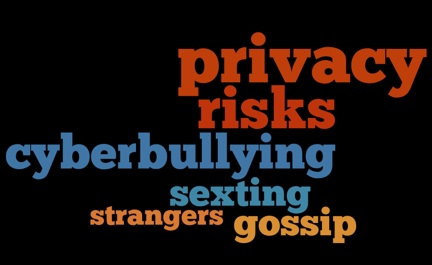
Made with Wordle!

Day after day frightening stories bombard us with warnings about what might happen to children and teens when they use the Internet and World Wide Web, so it’s useful to remind ourselves that these digital resources can provide our children with unparalleled opportunities to learn, socialize, and become active citizens. An article, Our Overblown Paranoia About the Internet and Teens, recently published in the online publication, Salon, provides just such a reminder.

Pediatrician Rahul Parikh, who practices in the San Francisco Bay area, points out that, despite all of our anxiety about teens and Internet risks, no statistics really exist to offer a full picture of the incidence of exposure to risk. Those few that do are often biased because of a common problem for research, posing questions to get the desired answer. Situations that do occur are often covered by a hysterical media, making us feel like a problem happens over and over, just around the corner. Continue reading “Teens, Parent Anxiety, and the Internet”