Posted in digital parenting, online security, parents and technology, privacy

Back-to-School Digital Reading #5: Your Child’s Privacy

Privacy is important for adults and children. Now an investigation has found that children who use well-known web sites are opening the door for small information-collecting programs called trackers to be installed on their computers.

In a September 17, 2010 article, The Wall Street Journal (WSJ) reported on its investigation into tracking technologies that are widely used by popular websites visited by children and adolescents. The article, On the Web Children Face Intensive Tracking, explains how investigators examined 50 popular children’s Internet sites to find out how much tracking occurs. They found that these sites install large numbers of tracking programs on personal computers without the knowledge of children and their parents.
Continue reading “Back-to-School Digital Reading #5: Your Child’s Privacy”
Posted in acceptable use, digital citizenship, digital parenting, online safety, online security, parent education, parents and technology

Visit Google Family Safety Center – Bookmark It!

Comprehensive web-based resources on digital safety, cyber-bullying, media literacy, and general technology information can help parents learn more about the web and how their children use it. Most of these sites update their content daily with timely tips, strategies for parents and kids, blog postings, and other helpful links. Yet, with so many sites to choose from, parents may have difficulty keeping track of any single location, let alone navigating among the sites on a regular basis.

Now Google, as so often happens, has come up with a terrific solution — the Family Safety Center. The center is well laid out with clear explanations about safety tools and connections to many of the best digital and media safety sites — all partnering with Google.

Continue reading “Visit Google Family Safety Center – Bookmark It!”

Posted in digital parenting, online safety, online security, parents and technology

Help Your Family Avoid Online Scams

Every minute of every day people are victims of online scams — most often they arrive via e-mail. Some experts estimate that one person every 10 seconds is a victim of some type of scam or identity theft, and often the theft of personal information is easier because the victim unwittingly provides personal data. Families with multiple computers are especially vulnerable because people are working on many different online tasks. Children are susceptible to scams with animals, sick children, and the hardships of disasters. Kids need to be reminded – frequently – not to hit the reply button, no matter how good the cause.

Click here to go to SCAMFINDER.

The consumer affairs reporter at the Cleveland Plain Dealer, Sheryl Harris, has developed Scamfinder, an extensive database to help people identify questionable e-mail or phone calls.

While most of us are familiar with the unrelenting e-mails from Nigeria, many other online scams, usually delivered by e-mail, are realistic and unnerving because they hit so close to home — for instance a charity soliciting around the time of a natural catastrophe or a seemingly thoughtful person writing to ask for contributions to police or victims of abuse. Sheryl Harris is often featured on the Market Place radio program, most recently on September 6, 2010. Scamfinder categories include:

Continue reading “Help Your Family Avoid Online Scams”

Posted in acceptable use, digital parenting, home computer security, online security, parents and technology

Back-to-School Digital Reading Assignment #4: Online Safety Software Doesn’t Do It All

To Install or Not to Install — That is the Question!

When people ask me whether a family should install protection or filtering software at home, I always have one response. Protective software programs are fine, but limited. Yes, they keep a certain amount of inappropriate content away from children, but the problem of access to inappropriate content is not solved by simply protecting home computers and networks with software. Over the course of a day or week a child encounters many other connections to the world wide web — on laptops, smartphones, iPads, computers, in other people’s homes, and maybe even at a parent’s office. And many children simply figure out how to work around or even outwit the software.

Protecting children from bad content is critical, but they also need to know what to do and what strategies to use when confronted by the bad stuff. Does your child remember your expectations?  Will he or she know what to do?

Continue reading “Back-to-School Digital Reading Assignment #4: Online Safety Software Doesn’t Do It All”

Posted in digital parenting, home computer security, online security, parents and technology, urban legends

3 Sites to Help You With E-mail Hoaxes

… so please don’t forward the e-mails!

Use these web sites to verify strange stories that you receive via e-mail or view on web sites. Verify before you forward these stories to others — always — even if a story feels like it has to be true. Most of the time these stories are false, and sometimes they carry malicious code.

These sites cover the real story behind urban legends, hoaxes, myths or rumors.

Posted in digital parenting, online safety, online security, parents and technology, privacy

Disable or Limit Facebook Places: Eight Resources to Help

Just when we think we have a handle on a social networking, along comes another virtual gimmick to figure out. In this case Places is a Facebook mobile phone application designed to follow you around using the phone’s GPS, let people know where you are, and significantly reduce your privacy. Keeping a tight lid on anything tweens and younger adolescents do with Places will be a priority for parents this fall. A couple of suggestions…

  • Make Facebook Places a discussion topic and figure out a good time to talk with your family. Privacy is a concern, so don’t delay. With the start of the school year only a few weeks off, children with mobile smart phones will most likely try to make Places a part of their Facebook activities.
  • Think about the general Facebook and specific Places guidelines that you want to set for students in your family. Do this now, before Places becomes ingrained in the adolescent culture.

Continue reading “Disable or Limit Facebook Places: Eight Resources to Help”

Posted in digital parenting, online security, parents and technology, privacy

Protecting Privacy Online

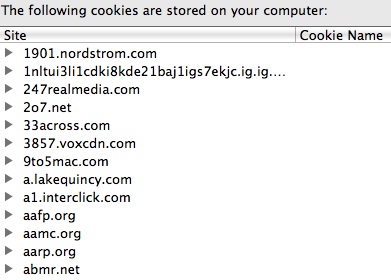
On the web just about everything we do is recorded or tracked in some way. The digital footprints of our online lives are collected for all sorts of reasons, advertising primary among them, and while some companies collect data on individuals, others collect data and then combine information to identify trends. Either way, personal online privacy is eroded. Guiding children toward an understanding that nothing they do on the web is private is one of the greatest responsibilities of digital era parenting

A few of the cookies on a computer.

The Wall Street Journal is publishing a series on privacy, describing how the digital documentation of our online lives is affecting our private lives and explaining the steps individuals and families can take to protect their privacy. A graphic in the series provides readers with step-by-step instructions to make Chrome, Firefox, Safari, and Internet Explorer protect privacy.

Another part of the Journal series, a July 30, 2010 article, Sites Feed Personal Details to New Tracking Industry, provides additional information about tracking, detailing the steps that occur when a group collects a user’s information and then sells that information to companies and advertisers.

Continue reading “Protecting Privacy Online”