Posted in 21st Century Learning, blogging, digital learning, educating digital natives, parents and technology, web 2.0, writing

If You Really Want Your Digital Kid to Write Well – Start a Family Blog

After reading a January 5, 2013 post on Edudemic, How and Why Teachers Should Blog, I want to share a blogging experience at my school.

I have the honor of working with a small group of amazing third-grade teachers — my colleagues — and last summer they decided to begin blogging with their students. This past fall each of the teachers set up a classroom blog at KidBlog. This student-oriented blogging site is designed to offer maximum privacy to young writers, but it also offers the opportunity for more access — and more readers — if desired. Interestingly, while the three classroom blogs are all similar, each has slight variations that reflect the personalities of the kids and the ideas of the teacher.

Visit KidBlog!
Visit KidBlog!

After orienting their students to the idea of blogging — discussing appropriate tone, privacy, and respect — the teachers let the children write. Third graders have learned to read one another’s work and make comments and suggestions. Sometimes they share complete stories, and at other times they write more spontaneously.

Continue reading “If You Really Want Your Digital Kid to Write Well – Start a Family Blog”
Posted in digital change, digital parenting, educating digital natives, kids changing lives, parents and technology, teachers, teaching digital kids

Do Today’s Digital Kids Learn Differently?

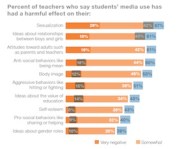
Image from Children, Teans, and Entertainment Media: The View from the Classroom
Image from Children, Teens, and Entertainment Media: The View from the Classroom

In case you missed it, check out the November 1, 2012 New York Times article, Technology Changing How Students Learn, Teachers Say.

Technology reporter Matt Richtel shares information about two recent studies that examine, on the basis of educator surveys, how today’s digital children may be learning differently than in the past. Although individual responses are subjective, the results of the surveys “are considered significant because of the vantage points of teachers who spend hours a day observing students.”

One survey, conducted by the Pew Internet and American Life Project, examined responses from 2,462 teachers. The other, conducted by Common Sense Media, surveyed 685 educators.

It all comes down to attention span. In both surveys, teachers expressed concern that students, used to fast-paced, always changing activities, are less able to focus on an academic task for a prolonged period.

Continue reading “Do Today’s Digital Kids Learn Differently?”