Posted in 21st Century Learning, digital learning, digital parenting, family conversations, online learning, parents and technology

Helping Children Navigate Digital Streets: Ideas for Parents (and Teachers, Too)

Several times recently I’ve mentioned a colleague’s blog post, A Letter to Parents of Digital-Age Students. Published at Getting Smart, this piece is so good that I’ve already shared it with half-a-dozen colleagues and handed it to several parents at my school.

Read the post.

Susan Lucille Davis, a colleague of mine and — lucky for me — a member of my personal learning network, writes about the strategies that we adults must use if we want our children to become savvy and safe digital consumers. The task for adults, whether we know a lot or a little about technology, is to support, guide, and help children as they go about learning to manage the challenges in today’s digital world. We must be adult trail guides.

While Susan Davis directs her post primarily toward parents, educators can also take her information to heart.

Three Important Points in this Article                            Continue reading “Helping Children Navigate Digital Streets: Ideas for Parents (and Teachers, Too)”

Posted in 21st Century Learning, cultural changes, digital learning, digital parenting, parent education, parents and technology, teaching digital kids

Beloit College 2016 Mindset List: How Fast Life Changes

The new Beloit College 2016 Mindset List — a great start-of-the-school-year conversation piece for adults — is out.

Watch a video about the list.

At the beginning of each academic year, several faculty members at Beloit compile a list to demonstrate how students in the entering freshman college class experience life, learning, and culture differently from many of the adults they know. Some items are silly, others compare digital kids with their parents’ generation; some I don’t understand; and others I can fit into a bit of context, but they are mostly unfamiliar to me.

The list’s mission is to remind educators and parents that it takes energy and openness to new literacies to understand how dramatically the “growing-up” and learning processes change over time (and many of these have nothing to do with digital life). 

Every fall I look forward to the release of this list, which Beloit releases just before the start of the school year. I’ve included a few of my favorites from this year.          Continue reading “Beloit College 2016 Mindset List: How Fast Life Changes”

Posted in 21st Century Learning, digital citizenship, digital learning, evaluating web site resources, parents and technology

New Google Lessons: Understanding YouTube and Digital Citizenship

Visit the Google lessons site.

Check out the Google interactive lessons, videos, and slides, all focused on digital citizenship, privacy, and YouTube best practices. Useful for teachers as well as parents, these discrete units are easy to use and share, especially when students need an organizational framework before beginning to look for school project resources. Each lesson is readily downloadable as a Google Doc and even for other presentation media such as PowerPoint.

Many of the Google videos include tips that can help students use YouTube more effectively while honoring copyright principles and evaluating content carefully. Google developed these digital resources for secondary students, but in many schools, the videos will also be valuable for middle schoolers. Even fifth grade teachers may find that some of the videos can help them in the context of curriculum units.

A conundrum exists, of course…          Continue reading “New Google Lessons: Understanding YouTube and Digital Citizenship”

Posted in 21st Century Learning, digital citizenship, digital learning, digital literacy, parents and technology, web 2.0

Digital Footprints: Changing What We Teach

Check out Richardson’s Book.

Recently, after reading Will Richardson’s article Footprints in the Digital Age, I began thinking about how much attention we pay to online safety and security without thinking nearly as much about teaching kids how to be literate consumers and competent creators of content. Richardson’s article started me thinking about how I might refine the way I teach digital citizenship to fifth graders.

While safety and security will never be left out of the curriculum, the 2008 Educational Leadership article convinced me to put more effort into helping my students think of digital footprints as only one part of the digital life equation. The other part of this equation involves teaching children to think proactively about the online narratives that they are creating and helping them begin to understand how other people will be searching for each of them — and for appropriate reasons. My students and their parents need to become curators of the digital content in their profiles, just as any highly skilled museum curator creates an exhibition.

A strong digital profile, Richardson writes, “Google’s well.”        Continue reading “Digital Footprints: Changing What We Teach”

Posted in 21st Century Learning, collaboration, digital learning, parents and technology

What in the World is a Wiki?

A wiki is an online document, viewed in a web browser, that allows a user or users to add and accumulate information on a topic. Usually, but not always, people work collaboratively on a wiki, so it’s a terrific learning tool.

The word wiki comes from a Hawaiian word that means fast.

Anyone can set up a wiki and invite others to contribute. All of the pages are visible and can be edited in the browser. What is unusual about a wiki, compared to many other forms of writing, is the ability of all users to edit and change the work of fellow collaborators, definitely a “we’re all working together project” that teaches group members to cooperate with one another and respect their work. A wiki document can include text, links, pictures, and video.

The In Plain English Wiki tutorial provides a good introduction filled with useful information. Also, check out the comprehensive wiki explanation with an emphasis on wikis in the workplace at OreillyNet. A wiki tutorial at TeachersFirst walks people through the basics of starting a wiki and includes a page with wiki ideas for the classroom. Wikipedia, as its name implies, is a wiki.

A Few Suggestions for Wikis at Home Continue reading “What in the World is a Wiki?”

Posted in 21st Century Learning, blogging, digital learning, digital parenting, parent education, parents and technology

You Can Start a Family Blog – Summer 2012

Visit Start a Family Blog and Get Started!

This summer think about starting a family blog. It’s a terrific communication project as well as a collaborative learning opportunity for everyone — kids, parents, grandparents, cousins, aunts, and uncles.

Last year I taught a short online blogging course to parents at my school. My Start a Family Blog classhosted on a WordPress blog, is still available. The posts will guide interested families through the basics of starting a blog for relatives and friends.

Over at some novel ideas, a blog authored by librarian Stacy Nockowitz would be bloggers will find a comprehensive and rich list of resource links to help get started. She organizes her links into categories:

    • Blogging Basics
    • Blogging Resources
    • Blogs About Blogging
    • Blogging Platforms
    • Images

Also included at the bottom of the resource page is a cool glossary of blogging terms.

Posted in 21st Century Learning, digital learning, digital parenting, evaluating web site resources, family conversations, online research, parents and technology, teaching digital kids

Help Students Evaluate Digital Sources-Howard Rheingold Video

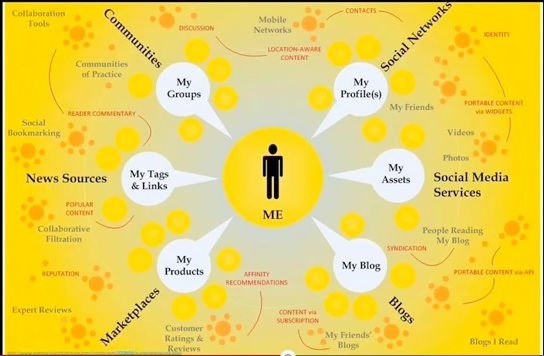
Rheingold’s vision of a person’s personal trust network copied from the video.

Teaching children to evaluate resources and determine credibility is the biggest challenge of our 21st Century world. Until now authoritative textbooks have dominated the world of education, but not anymore.

In the video below, Howard Rheingold, the digital thinker, professor (Stanford and UC Berkeley), and personal learning network advocate, describes how parents and educators should help students develop the ability to ask questions when they discover digital information, thereby evaluating the quality or lack of it. Rheingold calls this “crap detection,” a term originally coined by Ernest Hemmingway.

We need to teach kids, Rheingold points out, “how to search and how to find” and how to be sure that what is found is of good quality. The long-range goal is for each individual to develop what Rheingold calls a “personal trust network.”

Continue reading “Help Students Evaluate Digital Sources-Howard Rheingold Video”