Posted in 21st Century Learning, 21st Century teaching, cell phones, digital change, digital devices, digital parenting, iPhones and iPads, parents and technology, teaching digital kids, values in digital life

Managing Change and Learning in a World With Updates

os7 iphone 1It never fails!

Just when you feel good about your digital world learning curve, a new device operating system brings a serious case of update-time discomfort. While none of us ever stops learning, sometimes these periods of relearning tasks that, in theory, we already know pretty well can be daunting.

I work with educational technology in a school, where updates are part of the job. Yet each time I need to relearn routine tasks I get a healthy reminder that when it comes to digital skill problem-solving and tinkering, I remain a digital immigrant — always a bit slower at figuring out new things than most of my digitally native students.    [See note at the end of this post.]

A few nights ago, when I read the stories about the new iOS7 for my iPhone, I resolved to wait a week or two and let any glitches work themselves out. But the next afternoon, Julian, a middle school student, stopped by my technology office asking questions about the cool new iOS7 system that he was downloading — that very minute. I did not know the answers to his questions.

Aha, I thought. Some of my students may need my help. So the next morning at 5:30, I downloaded the new operating system on my iPhone. An hour later with a somewhat different looking device, I fumbled around, located my Audible account, and listened to my latest recorded book as I drove to school — while patting myself on the back. I can manage the new iOS7 — not to mention change.

Then I arrived at school, got out of the car, and could not turn off my book. For more than five minutes I stood in the parking lot tapping at vaguely familiar iPhone icons and finally managed to turn it off. But in the process I turned on some bluegrass music. I had no idea where that music was coming from, because as far as I know, bluegrass does not reside on my iPhone.

Continue reading “Managing Change and Learning in a World With Updates”

Posted in digital devices, digital kids, digital parenting, media and family life, networking, parenting, parents and technology

Digital Parenting: Recently Released Research from Northwestern University

Media & Family Conflicts
One of many charts and graphs in the report.

A new study, Parenting in the Age of Digital Technology, was recently released by Northwestern University’s Center on Media and Human Development. The 52-page report is easy to read and chock full of interesting graphics and charts.

Data were gathered through a survey of 2,326 parents whose children were eight years old and younger. The surveys were conducted in English and Spanish. Check out page nine of the report for more information on the methodology of the research project.

Most Interesting Report Findings (more are available in the report)

  • A large number of the parents in the survey do not believe that increased use of media has made parenting easier.
  • Most parents in the survey did not report many or significant family conflicts around media use.
  • There continues to be a big gap between those who can afford new digital devices and those who cannot afford them.
  • The study identified three types of parenting styles when it comes to family media use.
    1. Media-centric family life centers around various types of screens, and parents as well as children enjoy using media a lot of the time.
    2. Media moderate family life includes less media access, and the television is turned off a lot more of the time. Video games are not as important to daily life as in a media-centric family.
    3. Media lite family life includes screen time but less than the other two parenting styles. They tend to do to less television watching as a family, and they do not use television to distract children so that parents can accomplish other tasks.

The blog at the Joan Ganz Cooney Center at Sesame Workshop also describes the study in detail.

Posted in 21st Century Learning, 21st Century parenting, acceptable use, cell phones, digital devices, digital devices and gadgets, parents and technology

Getting Your Child a Cell Phone This Summer? Read This First!

It’s summer 2013…

…and lots of families will soon purchase a new mobile phone for a fifth, sixth, or seventh grade child.

cell phoneRemember, however, you are not just handing over a telephone. A child is getting a mini-computer — a digital device  that takes pictures, shares locations, communicates via text, e-mail, and phone calls, and easily installs apps that connect in all sorts of other ways. A new cell phone networks your child in nearly unlimited ways to the entire world, and most of what he or she sends on the web via cell phone will never be deleted.

Before handing over the new mobile device, 21st Century parents need to think about how they want digital kids to use their new prized possessions and also about what they don’t want children to do.

Adults can be specific and clear about what is acceptable by setting up a cell phone user contract. Use an agreement word-for-word from the list of links on this blog. Or copy one of the contracts as a template and write a more personalized version that is appropriate for your family. Today’s kids are 21st Century learners, eager to use and explore the digital world — a great way to be — but parents need to set clear expectations that help to ensure that a child explores and experiments as much as possible without humiliation and  embarrassment.            Continue reading “Getting Your Child a Cell Phone This Summer? Read This First!”

Posted in cell phones, digital devices, gadget ownership, iPhones and iPads, parents and technology, tips and tricks

40 Really Cool Tips for iPhone Users

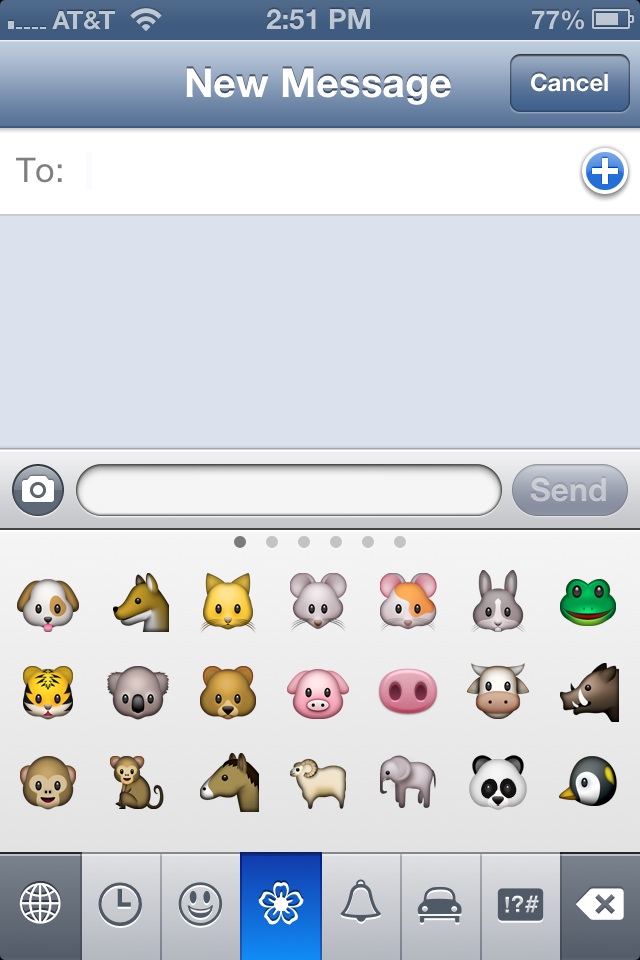
emojis
The emoji keyboard has several icon screens.

iPhones seem to have unlimited features to tweak. Since I have owned iPhones for more than four years, I tend to believe I am pretty expert about using them.

Then I read this Christian Science Monitor article, 40 iPhone Tips and Tricks Everyone Should Know, and discovered that I still have quite a few cool new things to learn. The February 2012 report, by Megan Riesz, Eoin O’Carroll, and Chris Gaylord, includes a few far-fetched suggestions that I will never do — in my case some the ideas for tweaking Siri — but it also includes several iPhone tweaks that I’ve already added as I was making my way through the 40 tips.

A Few of My Favorites

  1.   Create an “app “out of a website that you visit a lot.
  2.   Take better pics with HDR photography.
  3.  Install the “emojis” keyboard with lots of little pics and icons — especially nice for texting.
  4.  Take a screen shot on the iPhone.


Posted in acceptable use, apps, cell phones, digital devices, nothing is permanently erased, parents and technology

SnapChat: Instantly Deletable Images? Sort of…

Snapchat: the free mobile app that promotes itself as a disappearing act. Parents and educators need to know just enough to understand its attraction to children and adolescents and the potential problems that may occur

Teens and, yes, some tweens are now playing with Snapchat because it’s designed to make pictures disappear at their destination — in ten seconds or less.

I’ve tried to use the app, and pictures really do disappear. Voilà! The content is gone. So does this mean a child (or an adult) can go ahead and send all sorts of pictures?

Well, not exactly. Read A Warning about SnapChat, Teenagers, and Online Photo Sharing, appearing on February 11, 2013, over at the Forbes website.

After downloading and installing the Snapchat app on a mobile phone, a user chooses a picture, text, or drawing and decides how long to allow the picture to reside on the recipient’s screen — anywhere from 1 to 10 seconds. For Snapchat to work the sender must trust that the recipient will allow the picture to delete and that the recipient will be trustworthy and respect the wishes of the sender. Any user is supposed to be 13 or older.

So yes, the content does disappear, but even a picture residing for just a few seconds gives an unreliable recipient enough time to take a quick screenshot, preserving the image. Read this April 10, 2013 New Yorker article, Delete This Picture When You’re Done, by Matt Buchanan, who points out that the Snapchat site is handling over 60 million images a day. Another informative article is SnapChat: Sexting Tool or Next Instagram, a CNN report by Doug Gross.      Continue reading “SnapChat: Instantly Deletable Images? Sort of…”

Posted in 21st Century parenting, connected learning, digital devices, digital parenting, frightening events, social media, too much media?

When Digital and Social Media Combine With Crisis

Moderation. Even with the best intentions, the decisions we make each day about what to do and how to live become more complex as our digital lives expand. Yet making choices about when and how long to stay connected could not be more important for us, and during times when a tragedy grips the country or the world, our connection choices become even more important.

moderationNow I spend considerable time on my blogs and at my job encouraging parents, kids, and teachers to embrace digital life while also choosing to pursue plenty of offline activities. Making choices about what to do and not to do is especially critical when children live in the house, but all of us should pay attention to the length of time we spend in the digital world.

Choosing does not necessarily mean avoiding long periods of connected time if we are learning or accomplishing something significant (and yes, a game can count). Good choices, however, keep us from wasting time and from missing valuable face-to-face interactions.

I am usually pretty good at moderating my time online — at least I was until the bombs exploded at the Boston Marathon. After that tragic event, and for the ensuing six days I’ve not been able to disconnect myself for very long. My husband is a lifelong runner who loves the Marathon, though he’s never run it, but two friends were in this race, so we immediately tried to find more information about them. Moreover, my daughter works at one of the teaching hospitals in Boston.

Digital Mod

So all week-long I could not disconnect from the digital coverage. I checked three newspapers (Washington Post, New York Times, Boston.com) several times a day, added a slew of new Twitter feeds (#BostonMarathon #Marathon #CambridgePolice @Boston_Police, #Boston), and used Public Radio apps on my phone and iPad to listen to Boston radio programs, especially WBUR. (Note: One of my middle school students, a confident 21st Century learner, asked me why I wasn’t using the Public Radio app to listen everywhere I went.) Every day this week I’ve made a final iPhone news check just before going to bed and grabbed my mobile again as soon as I have awakened. I even listened during exercise.

Continue reading “When Digital and Social Media Combine With Crisis”

Posted in 21st Century parenting, 21st Century teaching, data sharing, digital devices, digital downloading, privacy

Spring Clean Your Digital Profile

624464b40948768834_ckm6idcwa
Download the document at A Platform for Good.

The idea of spring cleaning each individual’s digital profile is terrific — something for parents and teachers to do themselves and then share with children.

Just like we tidy up our homes and our gardens in March, April, and May, it’s a good time to put our digital domiciles on the to-do list. Paying attention to the upkeep of our digital footprints and devices allows us to clean up and polish online images and minimize potential problems on our devices and gadgets. In the process, we learn a lot about ourselves, but also about the details that others can learn about us online.

So check out the Family Online Safety Institute’s (FOSI) digital life spring cleaning mini-poster over at the organization’s newish web space, A Platform for GoodFOSI designed A Platform for Good as an informational site that helps parents, teachers, and teens connect, share, and do good online.  The website’s about page shares this thought about its mission:

Our vision for A Platform for Good is to start a dialogue about what it means to participate responsibly in a digital world. While recognizing the potential risks, we will celebrate technology as a vehicle for opportunity and social change.

The clean-up-your-digital-life mini-poster, available by link or download, asks each of us to take some time to dust off our online lives. Suggestions include ensuring that our passwords are strong, Googling ourselves to see what comes up from a search, and examining our devices to be sure that they are secure and up-to-date. The Platform for Good document also encourages individuals — adults and children — to evaluate the privacy settings on any social network accounts (many adults and children reside on these sites as if they are second homes or at least daily digital playgrounds).

So why should we go through this process?          Continue reading “Spring Clean Your Digital Profile”