Posted in 21st Century Learning, 21st Century teaching, cell phones, digital devices, student learning and cell phones

The Enormous School Cell Phone Conundrum

Last week I read a great article describing how teachers and students might use mobile phones in the classroom.

All sorts of apps promote student learning, but it takes time an patience to identify the good ones.
All sorts of apps promote student learning, but it takes time and patience to identify the good ones.

Will Ferriter, the proprietor of The Tempered Radical blog, posted an article Interview on Cell Phones in the Classroom, that explains his personal views — based on years of teaching experience — about using student mobiles should be used in the classroom.

“Our goal,” he writes, “shouldn’t be to ban access to powerful tools for learning. Instead, our goal should be to show the students in our classrooms how to take full advantage of the learning potential sitting inside their purses and their back pockets”.

Read the entire blog post which addresses — broadly — the opportunities for learning that digital devices offer  21st Century students. Lots of educators may disagree with Ferriter’s view, but the fact is we fight a loosing mobile device battle. Students own these devices, and while they are always close at hand and the kids know how to use them to connect with others, most have no understanding for the true learning power of these devices offer. We could help them learn a lot more and become more thoughtful about using their mobiles.
Continue reading “The Enormous School Cell Phone Conundrum”

Posted in 21st Century Learning, 21st Century teaching, commenting, parents and technology, social media

Let’s Teach Children How to Comment

Knowing how to write a comment that is appropriate for different online settings is a critical literacy skill for 21st Century children (and also for many of their parents). Too often young comment writers end up fervently wishing they had thought a bit more about what they posted.

Screen Shot 2015-09-24 at 8.53.29 PMEducators and parents need to pay serious attention to the commenting lives of kids. While the World Wide Web and social media offer young children, pre-adolescents, and teens nearly unlimited opportunities to comment and express their opinions, problems occur when young people do not possess the impulse control skills for such unrestricted access.                             Continue reading “Let’s Teach Children How to Comment”

Posted in 21st Century Learning, 21st Century teaching, collaboration, digital learning, professional development

25 Years in Ed Tech — 25 Lessons Learned!

After serving at a school for 33 years, more than 25 or them as an educational technology faculty member, I am departing in a few weeks and moving on to new experiences. This year I’ve had plenty of time to think about my service on an edtech faculty team, ruminating on my rich experiences. I’ve helped teachers and students use technology in ways that help them grow into more effective and reflective learners, though in truth, I’ve probably learned far more than I’ve helped others learn.

While I will miss the daily joys and the challenges of 21st Century school life, I expect to continue supporting people — students, parents, family, friends, and anyone else — as they discover more about living and learning in a digital  world  with social media, apps, the latest devices, and whatever else that appears on the edtech horizon. Of course, I’ll keep blogging right here at MediaTechParenting.net.

So below are 25 observations (lessons learned) that grow out of my 25 years of teaching and learning with educational technology.

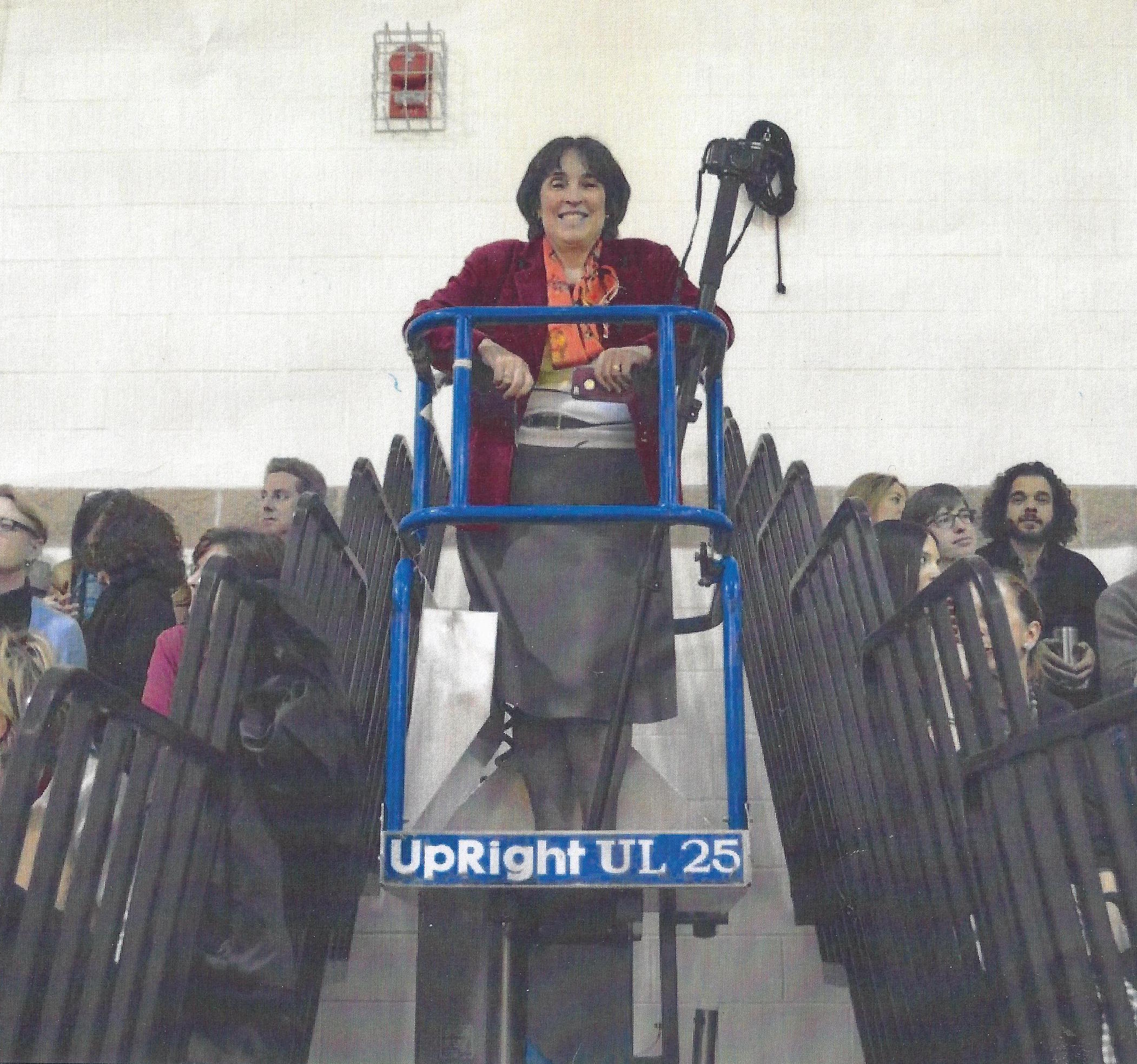
Me in the cherry picker so  we can film an assembly from a good angle.
Me in the cherry picker so we can film an assembly from a good angle.

1. The curriculum and student learning are at the core of our work. The mission is to figure out how to help teachers learn new skills so they can help students learn more effectively and productively.

2. Collaborating with teachers on new technology projects in their classrooms is essential and best way to help them learn. Communicating with those teachers is paramount.

3. We need administrators to evaluate faculty members regularly, assessing how teachers infuse technology into the curriculum and how these teachers expand their skills over time.

Continue reading “25 Years in Ed Tech — 25 Lessons Learned!”

Posted in 21st Century Learning, 21st Century teaching, maker movement, parents and technology

Makerspaces Are Amazing, Yet I Remember When…

My local makerspace in Washington, DC — FabLab.

I am so energized by makerspaces, where people — children and adults — have access to all sorts of equipment to invent, try out ideas, and make things. I’ve spent some time in makerspaces at a number of conferences, and last summer I wrote about my experience at Gary Stager’s Constructing Modern Knowledge 2014 (CMK14) conference in Manchester, New Hampshire. (Read CMK post # 1. Read CMK post #2).

At my school our fifth graders have a small but lively makerspace where they can try ideas, often fail, and always have an opportunity to keep going and try again and the room is awash with small motors, LED devices, needles, fabrics, and even a few arduino boards. Parents and teachers should become aware of the trend for these innovative spaces and learn more about them. It will only benefit the learning of their 21st Century children and students.                        Continue reading “Makerspaces Are Amazing, Yet I Remember When…”

Posted in 21st Century Learning, 21st Century teaching, coding, professional development, programming, teaching digital kids

Learning How to Code: Demonstrating How to Learn – Report #2

scratch_logoWe educators offer great gifts to our 21st Century students when we demonstrate that we, too, can learn new things. By letting children see us mastering unfamiliar information, figuring out problems, overcoming challenges, and yes, even making mistakes, we help them develop more comfort and confidence when they make errors and feel like they are not making progress. We adults teach all the time, but we probably don’t model learning new material nearly enough, and the kids notice it.

UnknownAs Ted Sizer wrote in his book, The Children Are Watching, they notice what we do and what we do not do. (A good book, by the way, for teachers and parents to read).

So this year I’m demonstrating how much I have to learn for students in grades one through five who attend my MIT Scratch coding activity. Literally, they are watching me learn how to code Scratch scripts.

Continue reading “Learning How to Code: Demonstrating How to Learn – Report #2”

Posted in 21st Century Learning, 21st Century teaching, coding, parents and technology, programming, teaching, teaching digital kids

Hour of Code Reflections: What a Difference a Few Words Make!

Image used with permission.

What if we encouraged young learners, when they encounter a difficult learning task, to replace the words “I don’t get it” with “I haven’t figured out the problem yet”? Can changing just a few small words make learners more comfortable when they work on unfamiliar or difficult activities?

I’ve spent the last month mulling over this word change idea after participating in Hour of Code activities with young 21st Century learners at my school in December. Watching the children in kindergarten and grades three, four and five solve puzzles and play the unfamiliar coding games was eye-opening because in each class the majority of students — and some of the teachers — were working on learning tasks that they had never encountered before (definitely terra incognita).                        Continue reading “Hour of Code Reflections: What a Difference a Few Words Make!”

Posted in 21st Century Learning, 21st Century teaching, connected learning, digital literacy, online education, programming

Learning How to Code: Relearning How to Learn – Report #1

scratch_logo
Check out Scratch!

I am learning how to code, and right now it’s hard. With all of the talk about teaching children to code — I agree, but sometimes the world of education goes overboard on our newly recognized philosophies — I decided to organize a small before-school activity using MIT’s Scratch coding site. There was only one problem with my program idea. I only knew a little bit about Scratch.

So I started the morning activity during the second week of school and by day two, a few of the 10-15 attendees (children in grades 3-5) were ahead of me. “What’s a variable?” one of them asked. “Do you know how to make a game where the sprite (the little person on the screen who carries out the coding commands) bumps into a ball?” asked another. My answer in both cases was no. Sure I knew how to do many beginning tasks in Scratch, but not what these children wanted to know.

Now those of you readers who are educators and parents know that kids often take care of things like this by figuring out things for themselves — and my students did just that, experimenting and trying things out  — but I wondered, “If these questions were coming up on the second day, what would the second week be like?” I needed to master some new Scratch skills and fast.                                Continue reading “Learning How to Code: Relearning How to Learn – Report #1”