
Where a digital device is charged is a health issue for 21st Century children.
With so many different electronic devices in our lives, it’s easy to get distracted and use them for extended periods and inappropriate times. Concerns about overuse abound, but one of the most significant issues is the way that digital devices keep people, especially 21st Century preadolescents and teens, from getting enough good quality sleep.
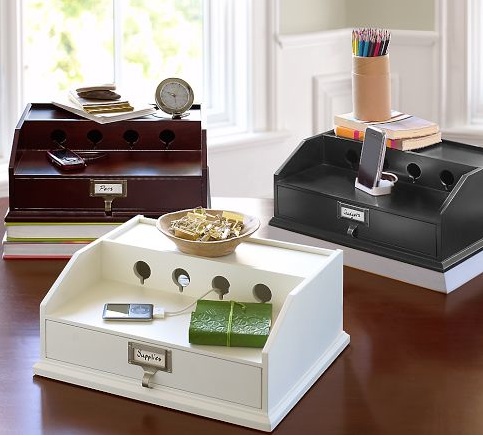
To improve sleep habits in your house, consider purchasing or one or two digital gadget charging stations where family members can charge phones and other devices. Locate the charging stations away from the bedrooms.
A Google search for charging stations gets you started, or you can begin with this Mashable post, 10 Chic Charging Stations.
I recently discovered, in a small way, just how a cell phone screen can disrupt sleep. I received a new Solitaire game app and began playing two or three games on my iPhone just before bed several nights in a row. A few games grew into 20 or 30 minutes of play, and for three nights in a row, when I put down the phone, it took me a long time to settle down and get to sleep. The fourth night I did not play, and sleep came easily.
Lesson learned.
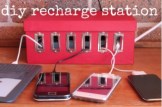
One of my favorite charging stations is the red box at the top right of this post, a nifty do-it-yourself craft project made from a filing box. Click on the image link and check it out at MakeZine.
Twenty-first century parenting demands are unending and sometimes difficult to solve, but introducing charging stations into a home is a simple and elegant solution that addresses sleep deprivation issues for everyone in the family.
Other than ensuring a child gets all of the recommended vaccinations, supervising good sleep is just about the best thing a parent can do for a child’s health.
A Few Resources on Sleep Deprivation and Digital Device Screens (repeated from the previous post)
- iPads Tablets, Smartphones Disrupt Good Sleep, Study Finds – Washington Post
- Help Kids Not Lose Sleep Over Digital Devices – Johns Hopkins Children’s Hospital
- Gadgets Stealing Sleep – Pew Internet
- Teens and Sleep – National Sleep Foundation
- Need More Sleep? Turn Off Gadgets and TV Earlier – NetworkWorld
- Born to Be Wired: Cell Phones Creating Sleep-Deprived Teens – Alabama TV station
- Cell Phones and Sleep – WebMD
- Can’t Sleep? Turn Off That Cell Phone – Time
- More Than 4 in 5 Teens Sleep with Cell Phone On or Near the Bed – Pew Report
- One in Three Adults Sleeps Less Than Seven Hours, Says CDC – CNN


 Media! Tech! Parenting!
You must be logged in to post a comment.