Posted in 21st Century Learning, 21st Century parenting, digital change, digital life, digital parenting, education not fear, Facebook, parents and technology, risky behavior, social media, supervising digital kids, values in digital life

On Digital Parenting Fear, Part #2 – We Must Know More About Kids’ Digital Lives

fear-riskIn our connected world unfamiliar activities make adults worry about kids, and violent and exploitative events, some connected to the digital world, make us fear for our children’s safety. This past week two events, a 13-year-old’s ruthless murder that was associated with online app interactions and a Wall Street Journal article, Cyberthieves Have a New Target: Children, made many of us wonder, once again, whether the digital world is degrading the quality of our lives.

Cybertheives PM

For me the week reinforced the importance of parents understanding what their children are up to on digital devices. It’s a serious responsibility, it requires enormous time and energy, and we cannot hire outside experts to do it for us. The work requires every parenting skill that we’ve ever developed and more, and if you are not up to it you need to consult a parent education organization, such as the Parenting Encouragement Program (PEP) in my area, that offers training to parents. Continue reading “On Digital Parenting Fear, Part #2 – We Must Know More About Kids’ Digital Lives”
Posted in 21st Century Learning, electronics, innovation, maker movement, makerspaces, parents and technology

Electronics Tutorial Helps Parents & Teachers Gain Deeper Understanding

Click on this icon at the top left of the webpage to access the tutorial.
Click on this icon at the top left of Paul Mirel’s webpage to access the tutorial.

As exciting makerspaces spring up all over the place, I wonder how much attention is given to leveling the makerspace playing field in order to ensure that everyone in a 21st Century group, class, or school community has the basic knowledge for exploring and innovating.

Take understanding basic electricity, for instance. At a conference that I attended last year — an amazing event filled with countless maker opportunities —  some people seemed to understood electricity’s basics and lots of others did not. The people without the knowledge, the “have-nots,” frequently appeared to lurk on the periphery of projects.

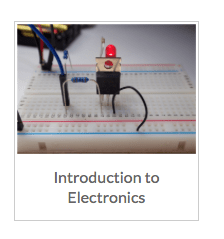
A friend and former colleague, physics teacher Paul Mirel, recently developed an introductory electronics tutorial for his art students at the Maryland Institute College of Art (MICA) in Baltimore, MD. It’s written in a way that is easy to understand and also easy to follow. He thinks that his students need an elementary understanding of basic electronics if they are to fine tune their maker skills. Check it out!               Continue reading “Electronics Tutorial Helps Parents & Teachers Gain Deeper Understanding”

Posted in 21st Century Learning, Bookmark It!, digital learning resources, online learning, parents and technology

National Library of Medicine Learning Resources for Young Learners

Amazing resources for young learners at The National Library of Medicine!
Amazing resources for young K-12 learners at The National Library of Medicine!

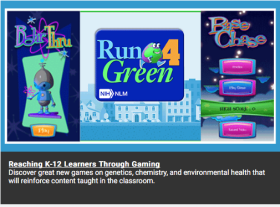
Check out The National Library of Medicine (NLM) resources for K-12 education, including a number of games. The library is a part of the National Institutes of Health (NIH), and also has an excellent weekly podcast on a wide range of topics.

Posted in 21st Century Learning, 21st Century teaching, coding, parents and technology

A Great Code Chat for Girls

Watch this amazing  and inspirational video about girls and coding. It’s worth sharing with kids and keeping it at hand when your child or a student in your class gets discouraged by a challenge in a math or coding activity.

The video comes out of the Made With Code project where there are lots of other videos to watch.

Posted in 21st Century Learning, digital citizenship, digital devices, family conversations, family life, mentoring digital kids, parents and technology

A Positive Story for Younger Digital Kids: Meet the Von Awesome Family

THUMBNAIL_IMAGEAs parents and educators, we quickly come to understand how stories help young people learn.

Unfortunately, when it comes to digital parenting and digital citizenship, we do not have many positive children’s stories — the kind you can sit down and read with a child. We know what we want children to learn as they grow up and use more and more digital devices in a connected world. We are also gradually coming to understand that citizenship and digital citizenship are one and the same.

We need lots more stories that illustrate the way digital life should be lived — stories that we can share with 21st Century children when they are young.

Continue reading “A Positive Story for Younger Digital Kids: Meet the Von Awesome Family”

Posted in 21st Century Learning, 21st Century parenting, decision making, digital kids, digital life, ethical behavior, parents and technology

Building Ethical Thinking Skills – Thoughts on Disconnected: Youth, New Media & the Ethics Gap

In an always-connected world, how can we help our students and our children become better, more thoughtful problems solvers when they encounter challenging dilemmas? What can adults do to encourage young people to grow into citizens who understand how to examine issues and problems from a range of perspectives — theirs, of course, but also the possible ramifications of theirs in the context of a community where they live, with others, or even the world. Each parent and every teacher ask these reflective questions again and again as they observe young people navigating through their online lives.

The questions change a bit in the midst of a digital problem or public embarrassment, caused by misuse or misunderstandings on the Internet. In those situations it’s not uncommon to hear people, and young people especially, exclaim, “Why did I do that?” or “What was I thinking?”  Or even more often an adult asks a child, “What were you thinking?” These questions come up when there is little to reflect

In her book, Disconnected: Youth New Media and the Ethics Gap, Carrie James (read author’s bio) suggests some answers to these questions as she shares the results of her qualitative research with young people ages 10 – 25 and also with parents of digital natives. James examines the decisions that young people make and how they respond to digital life ethical problems. In her research the author documents how participants think about and solve privacy, participation, speech, and intellectual property dilemmas, finding that the most of the young people tended to examine issues and respond to problems with a self-focused perspective or a friend-focused moral perspective. Only rarely did the young subjects in her interviews engage in more complex ethical thinking by considering perspectives from the viewpoint of a larger community, a group, or even society as a whole.    Continue reading “Building Ethical Thinking Skills – Thoughts on Disconnected: Youth, New Media & the Ethics Gap”

Posted in 21st Century Learning, 21st Century teaching, cell phones, digital devices, student learning and cell phones

The Enormous School Cell Phone Conundrum

Last week I read a great article describing how teachers and students might use mobile phones in the classroom.

All sorts of apps promote student learning, but it takes time an patience to identify the good ones.
All sorts of apps promote student learning, but it takes time and patience to identify the good ones.

Will Ferriter, the proprietor of The Tempered Radical blog, posted an article Interview on Cell Phones in the Classroom, that explains his personal views — based on years of teaching experience — about using student mobiles should be used in the classroom.

“Our goal,” he writes, “shouldn’t be to ban access to powerful tools for learning. Instead, our goal should be to show the students in our classrooms how to take full advantage of the learning potential sitting inside their purses and their back pockets”.

Read the entire blog post which addresses — broadly — the opportunities for learning that digital devices offer  21st Century students. Lots of educators may disagree with Ferriter’s view, but the fact is we fight a loosing mobile device battle. Students own these devices, and while they are always close at hand and the kids know how to use them to connect with others, most have no understanding for the true learning power of these devices offer. We could help them learn a lot more and become more thoughtful about using their mobiles.

Continue reading “The Enormous School Cell Phone Conundrum”