Posted in 21st Century Learning, data collecting, digital devices, digital learning, research on the web

Digital World Research-What It Tells Us About Causation vs. Association

On a fairly regular basis I hear presenters and parents cite research results about technology and 21st Century kids. Often they justify their points by making comments such as “According to research,” or “Research demonstrates that…”
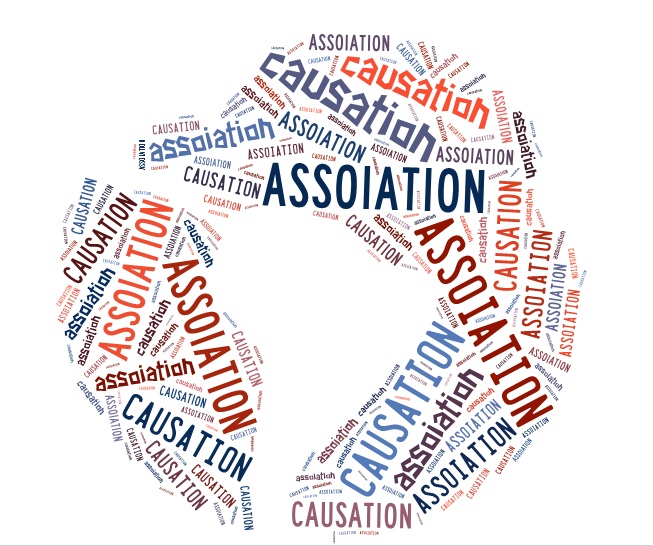
causationassociationSome time ago, for instance, I heard a presenter comment that too much use of digital devices causes students’ lack of concentration, and she cited a university research study. Trouble is, when I subsequently checked out the research, it was based on 25 participants — a small number on which to form a conclusion and make assumptions about a dramatic outcome. After I read the abstract, I discovered that the researchers who conducted the study concluded that the outcome is an association with kids’ lack of concentration and not a cause. The data did not indicate that too much technology causes a lack of concentration.

The difference between association and causation is significant, and parents, as well as those of us in the educational technology community, need to recognize the difference. Much of our accumulated data about technology outcomes are collected over a short-term, and in many areas we have no data collected long-term. Television statistics are the exception because, after years and years of well-designed, science-based studies, the causal connection between television viewing and childhood behaviors is only now being firmly established. That’s because enough data exist to enable researchers to draw firmer conclusions about how TV screen time affects certain childhood problems.

Continue reading “Digital World Research-What It Tells Us About Causation vs. Association”
Posted in 21st Century Learning, 21st Century parenting, digital citizenship, digital kids, digital learning, digital parenting, educating digital natives, parents and technology

Observations from FOSI 2013 – Conference Post #1

fosi2013I am away from school today, attending the Family Online Safety Institute (FOSI) 2013 conference in Washington, DC. I plan to post several times over the course of the two days, and because I am putting connected-world sharing above almost-perfect prose, I’ll make basic edits as I write but spend more time tonight and tomorrow fine-tuning my posts.

Check out the FOSI Annual Conference Program!

The conference, held in the Ronald Reagan International Trade Conference, features all sorts of digital life movers and shakers who offer information and guidance to parents, children, and educators.

One always has interesting first impressions at the beginning of any conference. Is it easy to get settled? Yes. Is the wifi ready and easy for us to use? Yes, and I am using it now. Are the people friendly and helpful? A definite yes. And finally, does the conference facility have a coat check? Yes! There’s nothing worse than toting around a coat all day during a conference.  It remains to be seen if it will be easy to recharge my laptop when necessary, but I expect that will not be difficult either.

So now I get to excitedly anticipate the FOSI program. I await the panel on new research. I’m eager to hear from danah boyd (lower case intentional), especially about her upcoming book, It’s Complicated. (Editor’s Note: Even when I knew just a few of the many wonderful things about danah I was already a fan just because she attended the same university as my daughter.) Another author I’ll be interested to hear is Catherine Steiner-Adair, whose book, The Big Disconnect, is my current read and featured on the front of this blog.

Continue reading “Observations from FOSI 2013 – Conference Post #1”

Posted in 21st Century Learning, 21st Century parenting, 21st Century teaching, Library of Congress, parents and technology, plagiarism

Teach Digital Kids to Respect Ownership: Copyright Resource Update

copyright wordleSome time ago I chatted with a parent about the concept of copyright. Both of us were concerned that digital kids understand very little about intellectual property. The free-for-all digital information climate ensures that children have considerable ease accessing information and considerable difficulty comprehending what belongs to whom. Given this easy access parents and educators need to spend time helping children understand the basics.

Copyright laws are arcane, and even a bit crazy, but it’s critical to teach kids that protecting the intellectual property of others is a necessary 21st Century skill. With your child take the Copyright Challenge quiz at Copyright for Kids to see how much you know. When you finish the quiz check out these frequently asked questions about copyright.

Continue reading “Teach Digital Kids to Respect Ownership: Copyright Resource Update”

Posted in 21st Century Learning, 21st Century parenting, connected learning, Great TED Talks, parent education, parents and technology, teaching digital kids

Real Answers to Parents’ Digital Questions? You Bet!

Digital World QuestionsMy greatest connected learner satisfaction comes when I discover answers to questions that I haven’t yet thought to ask — something that occurs almost every day in my digital world. Online I’ll search on a topic, read, or merely glance over a site, and suddenly I discover a resource and think — I need to know about that!

As I read the blog post, Learning Online: Real Answers to Real Questions, by colleague and master teacher, Susan Lucille Davis, that’s exactly how I felt. Davis shares a range of digital parenting resources that help to answer parents’ 21st Century learning questions, and along the way, she helps us realize just how much more we can learn in our connected world.

Writing for A Platform for Good, Davis offers resource suggestions that parents can use to gain digital skill and knowledge right along with their children, and teachers can share with their students’ parents.

A Few of My Favorite Tips  — For links and more information read the entire post.

  • I had no idea that parents can set up subsidiary e-mail accounts, despite the fact that I am on Google and Gmail countless times each day.
  • Somehow I’ve missed Joyce Valenza’s TEDTalk about helping kids expand online research skills, but it’s a resource to share widely in an academic community.
  • Good quality COPPA information sources, that provide basic information to share with parents, are hard to find, but Davis found one and it’s good.

I, too have found that parents need lots of information about digital kids and learning.  On my “class-on-a-blog,” initially set up for parents at my school,  I write about tools, apps, and sites. On this other site, Discover Your Child’s Digital World, my posts concentrate on digital adventures that kids experience and adults may not know much about.

Posted in 21st Century Learning, 21st Century parenting, 21st Century teaching, digital citizenship, digital kids, ethical behavior, parents and technology

Is It Digital Citizenship or Just Plain Citizenship?

dewey quoteAs the lives of my students, online and off, grow more complex by the day, I spend a good deal of time helping them learn more about digital citizenship. Today the digitally connected, always-on world presents students, teachers, and parents with confusing questions and baffling behavior expectations.

But wait a minute!

Is this digital citizenship or just plain citizenship? Building strong 21st Century citizens is of paramount importance whether we are living our lives offline or on, and we need to avoid using old-fashioned compartmentalized instruction in a connected world.

The Merriam Webster Dictionary defines citizenship as “The qualities that a person is expected to have as a responsible member of a community,” and helping students shape themselves into responsible community members is what caring adults do. We model appropriate behavior and help children learn how to participate as respectful and ethical members of society. No matter where they work or play, our citizenship goals are the same.

Continue reading “Is It Digital Citizenship or Just Plain Citizenship?”

Posted in 21st Century Learning, parents and technology, video use

If So Many Adults Use Online Video – Imagine How Many Kids Use It?

Check out the video below that explains the results of a survey about how adults use video online. The Pew Internet and American Life Project conducted the survey in July 2013.

According to the report, “Over the past four years, the percent of American adult Internet users who upload or post videos online has doubled from 14% in 2009 to 31% today.”  Read the full report and look at the graphics.  Nearly eight and ten adults use video on the web in some way, with the youngest group, ages 18-29 doing the most.

Can you imagine what 21st Century adolescent and pre-adolescent learners must be doing with video?  Parents who have not taken the time to learn a bit about the ways their digital children use video will be at a disadvantage. Moreover, it will be difficult for adults to ascertain the amount of screen time their children are getting.


Posted in 21st Century Learning, digital footprints, digital kids, digital world conversations, parents and technology

Digital Footprint Series on All Things Considered

collecting dataWe cannot discuss digital footprints and privacy with children and family members too much or too often. The point is not to scare anyone — the virtual trails that we leave are becoming almost routine — but rather to help family members consider how much data we share, intentionally or otherwise, and whether at times we should consider making at least a few changes in our online behavior.

On September 30, 2013, NPR’s All Things Considered program aired the first of a series of reports on digital footprints, and it’s worth taking the time to listen or read and to learn more about just how much data is collected on each of us. I expect the other reports will be just as compelling. NPR is collaborating on the series with the Center for Investigative Reporting (CIROnline.org).

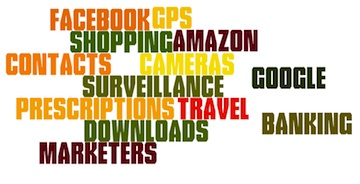
Reporter Daniel Zwerdling describes the obvious digital trails we leave behind with our computers, mobile phones, GPS-guided car trips, and credit card purchases, and also our less-than-obvious footprints from prescription drug purchases, traffic camera sitings, and wifi tracking and facial recognition cameras that track us in shopping malls. That we make digital footprints is not surprising, however, the amount of data that is collected about us and used to form profiles is extensive and worrisome.  Privacy — our privacy — has gone out the window.             Continue reading “Digital Footprint Series on All Things Considered”