Posted in digital citizenship, digital parenting, digital world conversations, electronic communication, family conversations, parent education, parents and technology, teaching digital kids

E-mail, Scandals, and Digital Footprints — AGAIN!

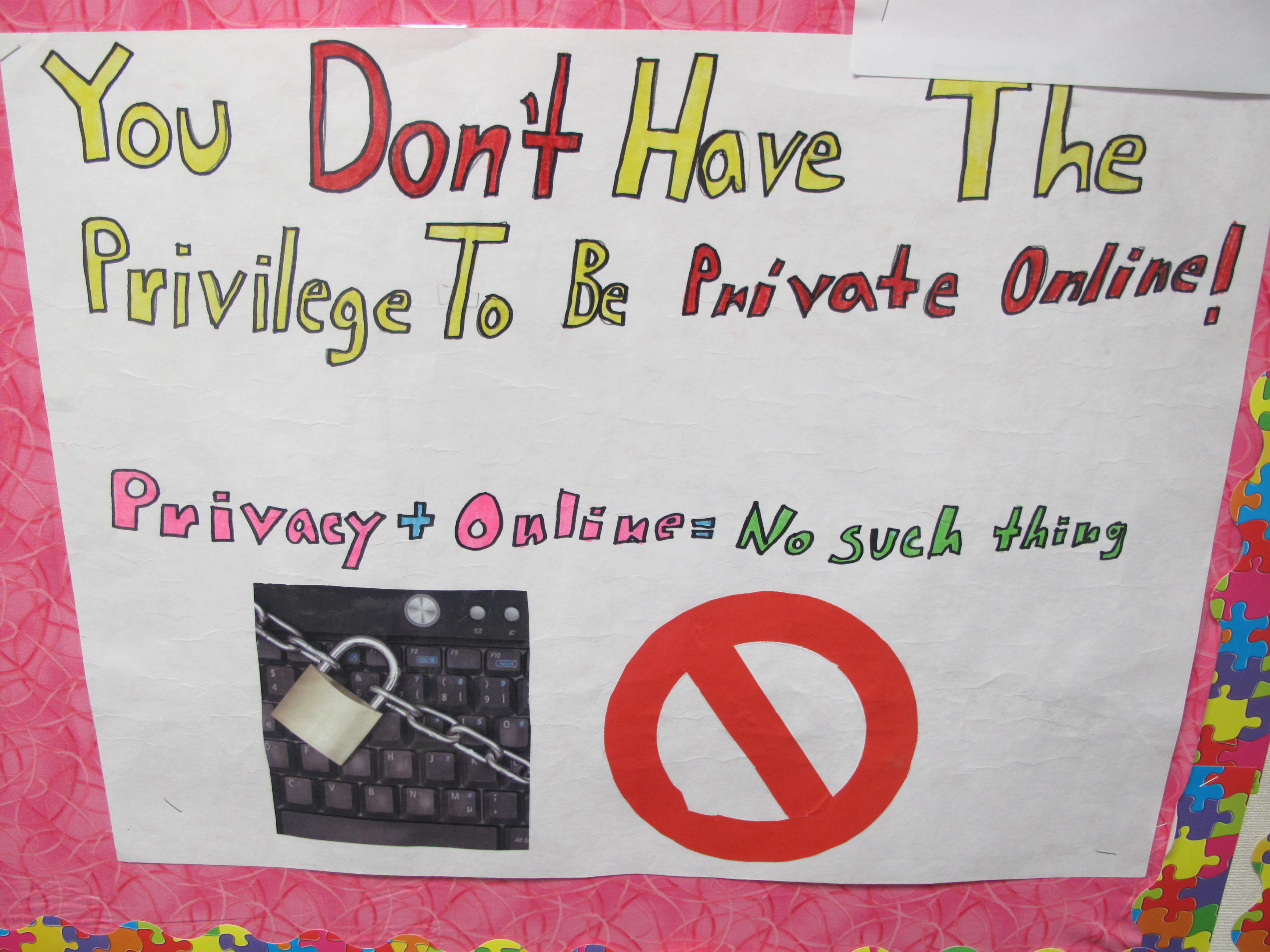
One of the digital citizenship posters made by my students a year or two ago.

On a fairly regular basis, a public scandal occurs, and these days just about every one of them reminds us of how ignorant people are about the transparency of their digital footprints.

If reading about the most recent scandal doesn’t convince you of how easily accessible digital footprints can be, then this November 17, 2012 Washington Post article should. In The FBI’s Long Reach Into Digital Lives, reporters Greg Miller and Ellen Nakashima describe how easily the FBI gets into an individual’s e-mails and how accessing one account leads to exploring the accounts of other people who have sent or received e-mails.

Interesting Quote from the Post Article

Investigators with a warrant to search a house for drugs can seize evidence of another crime… But the warrant does not allow them to barge into the house next door… But what are the comparable boundaries online? Does a warrant to search an e-mail account expose the communications of anyone who exchanged messages with the target?

Scandals arising from common digital mistakes can provide opportunities for adults and children to participate in family conversations, learning more about their online and networked world. However, if you do not want to talk about the scandal, that’s fine — talk about the lack of privacy that everyone experiences today. Children who make mistakes have no protection as they explore the digital world, because what they do can easily become public and embarrassing. In any past era their common and developmentally appropriate errors would mostly remain private, but with today’s speedy and electronic communication tools, that’s less and less likely.

We are not trying to scare children, but we are trying hard to make common sense second nature.
Continue reading “E-mail, Scandals, and Digital Footprints — AGAIN!”

Posted in 21st Century Learning, digital citizenship, digital learning, evaluating web site resources, parents and technology

New Google Lessons: Understanding YouTube and Digital Citizenship

Visit the Google lessons site.

Check out the Google interactive lessons, videos, and slides, all focused on digital citizenship, privacy, and YouTube best practices. Useful for teachers as well as parents, these discrete units are easy to use and share, especially when students need an organizational framework before beginning to look for school project resources. Each lesson is readily downloadable as a Google Doc and even for other presentation media such as PowerPoint.

Many of the Google videos include tips that can help students use YouTube more effectively while honoring copyright principles and evaluating content carefully. Google developed these digital resources for secondary students, but in many schools, the videos will also be valuable for middle schoolers. Even fifth grade teachers may find that some of the videos can help them in the context of curriculum units.

A conundrum exists, of course…          Continue reading “New Google Lessons: Understanding YouTube and Digital Citizenship”

Posted in digital parenting, parents and technology, social media, social media friends

Facebook and Younger Kids: Will They or Won’t They?

Earlier this month a spate of articles (see links below) reported that Facebook is testing features to help it decide whether to expand its social networking access to children under the age of 13.

Now a group of child advocacy organizations sent a June 18, 2012, letter to Facebook’s CEO, Mark Zuckerberg, strongly urging the company to avoid advertising for kids as well as to offer a guarantee of no tracking of children’s online activity. Read the entire letter at the bottom of this Consumer’s Union page.

The following organizations signed the letter:

Consumers Union, Center for Digital Democracy, Academy of Child and Adolescent Psychiatry, Center for Media Justice, Center for Science in the Public Interest, ChangeLab Solutions/Public Health Law & Policy, Children Now, Consumer Action, Consumer Federation of America, Consumer Watchdog, Privacy Rights Clearinghouse, Privacy Times, Public Citizen, and World Privacy Forum.

Articles to Read                         Continue reading “Facebook and Younger Kids: Will They or Won’t They?”

Posted in cell phones, digital parenting, electronic communication, gadget ownership, mobile phones, parents and technology, social media friends

Are Teens Moving Away from Facebook?

Take a few minutes to read Some Teens Aren’t Liking Facebook as Much as Older Users, a May 30, 2012 business article in the Los Angeles Times. Facebook’s growth is slowing, and many teens, after absorbing lessons about privacy and the need to share less personal information, now seek to socialize online in smaller community groups with people they know.

Reporters Jessica Guynn and Ryan Faughnder point out that students are also far more eager to use mobile services designed for their smartphones. Interestingly, parents are still avid Facebook users.

Best Quotes from the Article

  • Teens… can also be more selective about what they share and with whom, and feel less social pressure to “friend” everyone in their school or friends or friends.
  • Teens who belong to the first truly mobile generation — their most common form of communication is text messaging — are increasingly gravitating to services made for their smartphones and tablets.
Posted in acceptable use, data collecting, data sharing, digital footprints, digital parenting, Do Not Track Kids Act, parents and technology, privacy

Kids’ Online Privacy Legislation – Will It Ever Happen?

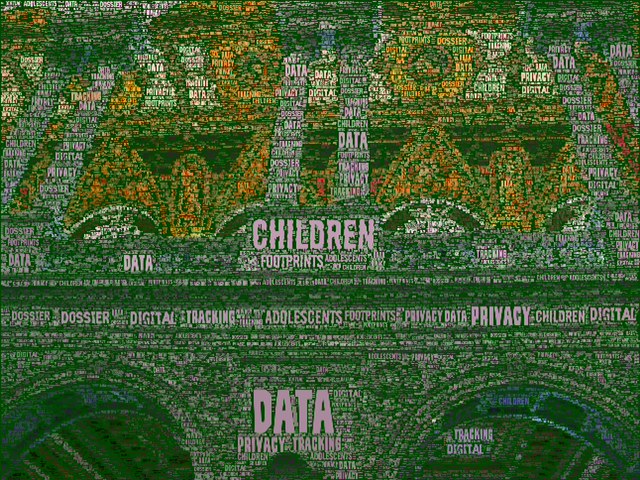
Image made with Wordfoto with a picture taken at the Library of Congress.

Much of what a child or teen does online gets added to a digital profile. Even when information is not supposed to be collected, it accumulates – somewhere. Moreover, when a child or adolescent acts impulsively or thoughtlessly online, no way exists to erase or delete a digital mistake. Harvard’s Berkman Center for Internet and Society posts a great digital dossier video that parents and educators may want to use as a conversation tool.

To learn a lot more about the state of privacy policy, especially as it concerns children and adolescents, read the article Congress Revisits Online Privacy Legislation over at Boston.com.

Continue reading “Kids’ Online Privacy Legislation – Will It Ever Happen?”

Posted in digital footprints, digital parenting, marketing to kids, media literacy, parents and technology, privacy, teaching digital kids

Can We Stop Confusing Kids’ Privacy with Transparency?

Our digital society hasn’t figured out what to do about privacy. More importantly, it hasn’t figured what to do about the privacy of our kids — we keep confusing privacy with transparency.

It’s problematic enough that adults are diving willy-nilly into the digital world, sharing everything about themselves, private and not so private, but it’s even worse to observe a world where everything a child does and almost every mistake he or she makes is now public. These days we are giving children and adolescents no cover and no protection as they blithely explore the digital world while making what in any other era would be common and developmentally appropriate errors.

Lest I sound like a digital Luddite, I’m not. I love participating in the activities of my digital world, actively but moderately, and I have an arsenal of digital gadgets in my purse, book bag, and lying around my house. As an educator, however, I am keenly aware of how much we are forgetting to nurture and honor kids’ developmental stages as they grow up in this digitally dense world. Part of solving that problem involves ensuring that children have a guaranteed amount of privacy.

Continue reading “Can We Stop Confusing Kids’ Privacy with Transparency?”

Posted in apps, digital devices and gadgets, digital parenting, parents and technology, privacy

Lots More People are Using Smartphone Location Services

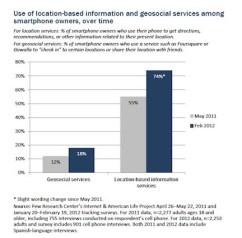
Source: Pew Internet and American Life Project

The Pew Internet & American Life Project has just published new survey results finding that 74% of smartphone owners — that’s three-quarters — appear to be using location services on their phones.

This statistic is double what it was when Pew conducted a similar survey in May 2011. The increase in location services occurs despite privacy concerns about tracking and data collection. Check out the report to look at the data by age, gender, and ethnic group, depicted in a range of charts and graphs.

I am still minimizing or turning off the number of location services that I use on my phone. While some of us use more location services than others on our smartphones, it’s critical for parents to know how location services work and how to limit access on the phones that their children around each day. Many apps ask to turn on location services during the installation process.

Do you know about Foursquare ? If it’s on an adolescent’s cell phone a parent needs to learn about it. Find out more about location services by reading a post that I wrote about location services, Location, Location, Location – Services that Is.

Each adult needs to figure out how much privacy is necessary or desired in his or her digital life and also in the digital lives of children. People seeking one right answer won’t find it, however, it’s best to take the time to understand the devices that family members carry and apps that they use.